Follow Us on Google
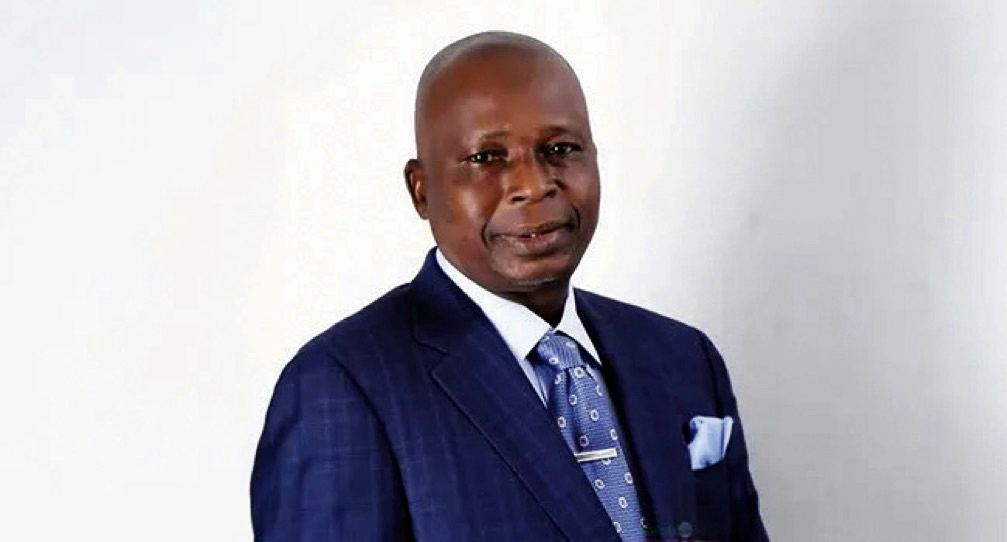
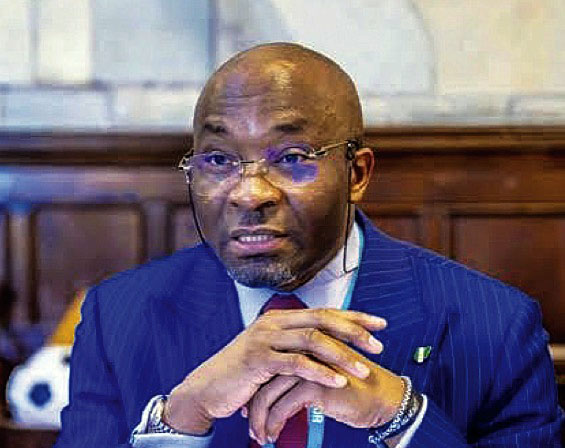
When Prince Lateef Olasunkanmi Fagbemi marked 30 years since his elevation to Nigeria’s Inner Bar this week, the tributes that poured in from the Afe Babalola & Co. chambers where he cut his teeth, to Aso Rock itself, traced an arc rare even among Nigeria’s legal elite.
Here was a young man called to the Bar in August 1985 who, within roughly a decade of active practice, earned the rank of Senior Advocate of Nigeria (SAN) at 37, becoming one of the youngest lawyers ever conferred the honour. He graduated from the University of Jos with a Second Class Upper in Law in 1984, was admitted to the Nigerian Bar the following year, and later earned a master’s degree in law from Obafemi Awolowo University. Three decades later, that same lawyer sits as Nigeria’s 24th Attorney-General of the Federation and Minister of Justice — a rare instance of courtroom mastery converting directly into custodianship of the nation’s justice architecture.
Making of a Silk
Fagbemi’s formation as an advocate happened almost entirely under one roof. He acquired his early tutelage under the legal guru Chief Afe Babalola, spending 11 years in that chamber before striking out on his own. The tribute issued this week by Afe Babalola & co itself called his rise from that chamber to Nigeria’s highest legal office “not just a personal triumph but a validation of the values” the firm holds — hard work, merit, and uncompromising excellence.
The chamber he eventually built (Lateef Fagbemi & Co.), also known as Temitope Chambers, grew from a solo Ibadan-based practice into a firm with offices across Lagos, Kwara and Abuja. In over four decades, Fagbemi has handled cases spanning arbitration and alternative dispute resolution, commercial law, land and border disputes, high-profile political litigation, anti-corruption matters, constitutional questions and election petitions.
Jurisprudence shaped in the courtroom
It is in election law and constitutional litigation that Fagbemi’s imprint on Nigerian jurisprudence is most visible. He represented former Rivers State Governor Rotimi Amaechi in the pivotal 2007 election tribunal case, a matter that tested and ultimately helped define the doctrine that a political party, not merely its candidate, is the true owner of an election victory, a principle that has since anchored Nigerian electoral jurisprudence. In that case, Fagbemi led Amaechi’s legal team and persuaded the Supreme Court to validate his client’s gubernatorial victory, a demonstration of his capacity to navigate intricate legal terrain that later made him the natural choice as lead counsel for the All Progressives Congress at the 2023 Presidential Election Petitions Court, where he steered the strategy against the petitions filed by Atiku Abubakar and Peter Obi. That multi-dimensional petition, contested by a team of 27 senior advocates under his leadership, stands as the high-water mark of a career spent testing the outer edges of Nigeria’s electoral law.
Beyond politics, his practice touched the machinery of the state directly. He served as a judge in various Nigerian courts, including the Federal High Court and the Court of Appeal, an unusual development that colleagues say sharpened his instinct for how courts actually reason, not merely how advocates argue.
From Advocate to Chief Law Officer
President Bola Tinubu appointed Fagbemi Attorney-General of the Federation and Minister of Justice in August 2023. He assumed office on 21 August 2023, succeeding Abubakar Malami. The brief he inherited was daunting: a justice sector widely seen as clogged, an anti-corruption architecture in need of coordination, and Nigeria facing crippling international liabilities.
Other News
The most consequential of those liabilities was the Process & Industrial Developments (P&ID) arbitral award — a case that had threatened to cost Nigeria more than its entire external reserves. Under Fagbemi’s watch, the legal team resolved the matter, ending a decade-long battle that had exposed the country to a potential liability exceeding $11 billion, while the ministry separately intervened to block the £15 billion Petro Union case, described as predatory litigation built on documents forged in the 1990s. Fagbemi has credited the late President Buhari with initiating the fight against the P&ID award, noting it was later carried through to conclusion under President Tinubu. In February 2026, his ministry notched another arbitration win, defeating the UK-based firm European Dynamics in an international arbitration after proving the company had failed to deliver a functional e-procurement system, saving Nigeria $6.2 million.
On the domestic constitutional front, colleagues point to one ruling above all others. A lawyer who has followed his tenure closely described the July 2024 Supreme Court judgment granting full financial autonomy to Nigeria’s 774 local governments as the crowning achievement of Fagbemi’s time in office. Legal practitioners have separately cited his role in landmark constitutional cases advancing local government autonomy as central to his legacy at the ministry.
Institutional and anti-corruption reform
Fagbemi’s tenure has also produced a body of legislative and prosecutorial work aimed at Nigeria’s persistent enforcement gaps. The Proceeds of Crime (Recovery and Management) Regulation Act of 2024, enacted during his watch, gave the country a stronger legal framework for managing recovered and forfeited assets, while his ministry has overseen the extradition of fugitive offenders to the United States and the repatriation of a murder suspect to Nigeria, strengthening the country’s standing in transnational criminal cooperation.
On prosecutions, the numbers he has presented to lawmakers are notable. The Federal Government secured 250 convictions from terrorism and criminal prosecutions in a single year, comprising 160 criminal convictions, 87 terrorism-related convictions, and three novel cases addressing the radicalisation of children and violence against women.
He has also pushed to modernise the machinery of justice itself. His proposed reforms to the Administration of Criminal Justice Act include mandatory pre-trial case management, reform of the “trial-within-trial” procedure, digitisation of court processes, strengthening of non-custodial sentencing, elimination of de novo trials after judges are transferred, and greater inclusiveness for persons living with disabilities. He has framed technology – including electronic case management systems – as core to tackling case delays, while insisting any deployment must protect due process, privacy, and institutional roles rather than centralising power inappropriately.
The picture is not without friction. Fagbemi has publicly flagged funding shortfalls as a drag on reform – telling lawmakers his ministry received only 82 per cent of its overhead allocation and just 12 per cent of its capital budget in a recent 10-month stretch, effectively stalling project implementation. And his recent appointment as Grand Patron of a pro-Tinubu ideological group has drawn scrutiny in legal circles, with some practitioners noting that previous Attorneys-General maintained stricter distance from overtly political associations while in office.
Career measured in two halves
What distinguishes Fagbemi from many of his SAN contemporaries is the symmetry of his career: 30 years as one of the country’s most tested courtroom tacticians, followed by a tenure at the apex of Nigeria’s justice bureaucracy in which the same instincts for precedent, for procedure, for the long game of litigation, have been turned toward institution-building. President Tinubu, marking Fagbemi’s 67th birthday earlier this year, credited him with a career “defined by excellence, integrity, patriotism, and unwavering service to Nigeria,” noting that his elevation to SAN at a young age reflected the diligence and intellectual rigour that has remained the hallmark of his practice.
Whether that record ultimately reshapes Nigeria’s slow-moving justice system as decisively as his courtroom victories once reshaped its election jurisprudence remains the open question of his tenure. But 30 years after he first donned the silk, few dispute that Lateef Fagbemi has spent both halves of his career at the Bar and now at the helm of the Ministry of Justice leaving fingerprints on the architecture of Nigerian law.