Follow Us on Google
• Says northern critics of president bad losers
• Those pushing Jonathan to contest don’t wish him well
From Sola Ojo, Abuja
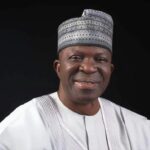
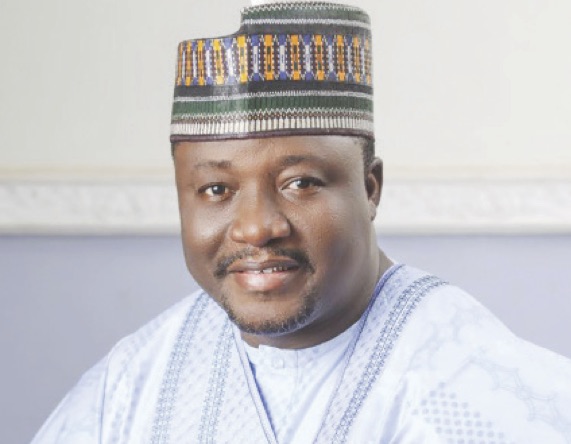
Alhaji Yerima Shettima, Convener of the Northern Stakeholders Consultative Initiative (NSCI) and former President-General of the Arewa Youth Consultative Forum (AYCF), has thrown his weight behind President Bola Tinubu, urging Nigerians to exercise patience with the administration. In this hard-hitting interview, Shettima argued that Tinubu inherited most of Nigeria’s current economic and security challenges from the administration of late former President Muhammadu Buhari. “If we were patient with Buhari for eight years, why can’t we give Tinubu at least two more years?” he asked.
Shettima dismissed criticisms from the opposition as unfair, insisting that the ruling All Progressives Congress (APC) has “come to stay” and remains Nigeria’s dominant political force.
You are the convener of the newly formed sociopolitical front called Northern Stakeholders Consultative Initiative. Can you tell us more about this group?
Yes, I am the Convener of the Northern Stakeholders Consultative Initiative (NSCI). It is essentially a political pressure group. When I served as President-General of the Arewa Youth Consultative Forum (AYCF), the platform was more focused on self-determination and advocacy. The NSCI, however, is more politically inclined, operating as a pressure group within the political space. As for the AYCF, we are working to usher in a new phase of leadership. I have paid my dues in that organisation, and as the current Chairman of its Board of Trustees, I am committed to ensuring a smooth transition. Plans are already underway to hold a convention where new leaders will be formally inaugurated, allowing me to focus fully on my responsibilities with the NSCI.
INEC recently conducted by-elections across 12 states. From the results, APC secured victories in most of these states, including Kaduna. What does this signify for the ruling party?
It is a clear indication that the APC has come to stay. Despite the criticisms and narratives suggesting that the party has not performed well, Nigerians themselves have shown through the ballot that APC remains their preferred option. The results of the by-elections demonstrate that APC is still the strongest choice at the moment.
There’s a lot of speculation about alliances to unseat President Bola Tinubu in 2027, involving the likes of Atiku Abubakar, Peter Obi, Rabiu Musa Kwankwaso, Rotimi Amaechi, Nasir El-Rufai and even former President Goodluck Jonathan. What’s your take?
I have great respect for former President Goodluck Jonathan, but I do not see him returning to contest. I believe he understands that certain things are not right, and those pushing him to re-enter the race do not mean well for him, and he should know that.
As for the others, Peter Obi, Rabiu Musa Kwankwaso, and the rest, even if they come together, I do not think they can make much impact. They have all been tested in different capacities, yet none has been able to deliver a formidable national result. Kwankwaso, of course, has a strong record in Kano and still commands influence there. But beyond that, does he have a solid national base one can confidently rely on? I don’t think so.
The PDP has structures across the country, and they have just zoned their 2027 presidential ticket to the South. Would you say they are making progress or losing ground?
The PDP is crashing by the day. Compare their strength when Buhari came into power to when Tinubu came in, and you’ll see the difference. They keep losing ground, and many of their members are defecting to the APC. Unfortunately, while I strongly believe in democracy and do not support a one-party state, the reality is that Nigeria is heading in that direction. Many politicians now see APC as the only viable platform, and unless something changes, we may be faced with a dominant one-party system.
Many people feel that the North is being “marginalised,” hence the pressure we saw after that meeting. Is the North really marginalised?
You see, in politics, you will always find people who criticise, especially those who have lost relevance or opportunities within the system. Some are simply bad losers, and they will continue to find fault. That’s part of democracy, people are free to express their views without fear of being hunted or silenced.
However, the real question is whether these critics are truly speaking the minds of the average northerner. I don’t think so. Look at their antecedents: many of them left government only two years ago after being in power for eight years. What did they deliver to the North in that period? Poverty didn’t start under President Tinubu; it was already deeply rooted during the era of the late former President Muhammadu Buhari. And despite being one of our own, Buhari did not give the North the results we expected.
So, for anyone now to turn around and say Tinubu has failed in just two years and a few months in power is unfair and a sign of frustration. Most of the challenges Tinubu is dealing with today are problems he inherited from the previous government. If we could be patient with Buhari for eight years, why can’t we give Tinubu at least a fair chance? Let’s give him two more years and then assess him properly. For now, he is doing well.
What’s your advice to President Tinubu on what he can do better?
Yes, people will always talk, but not everything they say is true. That’s why I think President Tinubu should stay focused. He has done a lot already, but there is still room for improvement, particularly in governance and economic management.
We are beginning to see signs of progress. For example, despite the difficult economic situation and inflation, the naira is gradually becoming more stable compared to what it was some months ago. At one point, the dollar is now relatively stable around ₦1,500. That kind of stability inspires confidence in foreign investors.
On insecurity, too, we have seen improvement. It’s not as bad as it used to be. So, while there is still much to be done, we must acknowledge that there are already some positive changes. With consistency and patience, I believe President Tinubu can deliver even more.
Other News
Do you think there is improvement in Nigeria’s security situation, given the continued reports of killings and abductions in different parts of the country?
Clearly, the body language of this administration and the measures put in place show that they have taken control of security to a reasonable extent. We are now hearing more positive stories from our security forces, and they deserve commendation. Of course, no country is completely free from terrorist attacks. Even the United States and other advanced nations still face such challenges. What matters is how we manage our own situation. We must confront these issues head-on and continue to support our security agencies.
The Nigerian security forces are doing well, particularly the Department of State Services (DSS). Under its current leadership, the DSS has worked intelligently and produced commendable results. I must applaud them and other security agencies. They are indeed doing a good job.
Let’s talk about Kaduna State. Politically, do you see a shift between the former Governor Nasir El-Rufai and the current Governor Uba Sani?
Honestly, there is nothing to compare between El-Rufai and Uba Sani. El-Rufai’s administration was largely marked by land grabbing, arrogance, abuse of the people’s sensibilities, and corruption. Yes, there were a few projects here and there, but many were funded by loans that left the state heavily indebted. Under El-Rufai, Kaduna was deeply divided along religious and ethnic lines. But under Uba Sani, unity has been restored. There is relative peace across the state, in the metropolis, urban centers, and rural communities.
On security, Governor Uba has done very well. His non-kinetic approach, combined with support from the federal government, has produced results, particularly along the Kaduna-Abuja highway. Today, the state enjoys greater stability, and that is the foundation for development. Communal clashes have also reduced significantly, and some of the lands forcefully taken during the previous administration are gradually being returned to their rightful owners. Uba Sani has truly performed well. In fact, I believe he deserves not only a first term but also a second term. The people of Kaduna can see the difference, and no one can deny the progress he has made.
But some argue that El-Rufai’s government took loans that were visible in projects, though it left Kaduna as the most indebted state in the country. What’s your response?
Well, if you look closely, the loans acquired during the El-Rufai administration cannot be justified by what is on the ground. Kaduna is now the highest indebted state, and it has to start repaying these debts that were accumulated by the previous government. Yes, Governor Uba Sani was a senator at the time, but that was a completely different office. He was not a principal actor in the state government then, so it would be unfair to blame him for those debts.
With subsidy removal, more funds are now available to state governors. How should they complement federal efforts to improve people’s lives?
Yes, I agree with you, state governments must use these additional resources wisely to complement federal government efforts. The priority should be to make life easier for ordinary Nigerians. Investments in infrastructure, education, healthcare, and job creation are key. It is not enough to have more money; it must be channelled into programmes and projects that directly impact the lives of the people. That is the only way Nigerians will feel the benefit of subsidy removal.
In alleviating poverty in Kaduna State, look at farming and transportation, those are areas where Governor Uba Sani has invested and is helping cushion hardship in the state. Compared to many northern governors, you can actually feel the impact of what he is doing. In some states, the more money they get, the poorer the people become, because things simply don’t work. Often, that boils down to leadership capacity. You can’t give what you don’t have. Some governors clearly have shortcomings, and it shows. But in Kaduna. Uba is trying.
Just a few weeks ago, he commissioned new buses. Around the same time, several truckloads of fertiliser were distributed across the state. Tell me, which other northern governor has done that? Projects are ongoing, infrastructure work continues, and people can see and feel it. Don’t also forget that he has included over 2.5 million poor residents in his economic inclusion programme. These are people who never owned bank accounts before. Now they have accounts and are receiving support directly through them. That is social protection in action.
Some residents appear impatient, saying the pace of infrastructure work on some of the groundbreaking he did two years ago has been slow. Can he move faster and deliver quality projects?
That’s why I say there’s room for improvement. He’s trying, whether critics like it or not, and we can feel it. Not everything can be done in a day. It took the previous administration eight years to deliver the few projects people point to within Kaduna town – moving from Mando to the Kaduna Tollgate coming from Zaria, ending around Kawo, and a few roads in Barnawa and elsewhere. If it took eight years to do that, why not allow Uba a fair amount of time to implement his own plans?
Remember the burden of loans previously collected, how much do they cost to service? Despite limited resources, he has demonstrated a lot. He has done well and continues to do well. There’s still room to improve, but progress is real.
There are claims of political pushback against the governor, notably from his immediate predecessor. What’s your view?
Despite distractions, some allegedly sponsored by elements from the previous government, Governor Uba keeps working. It seems the former governor believes that if he has failed, Uba must also fail. We are watching closely, and we will resist that.
As for people outside Kaduna praising the former governor, we live here. Outsiders can’t tell us better than we know ourselves or feel on the ground. This isn’t propaganda, Uba is working. He’s not a talker; he’s patient and tolerant. Frankly, the provocations we’re seeing would not have been tolerated under the previous administration. I urge Governor Uba to wake up to these antics and address them decisively, once and for all.
What should Nigerians, especially Kaduna people watch out for; Is Yerima Shettima stepping into politics proper soon?
Definitely, I am coming into politics because there have been clamours, appeals, and a lot of pressure on me to contest for the Kaduna Central senatorial seat. I will make my position known very soon. Whether I decide to run or not, I will state it clearly, but honestly, the calls have been overwhelming, and when people are calling, you can’t just ignore them. As for the question of which political party I will run under, that announcement will be made at the appropriate time.