Follow Us on Google
• Leaders asking Nigerians to make sacrifices should lead by example
By Agatha Emeadi
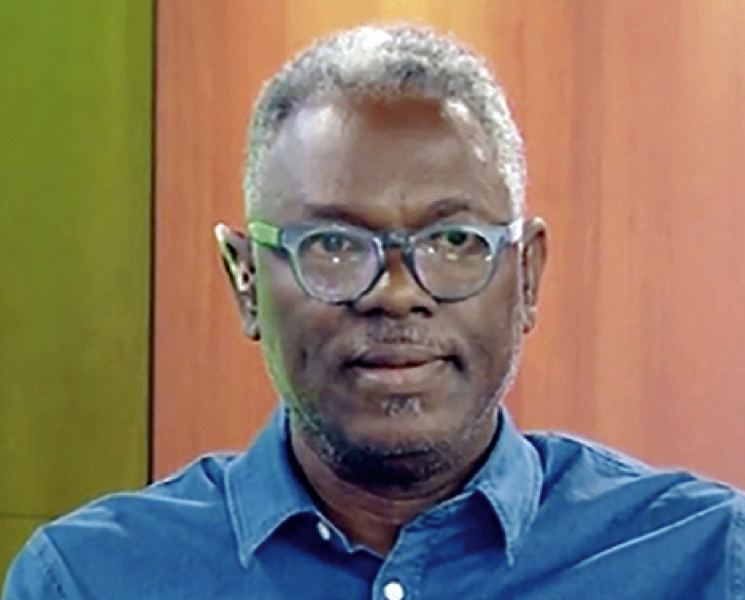
Akin Osuntokun, former Political Adviser to former President Olusegun Obasanjo has lamented that Nigerians are too focused on who becomes president while abandoning issues of constitutional reform.
He asserted that the central government has become too powerful, forcing many to covet or be passionately fixated on who occupies the nation’s highest and most powerful office.
“The centre has become too powerful due largely to years of military rule and centralized governance. There is this obsession to get there because it operates under the spirit of winner takes all and disbursement of patronage. Nigeria is a product of its history; the trend started in 1966 and has remained more or less till date.
He insisted that; with the level of fundamental dysfunction in the country, the emphasis should be on constitutional reforms and not who becomes the president next year.
He spoke more in this interview with Sunday Sun,
You have been relatively silent politically in recent times. Why?
I am disillusioned about the state of the country. I do not think we are getting our priorities right. Nigerians are overly focused on who becomes president, whereas the real issue is constitutional reform. The presidency has become the most destabilising factor in Nigerian politics because it operates as a winner-takes-all system. My priority therefore is not who wins the next election but how we can reform the constitution. If Nigerians cannot even agree on simple principles like power rotation between North and South, then it reflects poorly on the country. The obsession with the centre illustrates why Nigeria needs decentralisation and constitutional restructuring. In the first republic, leaders like Ahmadu Bello preferred remaining regional leaders rather than concentrating all power at the centre. Today, however, the centre has become too powerful due largely to years of military rule and centralised governance. There is this obsession to get there because it operates under the spirit of winner takes all and disbursement of patronage. Nigeria is a product of its history which the trend started in 1966 and has remained more or less till date. For those who do not want Nigeria to change for the better, when the game is played, they are the ones who will tell that the problem of Nigeria is about who becomes the president and not the constitution. So the focus is obsessively on the centre.
Why do you believe constitutional reform is more important than electing a new president?
Whoever becomes president under the current structure will likely disappoint Nigerians because the system itself is flawed. Even if someone like Peter Obi who seems to be the closest and best opposition becomes president, he would still have to work with a compromised political structure, including the National Assembly and entrenched patronage networks.
The president is immediately pressured by political interests, regional demands, and patronage expectations. The system compromises leaders from day one. If Obi becomes president, he has to work with the National Assembly and the judiciary. The National Assembly that we have today will be replicated and they will be a cog in the wheel of whatever Obi wants to do. He will encounter a lot of frustration. He will encounter some of the things about Nigeria that maybe he did not realise before. Assuming he gets to the presidency, some people will prove to him that he was elected by their proxy; and therefore make unnecessary demands and positions. So effectively, from day one, the fellow is compromised. I do not know who can envision Obi with the kind of tax, patronage, tons of money which the National Assembly arrogates to themselves.
Nigeria is bogged down by patronage politics and excessive concentration of power. That is why I insist that the focus in 2027 should be constitutional reforms and not personality.
How would you assess President Bola Ahmed Tinubu’s performance so far?
I align with the position of World Trade Organization (WTO) Director-General Ngozi Okonjo-Iweala, who said that an economy must first be stabilised before it could be grown. The policies introduced by Tinubu, such as subsidy removal and exchange-rate reforms, were painful but inevitable.
However, government communication has been poor. Nigerians are suffering and leaders must demonstrate empathy and sacrifice. It is difficult to ask citizens to tighten their belts while political elites continue living extravagantly. Leadership by example is critical, not leaders living ostentatious lifestyle while the citizens face hardship alone. If leaders share in the sacrifice, citizens will be willing to endure the hardship.
Again, politically, people have challenged him on developmental strides like power, good road network, health, education etc. Well, I can tell that all political players make promises during their electioneering campaign; and when they get there, the reality becomes different from what they will see. I recall former American President Obama, when he said the red line would be if Syria president uses chemical and biological poison to fight America. Well, Bashar, the Syrian president dared him, crossed the line and nothing happened. Obama did not do anything about it. One may mean the best, but situation might be something else.
Other News
Almost all politicians and leaders promise heaven and earth, but when they get there, they might be limited by resources especially in a country with a systemic crisis. Every aspect of the economy and society requires emergency attention. So at the end of the day, one is not able to keep to promises because the reality stares him eye-ball to eye ball.
Do you think Nigeria’s current challenges stem from systemic issues?
Absolutely, Nigeria faces a systemic crisis because every sector requires emergency attention. The major solution remains decentralisation of power and constitutional restructuring.
State police, for example, has become necessary. The original independence constitution prioritised regional autonomy for a reason. Unfortunately, military interventions dismantled that structure and centralised power excessively. Nigeria today is suffering from the consequences of abandoning true federalism.
Some people have said that certain contestants, especially in the opposition parties, should have buried their persistent presidential ambitions and allowed younger players to run. What is your view on this?
The question Nigerians should ask is; what exactly drives these ambitions? Is it competence, regional politics, or ethnic expectations? Unfortunately, Nigerian politics often rewards ethnic loyalty and financial strength rather than competence. That is why we frequently end up with sub-par leadership. Those factors that become the outcome of elections in Nigeria are not likely to produce the ideal leader that the country wants. That was what led Peter Obi to abandon ADC for NDC.
Do you think Peter Obi made the right political decision by moving to the NDC?
Yes. If Peter Obi wants to realistically pursue the presidency and secure a party ticket, it is a practical move. In parties like ADC, ticket allocation is heavily influenced by money and political structures. Politics in Nigeria is still dominated by financial power and patronage, making it difficult for competent leaders without deep pockets to emerge. Until the desperation for the centre rubs off on the citizenry, we will keep sharing the same anxiety because we want our kinsmen to be there whether they are doing well or not. With the kind of outrageous money politician spends presently, the parliamentary system of government is qualitatively different and puts Nigeria better than what we have now.
Do you believe that the president is strangulating opposition political parties as being alleged in different political quarters?
The issue again comes back to the constitution. The enormous powers vested in the presidency make abuse almost inevitable. The president controls resources, patronage, and major institutions. How can a president strangulate some other national levels of political parties and command dictatorship? That is why I keep saying constitutional reform is what the country needs. Whatever the president is doing is enabled by the constitution to do so. This level of concentration of power is unhealthy in a federation. Nigeria’s federal structure has been distorted by excessive centralization. Until powers are redistributed properly among federal and sub-national governments, these problems will continue.
Are you confident that INEC chairman can conduct a free and fair election in 2027?
I cannot confidently say that about any INEC chairman. The president appoints the INEC chairman and controls the institution’s funding through the executive and National Assembly. That arrangement compromises true independence. Presidential elections in Nigeria are extremely high-stakes because of the enormous powers attached to the office. As long as the presidency remains so powerful, political actors will continue trying to manipulate institutions, including INEC and the judiciary. There is no basis that I will have confidence in them. But unfortunately, that is the situation. The budget that INEC will spend will be determined by the president and the National Assembly. Therefore, one can draw conclusion on how independent and autonomous the owner of that office will be with that kind of fiscal arrangement.
A good number of Nigerians believe Tinubu’s government has failed in the areas of economy and security. Do you agree?
Nigeria’s problems are systemic and predate Tinubu’s administration. One must assess the situation objectively.
The government has at least stabilised certain economic fundamentals through subsidy removal and exchange-rate reforms. These measures have increased government revenues and reduced leakages. However, the painful impact on ordinary Nigerians is undeniable. The minimum wage is grossly inadequate under current economic realities. What is missing is empathy and visible sacrifice from leaders. Nigerians can endure hardship if they see that leaders are equally making sacrifices. I recall a scene when former Ghanaian president, Jerry Rawlings was seen shirtless driving a tractor, so, how will Ghanaians see their president shirtless driving a tractor and complain? That is why Nigerians are complaining. If you are asking them to make sacrifices, you should lead by example. That is the only way it will work. When the leaders are not reflecting on what they want Nigerians to do, they will complain.