Follow Us on Google
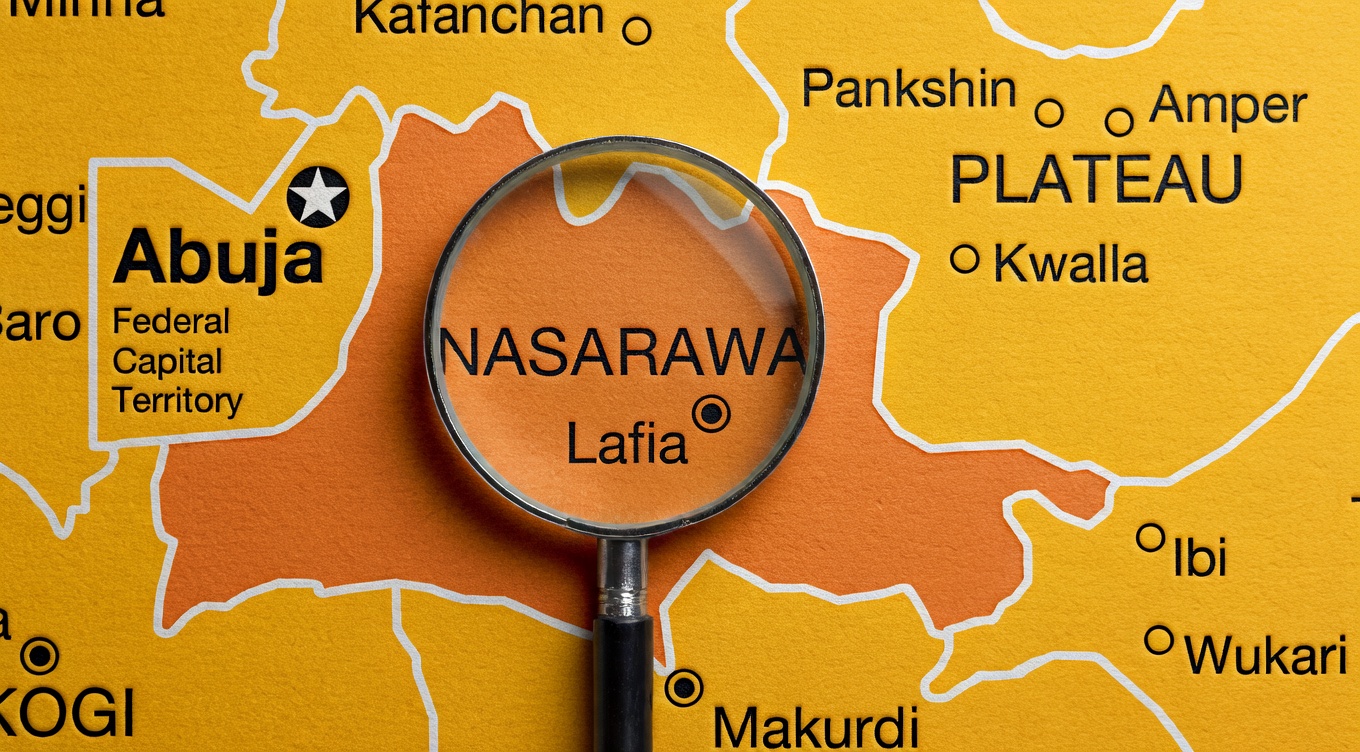
The release of the 2027 governorship candidates by the Independent National Electoral Commission (INEC) was expected to provide clarity on the political contest in Nasarawa State.
Instead, it has opened a new chapter in the race.
At the centre of the emerging uncertainty is the Social Democratic Party (SDP), where INEC has listed Musa Adamu Angbazo as the party’s governorship candidate, while the political camp of former Inspector-General of Police, Mohammed Abubakar Adamu, insists that the retired police chief has joined the SDP and remains in the race.
The development has raised a question that political observers, party members and stakeholders are now asking: Who is really running for governor of Nasarawa State under the SDP?
For now, INEC’s answer is Angbazo.
But Adamu’s political camp says otherwise.
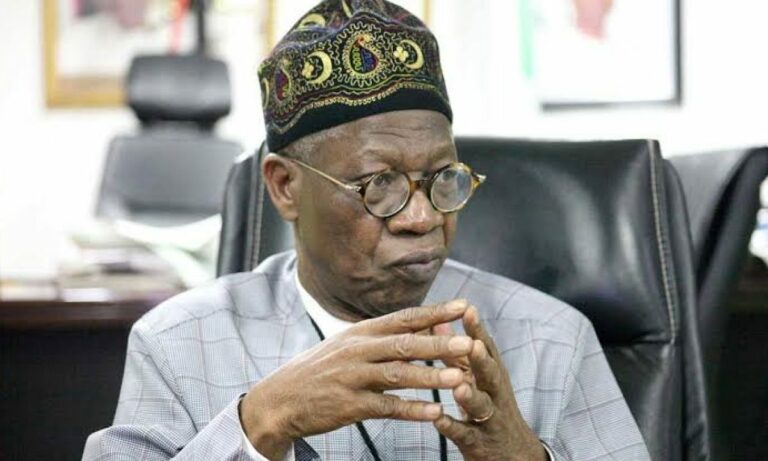
His Campaign Director-General, Abdullahi Yammani, in an interview with journalists recently, said that the former IGP had officially registered with the SDP after resigning from the All Progressives Congress (APC), where he contested the governorship primary and lost to Senator Ahmed Aliyu Wadada.
“The Ex-IGP, Mohammed Abubakar Adamu, has officially registered with the Social Democratic Party (SDP) online. He is fully in the race and ready to contest the governorship of Nasarawa State,” Yammani said.
That declaration has now come up against the official candidate list published by INEC. The commission’s list names Angbazo as the SDP candidate and does not include Adamu.
The contradiction may appear simple, but political analysts say it could have significant consequences for the emerging 2027 contest because the issue is no longer simply about a politician changing parties.
It is now about nomination, recognition, substitution and the law governing who can appear on the ballot.
INEC published the particulars of candidates nominated by political parties for the 2027 governorship and State Houses of Assembly elections in accordance with the Electoral Act 2026.
In Nasarawa, the commission listed APC’s Alyu Wadada, PDP’s David Emmanuel Ombugadu, SDP’s Musa Adamu Angbazo, APP’s Dahiru Musa Doma, Labour Party’s Jonathan Gaza Gbefwi, ADC’s retired Major General Nuhu Angbazo and candidates of several other parties. But Adamu’s name was missing.
For political observers, the omission was significant because the former IGP had, in recent weeks, become a prominent figure in discussions surrounding the opposition realignment in the state.
His decision to leave the APC followed his unsuccessful attempt to secure its governorship ticket. Wadada eventually emerged as the APC candidate after defeating the former police chief and other aspirants.
Adamu subsequently moved away from the ruling party, fuelling speculation that he could seek another platform for his governorship ambition. His reported movement to the SDP therefore attracted considerable attention.
But the INEC list has introduced a new complication.
If Adamu is the SDP governorship candidate, how did Angbazo’s name get to INEC? And if Angbazo is the legitimate candidate, what is the political status of Adamu’s reported SDP registration?
These are the questions now driving the conversation. Not just a political rumour.
Political analysts following the Nasarawa contest say the development should not be dismissed as another pre-election rumour.
There is now an official document, the INEC candidate list, against a public claim from Adamu’s campaign organisation. That makes the issue susceptible to documentary verification.
The critical evidence, analysts say, lies in the SDP’s nomination records.
What primary produced the candidate?
Who participated? What was the result?
When did Adamu join the SDP? Did he participate in the party’s governorship nomination process? What name did the SDP national leadership submit to INEC?
And was there any subsequent communication to the commission concerning a change?
Until those questions are answered, political observers say it would be premature to conclude that Adamu is set to replace Angbazo.
One thing, however, is clear: joining the SDP and becoming its governorship candidate are not necessarily the same thing.
The legal dimension makes the matter even more interesting. Section 33 of the Electoral Act 2026 provides that a political party shall not be allowed to change or substitute a candidate whose name has already been submitted to INEC under Section 29, except in the case of death or withdrawal by the candidate.
Where death or withdrawal occurs, the law provides for another primary to produce a replacement.
That provision is important to the Nasarawa SDP controversy. It means a party cannot simply submit one candidate to INEC and later replace that person because another politician has become more politically attractive or has joined the party. There must be a legal basis for the substitution.
Consequently, if there is a plan to replace Angbazo with Adamu, the critical question is not whether SDP wants Adamu. The question is: Does the law permit the change, and has the condition required by the law occurred?
If Angbazo voluntarily withdraws, the situation would be different. But if he does not, any attempt to replace him could raise a much more complicated legal question. That is why political observers believe the SDP’s next move will be watched closely.
The political feelers across the political camps suggest the development is already generating different interpretations.
Some observers see Adamu’s movement to the SDP as an attempt to maintain his governorship ambition after losing the APC primary.
Others see it as part of a wider realignment in Nasarawa, where politicians who could not secure tickets on the platforms of the major parties may seek alternative platforms.
There is also another school of thought that the controversy could eventually produce negotiations within the SDP aimed at presenting a candidate capable of giving the party a stronger presence in the governorship contest.
But analysts caution that political strength alone cannot resolve the matter.
A candidate must first satisfy the requirements of the electoral law. That is why, according to observers, the SDP now faces two separate questions.
The first is political: who does the party want to carry its flag?
The second is legal: who has validly emerged as the candidate under the Electoral Act? The two answers may be the same. At the moment, however, they do not appear to be.
The former IGP’s movement has added an interesting dimension to the 2027 election. Adamu was not an outsider in the APC primary. He contested against Wadada and other aspirants and built a political structure around his ambition.
His decision to leave the party after losing the ticket therefore means his political influence cannot simply be assumed to have disappeared with his departure.
The question is whether the political network developed during the APC contest can be transferred to another platform. That is where the SDP becomes important.
If Adamu eventually secures the SDP ticket and is able to mobilise the support base he built during the APC primary, political analysts believe the development could alter the calculations of the major parties.
Other News
If he does not secure the ticket, however, another question will arise: What happens to the political structure he has built?
Will it remain with him? Will it support Angbazo? Will it negotiate with another political camp? Or will it become fragmented? For now, those remain open questions.
Why Wadada and Ombugadu will be watching
The uncertainty surrounding the SDP ticket also has implications beyond the party.
The two major candidates currently occupying the centre of the Nasarawa contest are Wadada of the APC and Ombugadu of the PDP.
Wadada emerged from the APC primary with the party’s ticket after defeating Adamu and other aspirants.
Ombugadu, meanwhile, is returning as the PDP candidate after the fiercely contested 2023 election.
The emergence of a strong SDP candidate could affect the calculations of both camps.
Political analysts say the impact will depend largely on who eventually carries the SDP flag. A candidate with a strong political structure could attract voters who are dissatisfied with the two dominant parties.
On the other hand, a weaker SDP candidate could leave the election largely centred around the APC and PDP.
That is why the Angbazo-Adamu question has attracted attention beyond the SDP.
The 2023 shadow
The importance of every political movement in Nasarawa cannot be separated from the experience of the 2023 governorship election.
That election demonstrated just how competitive the state can become.
Ombugadu was initially declared winner by the governorship election tribunal before the Court of Appeal overturned the decision, with the Supreme Court subsequently affirming Governor Abdullahi Sule’s victory.
The legal battle that followed made the political temperature in Nasarawa unusually high.
As the state approaches another governorship election, none of the major parties wants to underestimate the effect of vote splitting, alliances or third-party candidates.
That explains why the identity of the SDP candidate has become a matter of political interest.
Could the courts have the final say? The possibility cannot be ruled out.
Nigeria’s electoral history contains several instances where disputes over party primaries and nominations eventually ended up in court.
The Electoral Act 2026 provides legal mechanisms for challenging aspects of party nomination processes, while INEC has previously amended candidate lists following court orders.
The courts could therefore become relevant if there is a formal dispute over the SDP nomination.
But political analysts warn against assuming that litigation is inevitable.
The matter could still be resolved within the party if the relevant stakeholders reach an agreement that complies with the law.
The decisive issue will ultimately be the documentary trail. Who was nominated?
Who was submitted to INEC? When was the submission made? What happened between the party’s nomination process and the publication of the INEC list?
Those questions could determine the next stage of the controversy.
INEC’s list may not be the final political word
There is also a need to distinguish between the current INEC list and the final ballot. The publication is the commission’s official position based on the candidates submitted by political parties.
But the Electoral Act contains provisions governing withdrawal, substitution and the correction of candidate information.
That means the publication should not be interpreted as a licence for parties to freely change candidates.
At the same time, it should not be assumed that every name currently published is beyond legal challenge.
The law, not political speculation, will ultimately determine whether any change can lawfully take place.
The bigger battle
What is unfolding in the SDP may be an early indication of how complicated the 2027 Nasarawa governorship election could become.
The contest already has established candidates and political structures.
But beneath the surface, alliances are shifting, politicians are changing platforms, and parties are attempting to position themselves for the battle ahead.
The SDP controversy has now brought one of those realignments into the open.
For now, the official position is straightforward.INEC says Musa Adamu Angbazo is the SDP governorship candidate.
But Adamu’s campaign organisation insists that the former IGP has joined the SDP and remains “fully in the race.”
Between those two positions lies a political and legal question that cannot be settled by rumour.
It will require the SDP to explain its nomination process, the relevant documents to be examined and, if necessary, the law to be applied.
Until then, political observers will continue to watch the space.
Because if Adamu eventually emerges as the SDP candidate, the 2027 race could take a new direction. If Angbazo remains the candidate, Adamu’s political structure will face a different choice.
However, if the disagreement goes to court, the judiciary could ultimately determine which name survives the political battle.
For now, the most important question arising from INEC’s candidate list remains unanswered,
Who is really running for governor in Nasarawa? INEC has given one answer.
The political developments surrounding the SDP suggest that the story may not yet be over.