Follow Us on Google
• Says elections must be referendum on ideas, not personalities
By Faheem Lawal
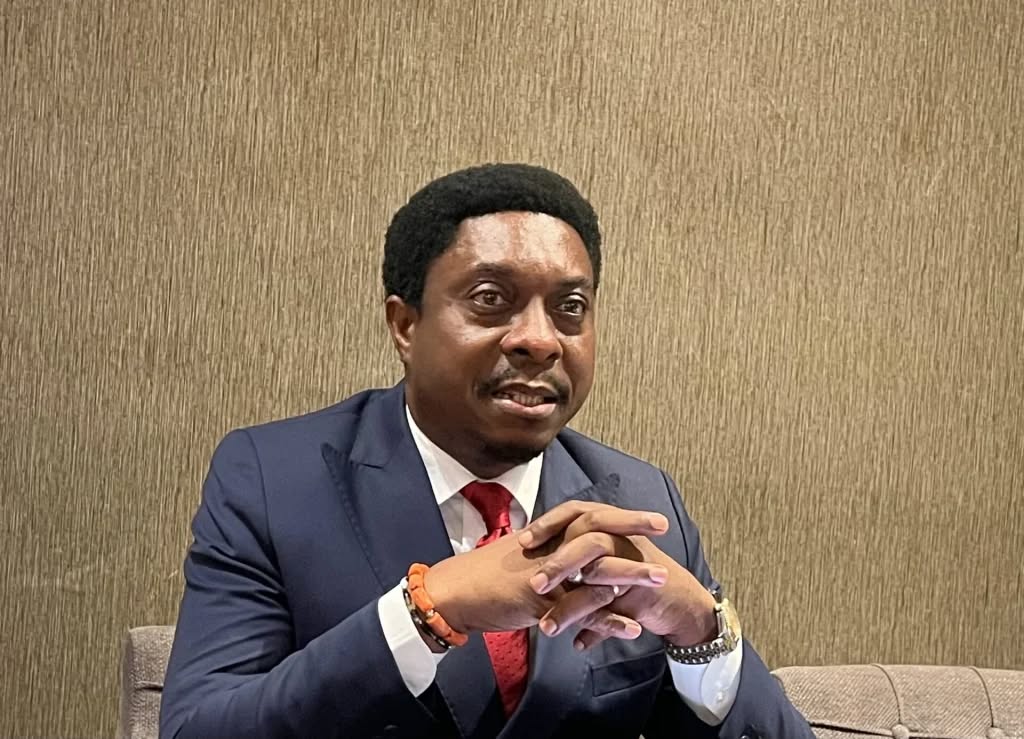
Peoples Democratic Party (PDP) governorship candidate in Abia State, Dr. Kelechi Anosike, has urged journalists to subject candidates and their promises to rigorous scrutiny ahead of the 2027 general elections.
Anosike said government and the media must work as partners—not adversaries—to protect democracy and promote the welfare of citizens, stressing, however, that journalists must not become public relations agents for politicians.
He spoke during the monthly congress of the Nigeria Union of Journalists (NUJ), Abia State Council, at the NUJ Press Centre, Aba Road, Umuahia.
“The media is not a campaign instrument for politicians. I see you more as critical stakeholders and partners in democratic accountability and the welfare of the people,” he said.
“If you remove the people, there is no government. Government exists for the people, and that places an additional responsibility on the media to report to government where the people are hurting.”
Anosike said the 2027 elections should be driven by competing ideas and measurable programmes rather than personalities, propaganda and social media popularity.
“2027 must be a referendum on ideas, not personalities or social media hype. It is about ideas,” he said.
“The media should ask every candidate: What exactly will you do? How much will it cost? Where will the money come from? Who will implement it? What is the timeline? How will citizens measure success?”
He charged journalists to go beyond reporting government activities and examine how policies and projects affect the lives of ordinary citizens.
“Your microphone should be more of a microscope, explaining government policies and how they affect the people, and not a megaphone for politicians,” Anosike said.
“Don’t just report how many roads were commissioned. Ask: Did they reduce transportation costs? Did farmers get to the market? Did people get jobs?”
He maintained that a government committed to the welfare of the people should not fear scrutiny or attempt to silence critical reporting.
“Government and the media are not enemies, even though some governments perceive them as such,” he said.
“A welfarist government empowers the media to ask hard questions, investigate what we do and tell us where our policies are hurting the people.”
Anosike proposed regular engagements between government officials and journalists, including monthly media chats and greater access to public information.
Other News
“The media should not meet government only when there is a crisis. There should be a regular interface,” he said.
“Monthly media chats are good and should be encouraged. Every ministry and agency must grant the media access to critical information. A government that blocks access to information is not a responsible government.”
The PDP candidate also called for greater attention to the safety, training and welfare of serving and retired journalists.
“If I say I’m a welfarist, I cannot exclude journalists. The person who reports the welfare of the people must not be forgotten by government,” he said.
“We will support the media, but we will never buy the media. Your loyalty at all times must be to the truth and the people. The media must be free enough to criticise government and responsible enough to tell the truth about government.”
Anosike announced the donation of a generator and fans to the NUJ Press Centre to address its electricity and ventilation challenges. The items were delivered the following day.
He also promised to complete and equip the abandoned NUJ secretariat with modern information and communication technology facilities within the first 100 days of his administration if elected.
“A modern media industry requires modern working facilities. Government should not merely ask journalists to perform; it should help create the environment in which they can perform professionally,” he said.
On his plans for Abia, Anosike said his administration would introduce “Operation Feed Abia,” a back-to-farm programme designed to boost food production and sufficiency.
He also promised a “No Abia Student Left Behind” policy, which would include equipping health facilities in tertiary institutions and providing graduates with skills training and start-up grants.
Anosike described the PDP as the strongest political party in the state, saying it had undergone changes in personnel, philosophy and direction.
“This is a new PDP, with new mindsets, a welfarist outlook, a new focus and a new direction,” he said.
“Those you say killed Abia in 24 years have left the PDP. They are now in the APC, Labour Party and ADC. Power belongs to the people.”
Abia PDP Chairman and deputy governorship candidate, Elder Amah Abraham, described Anosike as the “new face of the PDP” and a candidate with an unblemished record.
Earlier, the state NUJ Chairman, Chidi Asonye, welcomed Anosike and assured him that journalists would continue to discharge their professional responsibilities in the interest of the people.