Follow Us on Google

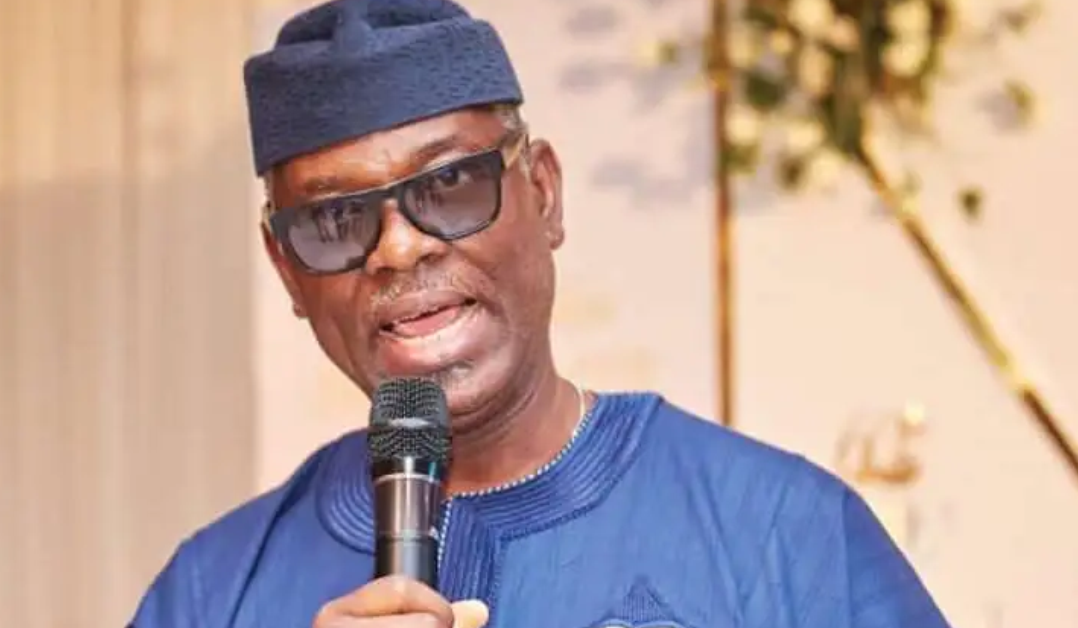
Former presidential adviser Akin Osuntokun has said President Bola Tinubu remains a strong contender in several northern states ahead of the 2027 presidential election, despite widespread concerns over insecurity, economic hardship and his declining popularity.
Osuntokun, Director of Politics at Arise News, made the assessment during an interview on the station on Monday, while analysing regional voting patterns and the prospects of the major contenders in the forthcoming election.
He said the electoral picture suggested that Tinubu could perform better in the North than some critics had predicted, adding that the president’s apparent competitiveness contradicted claims that voters in the region had completely rejected him.
“Looking at all the three candidates, they’re relatively doing well in the North, I can’t see any surprise. The only aspect of it that I’m surprised at is that the president is fairly competitive in the North, at least against the background of the kind of aggressive posturing and saying it won’t get anything there.
“But out of the three candidates, the presidential candidate I think the president is likely to sleep well tonight on the basis of what that map depicts for the president. It doesn’t conform to the kind of totalitarian disavowal of Tinubu that we have been hearing for a long time,” he said.
Osuntokun identified Borno, Kwara and Kogi as states where Tinubu was emerging as a potential winner, while describing the contest in several other northern states as competitive.
“He’s even trending as a winner in Borno State. Borno State, Kwara, and Kogi State, and in almost 9 or 12, or let’s say the 9 other states, it’s competitive,” he said.
He added that Tinubu could also improve his performance in parts of the country where he failed to secure sufficient votes in the 2023 election, particularly Lagos, which he described as electorally significant.
“So, for me, I think he did fairly well. And this time around, he will probably get more votes from certain areas that he didn’t get that kind of sufficient votes in the 2020 election. So, he’s going to do much, much better, you know, in Lagos State this time around, and the votes in Lagos are quite substantial,” Osuntokun said.
He acknowledged that insecurity and economic hardship remained major challenges for the president but argued that the electoral trends under discussion showed Tinubu could still attract considerable support despite those concerns.
“The insecurity and all whatever, hardship and things like that, but that it is there, and yet you are getting this kind of trend there,” he said.
The political analyst also examined the possible effect of Kano State Governor Abba Yusuf’s defection to the All Progressives Congress (APC) on the grassroots support of former Kano governor Rabiu Kwankwaso.
Osuntokun argued that voters’ loyalty to a political movement could carry more weight than the institutional influence of a sitting governor, suggesting that Yusuf’s defection would not automatically translate into a major electoral setback for Kwankwaso.
“Both matters, but in the end, it is the grassroots that I mean, that determines, that’s the higher factor.
“If you have that, the governor cannot muscle the voters go and vote, regardless of whatever institutional power that the governor holds. It’s not comparable. So, it’s not a question of the governor having institutional power, it’s not going to make a dramatic difference in the outcome of election in any state,” he said.
The 2027 presidential contest is expected to feature intense competition among Tinubu and opposition figures, with northern voting patterns likely to play a major role in determining the outcome.