Follow Us on Google

By Godwin Tsa, Abuja
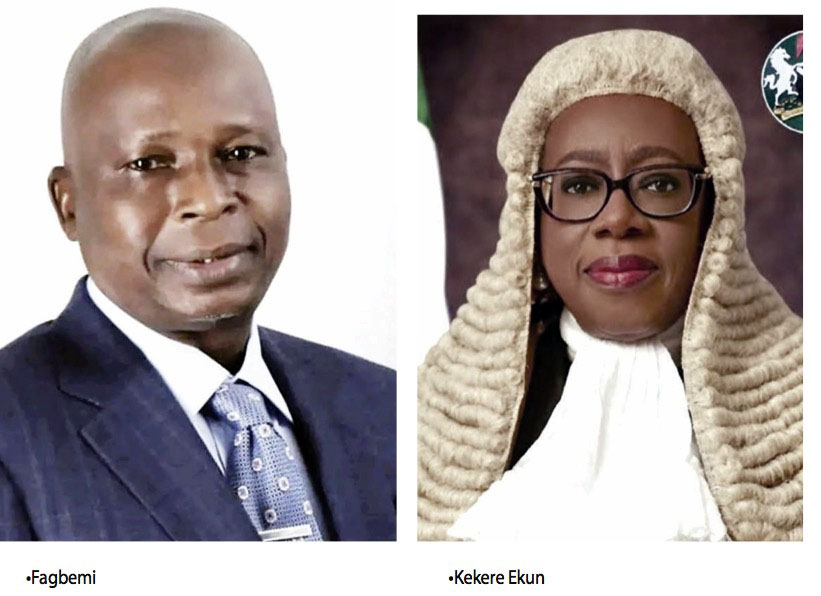
From the Chief Justice to the Attorney-General, the Bar and the Inner Bar, the message at the opening of the legal year was the same: the courts will carry the weight of the 2027 elections, and their credibility is not guaranteed.
The ceremony at the Supreme Court on Monday was meant to be celebratory. The Chief Justice of Nigeria, Kudirat Kekere-Ekun, administered the oath to 67 advocates and one academic, conferring the rank of Senior Advocate of Nigeria on 68 lawyers. Yet the speeches that followed, from the Bench, the Attorney-General of the Federation, the Nigerian Bar Association and the Body of Senior Advocates of Nigeria, read less like congratulation than a collective warning. Another electoral season is close, public confidence in the justice system is under strain, and everyone in the chamber has a part to play.
The warning has a hard calendar behind it. INEC’s revised timetable, issued after the Electoral Act 2026 replaced the 2022 Act, fixed the presidential and National Assembly elections for Saturday, January 16, 2027, with governorship and state assembly elections on February 6. That leaves the courts a short runway.
The litigation has already started. In a judgment on a suit by the Youth Party, Justice Mohammed Umar of the Federal High Court in Abuja set aside portions of INEC’s timetable that imposed timeframes on parties inconsistent with the Electoral Act 2026. He held that INEC lacked the power to end campaigns two days before polling and to publish the final candidate list before the statutory 60-day minimum. INEC has appealed, arguing that the trial judge read the relevant sections of the Act too narrowly.
INEC chairman Joash Amupitan, himself a Senior Advocate, has defended the appeal as a matter of legal certainty. He said some pre-election processes, such as monitoring primaries, uploading results and printing ballot papers, need coordinated scheduling even where the Act sets no explicit timelines. The commission has also warned that conflicting rulings could disrupt preparations unless appellate courts clarify the position quickly.
The Policy and Legal Advocacy Centre’s analysis of the new Act points to the same pressure. It notes that the Act and INEC’s compressed timetable together shorten the time for resolving pre-election disputes, and that primaries held earlier this year were likely to trigger an early wave of cases. For the courts, 2027 begins well before polling day.
Against this backdrop, Justice Kekere-Ekun used her address to set expectations for the Bench, the Bar and the public. To judges, she said that elections “inevitably generate heightened political activity and strong emotions,” and that the judiciary must bring the “same calmness, detachment and fidelity to the law” to electoral disputes as to any other case. Every word and action in an electoral period, she said, will be scrutinised, so judges must avoid political association or conduct “capable of creating an appearance of partiality.”
To lawyers, she was blunter. She named forum shopping, meaning the choice of a court or division perceived as more favourable and the filing of multiple suits seeking substantially similar reliefs, as a threat that can produce conflicting orders and expose the judiciary to “avoidable embarrassment.” Counsel, she said, owe the court full candour about related proceedings and respect for the jurisdiction of other courts. She also worried about capacity, warning that political cases should not crowd out other litigants awaiting trial.
On social media, she condemned the habit of turning professional disagreements into personal attacks, insisting that judges must be able to decide “according to law without fear of personal retaliation.” She did not spare the Inner Bar either. Reminding the new Senior Advocates that disciplinary action against senior lawyers in the past legal year showed distinction does not replace ethical conduct, she said the rank “does not place him beyond accountability.”
Attorney-General and Minister of Justice Lateef Fagbemi focused on the profession’s credibility. He said his office is concerned about rising cases of professional misconduct, especially among senior members of the Bar, and urged the Legal Practitioners Disciplinary Committee to modernise so its processes are rapid and transparent. He argued that when complaints stall for years, the public concludes that the profession is designed to protect its own wrongdoers.
His sharpest line was about the silk itself. The rank of SAN, he said, risks losing its value if it becomes more about money than service, and “The silk gown is not a commercial licence.” He urged senior lawyers to mentor younger colleagues, promote affordable access to justice and help reduce court congestion. The link to 2027 is that if litigants and voters doubt the integrity of those who argue before the courts, they will doubt the outcomes too.
Other News
The new NBA president, Oyinkansola Badejo-Okusanya, SAN, who was inaugurated in August, made accountability her theme. One headline from her address, in TheNigeriaLawyer’s framing, captured it: “We cannot seek scrutiny of the judiciary while reserving exemption for ourselves.”
On the election season specifically, she cautioned lawyers against making unsupported allegations against judges when they are unhappy with rulings, and pledged that the NBA would defend judicial independence against intimidation and improper interference while pursuing substantiated complaints through the proper channels. The balance is deliberate. The NBA wants to protect judges from attack without placing them beyond criticism.
She also turned to lawyers’ own conduct. She cited misleading clients, failing to communicate and mishandling client funds, and told lawyers to avoid unnecessary applications and unsubstantiated objections that add to congestion. Her message to government was just as direct. She urged public officers to obey court orders whether or not the decisions favour them. In an election year, when governments and parties are often litigants, that may prove the harder test.
She closed with a wish for the Court. She hoped for an election season in which fidelity to the law strengthens public confidence in the judiciary, and said expectations of the Supreme Court in particular are high.
Speaking for the Body of Senior Advocates, Wole Olanipekun, SAN, a former NBA president, took a different angle. He raised concerns about procedural obstacles facing lawyers who want to appeal disciplinary decisions, asked the Supreme Court and the Court of Appeal to resolve uncertainty over applications for leave to appeal, and urged the Attorney-General to consider amending the Legal Practitioners Act to close gaps in the appeal process.
His point on fairness applies beyond disciplinary hearings. He also called for greater consistency in judicial decisions and improvements to the Supreme Court’s electronic filing system, and urged judges to weigh the human consequences of their decisions while upholding precedent. Consistency is the quality that election litigation tests most. When different courts reach different results on the same facts, voters and parties read it as bias, whatever the cause.
His message to the new silks was about temperament. He told them to stay humble and sober and to avoid arrogance and attacks on the judiciary when judgments go against them.
The Supreme Court argues that it is preparing. The Nigerian Case Management System and the mandatory electronic upload of processes began on July 1, 2026, in phases, starting with pending appeals listed for hearing between September and December. The system now covers the High Courts of Borno, Bayelsa, Delta, Niger, Taraba and Ebonyi and the Federal High Court in Lagos. The Court of Appeal is expected to go live next month, a step the CJN called key to seamless electronic transmission of appeals up to the Supreme Court. An Election Petition Proceedings Centre with its own Litigation Registry has also been set up.
The statistics show how much work the Court carries. In 2025/2026 it handled 2,456 matters, up from 2,280, and delivered 411 judgments against 369 a year earlier. Of the 676 appeals, 19 were political. The Court also scheduled 1,385 matters for regular sittings, brought 733 older cases forward, disposed of 178 moribund matters in chambers and removed 125 concluded cases from the active docket. It assigned 141 matters to special panels covering Sharia, EFCC, AMCON, revenue and disciplinary proceedings.
The CJN added a point that is often left out of discussions of judicial independence: money. She called for the timely release of funds appropriated to the judiciary, warning that delays disrupt projects, procurement and essential services. A court cannot run an election petition centre or a digital registry on promises.
Taken together, the speeches set out an unwritten compact. The Bench is asked to avoid even the appearance of partiality. The Bar is asked to drop forum shopping and abusive applications, and to be honest about parallel suits. Senior lawyers are asked to accept discipline, the Attorney-General to make that discipline faster, and public officers to obey orders that go against them. The public is asked to take its anger to the proper channels.
Whether the compact holds will show once candidate lists are published and petitions arrive. The disputes over INEC’s timetable are an early indicator, and they will probably not be the last. The standard the CJN set is plain: the courts must be open and fair to every litigant, not just the powerful, while handling the most politically charged cases in the country.