Follow Us on Google
From Uchenna Inya, Abakaliki
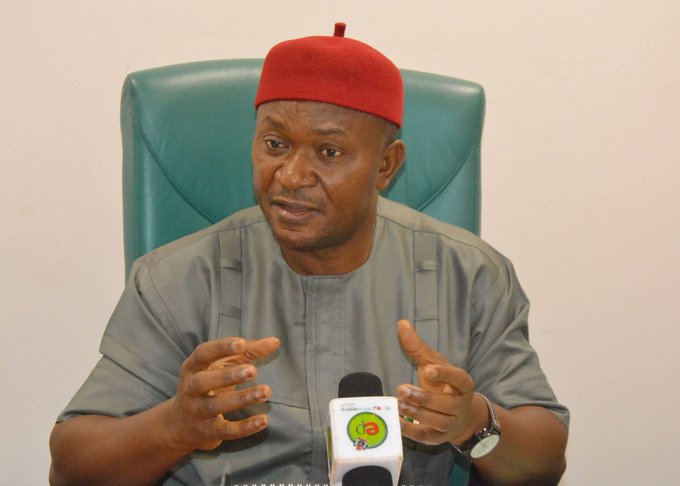
Former House of Representatives member, Chief Linus Okorie, has urged leaders and stakeholders of South East geopolitical zone to adopt a clear, strategic and time-bound approach in pursuit of the Nigerian presidency.
He warned that sentiment and moral arguments alone cannot deliver political power to the zone.
In a statement in Abakaliki, Ebonyi State, Okorie who represented Ohaozara, Onicha and Ivo federal constituency for eight years, argued that the longstanding debate about whether the South East deserves presidency has been conclusively settled and no longer requires further validation.
According to him, the more urgent national and regional conversation must now focus on identifying the most realistic pathway to actualising that aspiration and the time frame within which it can be achieved.
He explained that a sober examination of Nigeria’s political history shows that power transitions are rarely driven by emotion or equity alone, but by strategy, structure, timing, and political arithmetic. Every region that has successfully produced a president, he noted, understood this reality early enough and aligned its actions accordingly.
Okorie, public affairs analyst, observed that when the prevailing pathway under the All Progressives Congress (APC) is examined objectively and mapped along a clear timeline, it presents significant challenges for the South East.
He stated that under current expectations, President Bola Tinubu is projected to complete a second term between 2027 and 2031, after which power would rotate back to the North for two terms from 2031 to 2039. The presidency would then return to the South in 2039, with both the Southeast and the South South emerging as contenders.
According to him, a realistic assessment of prevailing political factors within the APC, including incumbent alignment, financial capacity, strategic economic and security value and recent political realignments, currently places the South South at a structural advantage.
He noted that the South South’s oil-based resources, national strategic relevance, and recent consolidation around the incumbent power structure significantly strengthen its position in any future contest.
He further cautioned that history has shown that appeals to equity, though morally persuasive, have rarely been decisive in Nigeria’s actual power transitions. As an example, he pointed to the extended period during which the Southwest has held either the presidency or vice presidency since 1999, demonstrating that political advantage often outweighs moral symmetry.
Okorie explained that if the APC were to nominate a South South presidential candidate in 2039, the Southeast presidency would likely be deferred once again, potentially until 2055.
From 2027, he noted, this represents a waiting period of up to 28 years. He emphasised that this observation should not be interpreted as an indictment of the APC or a dismissal of its supporters in the South East but rather as a recognition of political realities when timelines and probabilities are carefully examined.
In contrast, Okorie described the emerging pathway under the African Democratic Congress (ADC) as presenting a markedly different strategic equation. He said that within the ADC coalition, the Southeast is not a peripheral consideration but a central pillar, with multiple scenarios that significantly compress the waiting time for the region.
He outlined that under the ADC, the South East could produce a presidential candidate as early as 2027, resulting in immediate actualisation. Alternatively, a one-term North–Southeast arrangement between 2027 and 2031 could yield a four-year waiting period, while a two-term arrangement extending to 2035 would result in an eight-year wait. In all cases, he stressed, the timelines are shorter, clearer, and more predictable than those implied under the APC pathway.
Okorie who was Labour Party (LP) senatorial candidate for Ebonyi South zone in 2023 general election, noted that when these options are placed side by side, the contrast becomes unmistakable, with the APC pathway implying a wait of between 12 and 28 years, while the ADC pathway compresses the timeline to between zero and eight years.
He described this difference as the essence of strategic politics, where time, certainty, and risk are weighed alongside aspiration.
He called for strategic maturity across the South East, stressing that the moment demands the fusion of principle with pragmatism.
He urged stakeholders to move beyond reactive politics and embrace deliberate, data-informed decision-making that asks not only what is just, but what is achievable and within what time frame.
“The presidency of Nigeria is not awarded for patience alone. It is secured through clarity of purpose, unity of direction, and strategic timing. History will not judge us by the passion of our complaints, but by the wisdom of our choices.”