Follow Us on Google

By Fred Itua, Romanus Ugwu, Adesuwa Tsan and Ndubuisi Orji, Abuja
The publication of a preliminary voters’ register on the website of the Independent National Electoral Commission (INEC) has opened one of the most important debates of the run up to the 2027 general elections. The controversy concerns photographs attached to voter records that observers suspect were generated by Artificial Intelligence (AI). It has since widened to include questions of legal compliance, institutional transparency, political accountability and the capacity of Nigeria’s electoral system to withstand emerging digital threats.
The reactions of political parties and a former national commissioner of the commission reveal a notable feature of the episode. Although the parties occupy different positions in the political landscape, they converge on the proposition that the integrity of the register is the foundation of electoral credibility. They diverge, however, on the interpretation of the evidence, the remedies required and the degree of confidence that the commission should be accorded.
The factual background
The controversy emerged after INEC published its preliminary register of voters online on 26 October 2026. According to reports, the publication followed criticism that the commission had failed to make the document available on its website within the period prescribed by law. Screenshots circulated on social media showed questionable photographs attached to voter records in Ward 11, Uzairue South East, in Etsako West Local Government Area of Edo State. The entries included records associated with polling units such as Iyoku Utukwe Afashio Booth and Ikabigbo Primary School.
Nigerians across media platforms, also reported other anomalies, including alleged duplicate identities and missing names. Such accounts do not independently establish electoral fraud, but they have sharpened questions about the verification procedures that precede the entry of a record into the register.
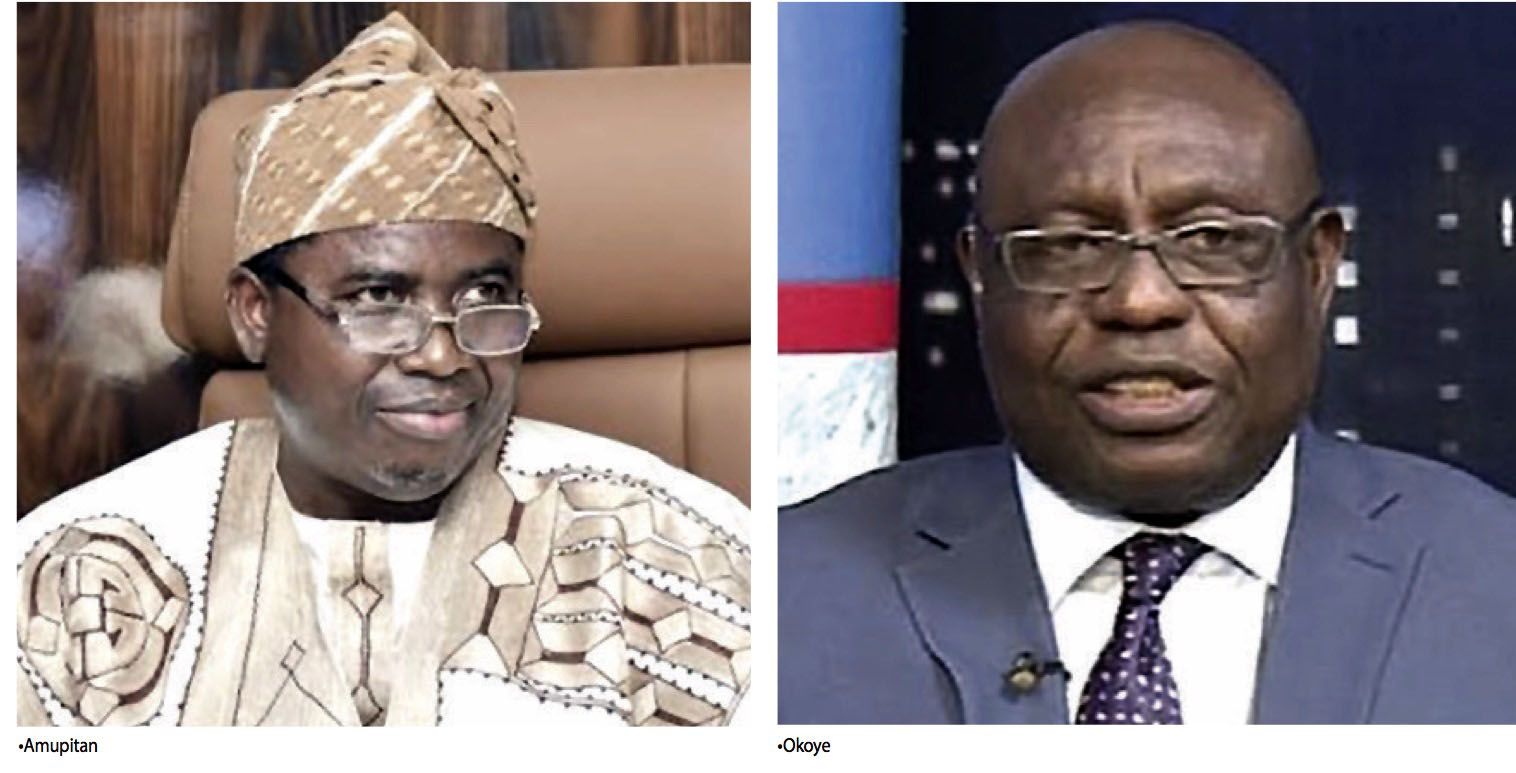
The scale of the database provides context. Senator Henry Seriake Dickson, the National Leader of the Nigerian Democratic Congress (NDC), referred to approximately 103 million registered voters announced by the commission. The former national commissioner, Festus Okoye, noted that the total number of registrations in the current Continuous Voter Registration (CVR) exercise stood at 10,772,421.
The commission’s account
INEC responded through a statement issued by the Chairman of its Information and Voter Education Committee, Malam Mohammed Kudu Haruna. The commission said it had noted public concerns and reports of suspected AI generated photographs in the preliminary register. It stated that the register published online on 26 October was the same document physically displayed at Registration Areas nationwide from 9 to 15 October 2026 as part of the Display, Claims and Objections exercise.
The commission further explained that a number of questionable records had been identified and flagged during the physical display, and that it had begun reviewing them and taking corrective action. It added that the online publication represents the original preliminary register and does not reflect all ongoing data cleaning activities. It emphasised that the preliminary register is not the final certified register, and that the claims and objections exercise exists precisely to enable public scrutiny and correction before certification.
The commission committed to completing verification, adjudication and data cleaning before the scheduled certification of the final register on 15 December 2026. It also said it was examining the circumstances surrounding the suspicious photographs, including possible technical or procedural lapses.
The commission therefore presents the controversy as an expected feature of a process designed to detect errors, rather than as evidence of failure. The persuasiveness of this position depends on whether stakeholders accept that the procedure functions as intended, and on whether the findings, when they emerge, are made public in sufficient detail.
The limits of the preliminary register defence
The principal challenge to the commission’s account came from the African Democratic Congress (ADC). Its Director of Strategic Communication, Phrank Shaibu, argued that the commission could not shelter behind the phrase preliminary register while Nigerians were viewing voter records containing photographs that the commission itself had flagged for investigation. He characterised a preliminary register as not constituting a licence for carelessness, and demanded disclosure of how the images entered the system, how many records were affected, whether any related Permanent Voter Cards (PVCs) had been issued and who bore accountability.
The exchange turns on two senses of the word preliminary. In the commission’s usage, it describes a stage in which errors are expected and corrected. In the critics’ usage, it cannot excuse anomalies that suggest weaknesses in the upstream process of enrolment.
The ADC’s demand for information on PVCs introduces a further dimension. A photograph in a register is a data entry, but a PVC is a physical instrument of voting entitlement. If records containing doubtful photographs were linked to issued cards, the matter would extend beyond data quality to the integrity of accreditation. The commission’s statement does not address this link, and the question remains open in the public record.
The legal and procedural dimension
The most legally specific critique was advanced by Okoye. He argued that the commission missed the deadline under Sections 19 and 9(6) of the Electoral Act, 2026, for online display and publication of the register for claims and objections. In his reading, displaying the register online is a statutory obligation, and not an optional or discretionary exercise. He maintained that the delay created the impression that the commission was withholding the register from Nigerians unable to visit registration centres physically.

His analysis proceeds from a principle of regulatory legitimacy. He stated that a regulatory body is expected to uphold the law and enforce it impartially, and that a regulator that disregards the law risks undermining its own credibility and its authority to enforce compliance by those it regulates. The argument connects a procedural lapse to a wider institutional consequence: the commission enforces rules on parties, candidates and voters, and the persuasiveness of that enforcement depends in part on its own observance of the rules.
Okoye also linked the timing of the publication to public perception. According to him, Nigerians would have been more inclined to give the commission the benefit of the doubt had the register been displayed within the stipulated period. Instead, it was displayed belatedly, following public pressure, which in his assessment fuelled the perception that the commission had something to hide, and caused the subsequent discovery of AI generated images to heighten distrust.
Dickson drew attention to a complementary aspect of the legal framework. He noted that the law requires the display of the register in designated locations, and urged Nigerians to scrutinise entries and report suspicious information through appropriate channels. He observed that residents of particular communities and polling units are often familiar with the genuine voters in their areas, so that community vigilance can contribute to the identification of suspicious entries. The point reflects the architecture of the claims and objections process, which depends on distributed public participation, and which functions effectively only when the register is accessible.
The question of provenance
The central empirical question in the controversy is how the photographs came to be in the register. The All Progressives Congress (APC) National Chairman, Nentawe Yilwatda, framed the issue through a set of questions. Who introduced the questionable photographs? How did they enter the registration database? Were there deliberate attempts to compromise the system, or were the irregularities caused by technical or procedural failures? He stated that an independent and transparent investigation must answer them.
The formulation identifies three analytically distinct explanations. The first is deliberate compromise, in which individuals intentionally introduced fabricated images. The second is procedural failure, in which enrolment practices permitted inadequate images to be accepted. The third is technical failure, in which software or data handling produced or retained anomalous images.
Other News
The commission’s statement, which refers to possible technical or procedural lapses, addresses the second and third explanations. Okoye addressed the first.
According to Okoye, fictitious and dubious registrations are not new to the commission, and during every registration exercise some individuals enlist Registration Officers to compromise the register. He blamed political actors sponsoring such officers, and urged the commission to identify the officers involved and refer them to law enforcement agencies for investigation and possible prosecution. He added that their sponsors and benefactors must also be identified and, where evidence is sufficient, prosecuted.
The three hypotheses carry different institutional implications. A deliberate scheme implicates individual conduct and invites criminal process. A procedural failure implicates the design of enrolment protocols and the training and supervision of officers. A technical failure implicates information systems and cybersecurity. Until the investigation reports, the available evidence does not distinguish among them, which is why the stakeholders’ demands focus on the process of inquiry rather than on its presumed outcome.
Artificial intelligence as an electoral risk
The controversy has also served as an occasion to examine the wider threat that AI poses to elections. Shaibu stated that AI can be weaponised to manufacture identities, manipulate voter records and flood the election with disinformation. He added that the suspicious photographs did not by themselves prove an attempt to rig the 2027 election, but constituted a grave warning.
Yilwatda offered a more extensive catalogue. He observed that AI presents a real and growing risk to electoral integrity when malicious actors use it to create fake photographs, fabricate videos, clone voices, impersonate public officials or circulate false election information. He added that AI could be used to spread fabricated statements attributed to candidates, announce fictitious election results, mislead voters about polling arrangements or produce content intended to provoke public anger. He also stressed that AI is not inherently a threat, since the same technology can support the detection of manipulated content, identify suspicious registration patterns and strengthen information management when deployed responsibly.
Okoye identified a further operational risk. He stated that the commission must demonstrate its ability to reassure Nigerians that unscrupulous individuals cannot use artificially generated images to circumvent the Bimodal Voter Accreditation System (BVAS) during voter accreditation. He stated that anti democratic forces may seek to exploit AI, and called on the commission, political stakeholders, civil society organisations and citizens to remain vigilant.
The Peoples Democratic Party (PDP), through its National Publicity Secretary, Jungudo Mohammed, advanced a similar proposition. He remarked that in the era of AI there is nothing that cannot be done, and that the commission must deploy counter technology to safeguard the electoral process and the data it has collected. Dickson employed the principle of garbage in, garbage out to describe the relationship between data quality and electoral credibility: if the underlying data are unreliable, the credibility of the process may be undermined.
These contributions identify at least three distinct domains of risk. The first is the integrity of the register, which concerns who is entitled to vote. The second is the integrity of accreditation, which concerns whether a person presenting at a polling unit is the person recorded. The third is the integrity of information, which concerns the circulation of fabricated content about candidates, results and procedures. The present controversy is directly relevant to the first domain, potentially relevant to the second, and illustrative of the third.
The spectrum of political responses
The reactions of the parties can be arranged along a spectrum from conditional confidence to demands for structural change.
At one end, the APC, through Yilwatda, acknowledged that the commission has questions to answer, but declined to attribute responsibility to the opposition. He stated that he would not accuse the opposition or any political party without credible evidence, and that electoral integrity is too important to be reduced to speculation or partisan finger pointing. Asked whether the commission could still be trusted to conduct credible elections, he answered in the affirmative, reasoning that the current review gives the commission an opportunity to show that its safeguards work and that irregularities can be detected and corrected before election day. He noted the commission’s acknowledgement of the concerns and the scheduled certification on 15 December 2026.
The PDP occupied an intermediate position. Mohammed commended Nigerians for their civic vigilance, and commended the commission for acknowledging the issues and undertaking to examine its systems. He stated that such acknowledgement gives the party confidence that the commission is determined to conduct a credible exercise. He nonetheless stipulated that Nigerians would not accept the language of technical glitches in the 2027 elections, and that the commission should use the preliminary register to resolve all loose ends.
The NDC adopted a firmer posture. Dickson described the allegations as a national embarrassment and stated that they were not a matter to be dismissed as speculation. He cautioned that the failure to address the concerns could damage public confidence and the country’s international reputation, and that it would be particularly embarrassing if investigations established that the register contained fictitious identities, photographs of deceased persons or images of ineligible individuals. He maintained, nonetheless, that there remained sufficient time for the commission to investigate and sanitise the register, and that primary responsibility for its credibility rests with the commission.
The ADC advanced the most far reaching demands. Shaibu stated that the commission’s credibility was on trial, and called for an independent forensic audit, public evidence and a complete record of corrections. He stated that Nigerians would not accept assurances in place of proof. He further stated that the INEC Chairman must restore confidence through a transparent investigation and a verifiable register, adding that if the Chairman cannot guarantee that, he should resign, and that if the probe exposes systemic failure or complicity, the commission must be overhauled.
Several observations follow. There is substantial agreement on the necessity of transparency and of correction before certification. There is divergence on the remedy, which ranges from reliance on the commission’s internal process to independent audit and, in the ADC’s formulation, leadership consequences.
The fact that the ruling party and the opposition parties each assigned the commission an obligation to explain suggests that the controversy has transcended partisan boundaries, though their conclusions regarding trust differ.
Institutional credibility and public trust
The controversy is ultimately a question of institutional credibility, a concept that the contributors treat as cumulative. Okoye’s analysis suggests that credibility is shaped by the sequence of events as much as by any single event: a delayed publication, followed by the discovery of suspicious images, produced a compounding effect on public suspicion.
Dickson’s remarks suggest that credibility has an external dimension, since the reputation of the electoral process affects Nigeria’s standing internationally. Shaibu’s statement that Nigerians will not accept assurances in place of proof suggests that, for a segment of the political class, credibility requires verifiable evidence in addition to official declaration.
The commission’s own statement implicitly accepts the importance of public scrutiny. It appreciated citizens and stakeholders who drew attention to the concerns, observing that such scrutiny contributes to improving the accuracy and integrity of the register. The statement therefore treats external vigilance as a component of the verification system, not as an adversarial intrusion. This framing aligns with Dickson’s call for citizens to inspect the register and with Okoye’s call for Nigerians to challenge those who induce wrongdoing.
A further consideration is the relationship between trust and technology. Okoye stated that the commission’s cybersecurity defences must be robust and that it must have the capacity to detect and prevent fraudulent registrations. The expectation is that the commission should not only repair the present anomalies but also demonstrate a forward looking capability to detect synthetic content.
Unresolved questions and the road to certification
The number of records affected has not been disclosed. The mechanism by which the photographs entered the database has not been established, and the commission’s statement offers only possibilities. Whether any records associated with questionable photographs correspond to issued PVCs is not addressed. The identity of any officers or sponsors implicated, if any, is unknown. No independent audit has been commissioned, although the ADC has demanded one, and the form that any verification process will take, including the extent of public reporting, has not been specified.
The timetable adds urgency. The commission has committed to complete verification, adjudication and data cleaning before certification on 15 December 2026. The period between the present and that date will therefore determine whether the findings are made available in a form that permits independent assessment. The criteria by which stakeholders will judge the outcome are, in effect, already articulated in their statements: disclosure of facts, accountability for those responsible, a verifiable record of corrections and demonstrable safeguards against the use of synthetic content in registration and accreditation.
The controversy therefore functions as an early test of the electoral infrastructure for 2027. It has exposed the interdependence of legal compliance, procedural design, technological resilience and public communication in sustaining confidence in an election. How the commission responds to each of these dimensions, and how the findings are communicated, will shape the framework within which the remaining stages of the electoral process are evaluated.