Follow Us on Google
From Fred Itua and Adesuwa Tsan, Abuja
What was designed as the nation’s most distinguished deliberative assembly, a crucible of laws, oversight and democratic accountability, has progressively been repurposed into a gilded sanctuary for former governors nursing the anxiety of political irrelevance.
With 2027 fast approaching, anxiety is now spreading in both directions; outgoing governors are plotting their Senate transitions, while sitting senators brace for the most ferocious displacement battle in the Fourth Republic’s history.
Since 2007, a disturbing and now institutionalised pattern has taken root. The country’s most powerful state governors seldom retire. They simply migrate downwards from Government Houses worth billions of naira in annual upkeep, to the Senate, where they recreate mini-executive fiefdoms inside the legislature. The 11th National Assembly now threatens to take this trend to unprecedented levels.
The 10th National Assembly, inaugurated in June 2023, is arguably the most executive-dominated Senate in Nigeria’s democratic history. The North West leads with four former governors currently serving as senators: Adamu Aliero of Kebbi Central, Aminu Tambuwal and Aliyu Wamakko of Sokoto, and Abdulaziz Yari of Zamfara.
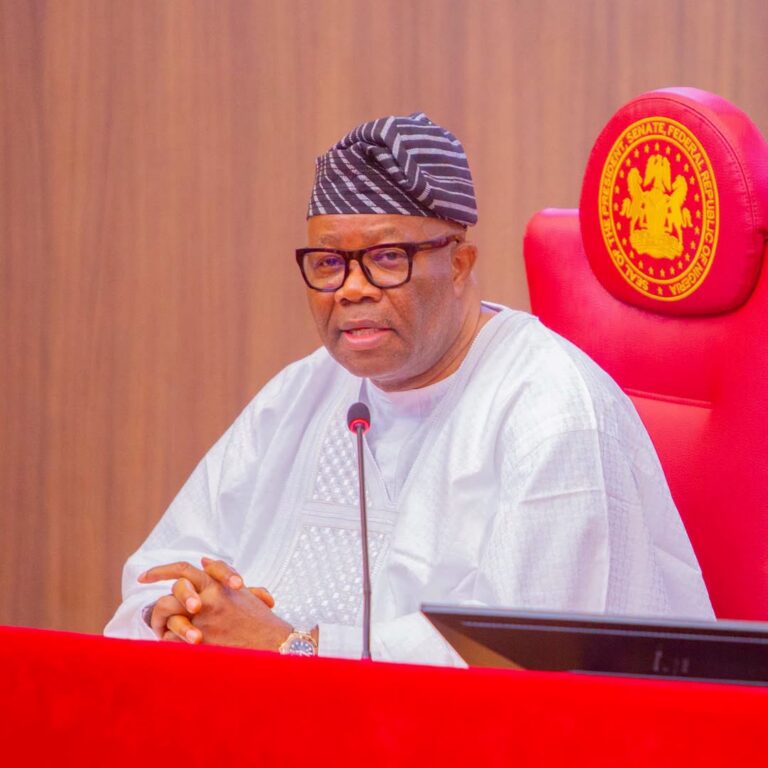
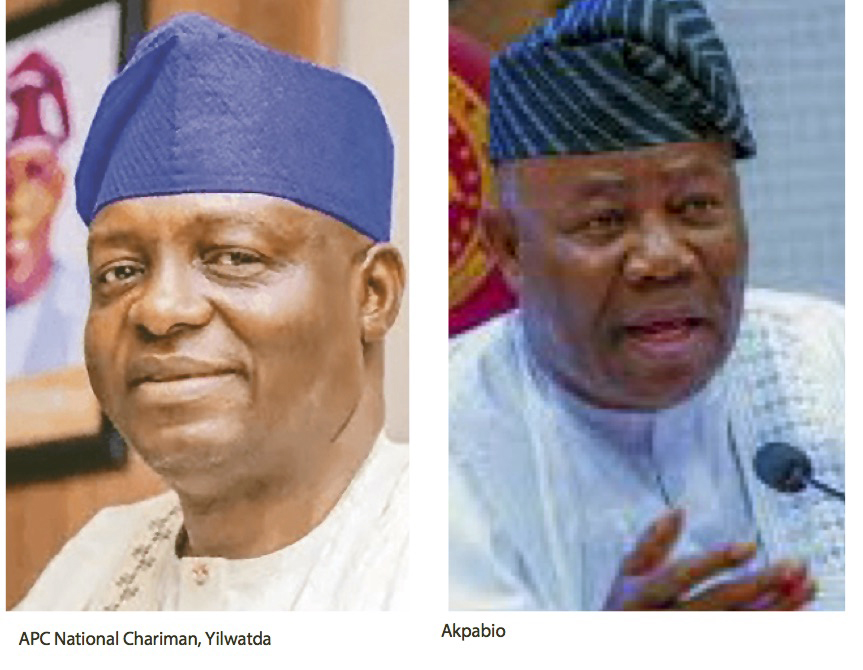
The South South is represented by Senate President Godswill Akpabio from Akwa Ibom, Seriake Dickson from Bayelsa, and Adams Oshiomhole from Edo. The North Central bloc includes Sani Bello of Niger and Simon Lalong of Plateau, while Ibrahim Hassan Dankwambo and Danjuma Goje hold seats from Gombe.
Orji Uzor Kalu represents the South East from Abia, and Gbenga Daniel sits for Ogun East in the South West. Parliamentary data further shows that the chamber includes a handful of former deputy governors, among them Senator Idiat Adebule of Lagos West and Enyinnaya Abaribe of Abia South, further deepening the dominance of former state executives in what is supposed to be an independent legislative chamber.
Yet the 10th Assembly may be merely a rehearsal for what the 11th promises to deliver. Findings indicate that many of the former governors currently serving as senators are themselves under mounting pressure, as a new wave of governors nearing the end of their constitutional tenures intensify moves to claim senatorial seats in 2027.
The development has triggered quiet negotiations, alliance building and fresh power struggles within the major political parties, pitching sitting senators against governors who still control party structures and state political machinery.
Among the governors most actively positioning themselves is Hope Uzodinma of Imo State, who is reportedly seeking to displace incumbent Senator Osita Izunaso, even though his own tenure does not expire until January 2028.
Abdullahi Sule of Nasarawa has formally submitted his APC nomination form for the Nasarawa North senatorial seat, reversing a public pledge never to seek elected office after his governorship. In Borno, political intelligence strongly points to a Senate transition for Governor Babagana Zulum, a scenario reportedly facilitated by Vice President Kashim Shettima.
In Ogun State, billboards and party pressure are nudging Governor Dapo Abiodun towards the Red Chamber, a move that risks a bruising clash with incumbent Senator Gbenga Daniel. Governor Ahmadu Fintiri of Adamawa, Governor AbdulRahman AbdulRazaq of Kwara, Governor Mai Mala Buni of Yobe and Governor Bala Mohammed of Bauchi, a former senator himself, are equally believed to be clearing their paths to the upper chamber.
In all, as many as eight to eleven serving and outgoing governors are actively positioning themselves for 2027, and if this materialises at even half the predicted scale, the 11th National Assembly could witness an unprecedented assembly of former chief executives in the Red Chamber.
The migration from Government House to the Senate is not accidental. It is driven by a convergence of structural, financial and psychological factors unique to Nigeria’s political environment. Nigeria lacks a structured framework for post-gubernatorial relevance.
Other News
Unlike the United States, the United Kingdom or South Africa, where former chief executives often transition into think-tank leadership, international diplomacy or private sector roles, Nigeria has no presidential libraries, no serious policy institutes funded by former leaders and no culture of elder statesmanship. The void is filled by hunger for another government pay cheque and the maintenance of a public profile.
Fear of prosecution is another powerful driver. The Nigerian governorship comes with executive immunity. Once that immunity expires, former governors become potentially vulnerable to accumulated legal liabilities. For many, the National Assembly offers a quasi-protective political environment, a continuing public prominence that discourages aggressive prosecutorial pursuit.
In this context, the Senate is not just a career choice; it has become a shield.
There is also the matter of money. Former governors receive lifetime pensions, security details and official residences in many states, yet many still pursue the Senate for the additional N20 million or more that accrues monthly to each senator in running costs and constituency allowances, one of the highest legislative remuneration packages in the world. For a governing class that has known only public wealth, the Senate provides a seamless continuation of the lifestyle.
The consequences for legislative independence are severe. The Senate is constitutionally designed to check, balance and oversee the executive. When the chamber is populated by men and women who spent eight years as chief executives wielding unilateral power, the institutional DNA is considered fundamentally corrupted.
Former governors are psychologically wired for executive command, not deliberative debate. They tend to dominate proceedings, intimidate career legislators and resist scrutiny of executive conduct. The result is a Senate that is less confrontational with Aso Rock, less willing to conduct independent oversight, and more likely to function as an extension of the presidency.
“Every seat occupied by a former governor is a seat denied to a lawyer, teacher, activist, entrepreneur, or development professional from that senatorial district who would bring fresh perspectives and independent thinking to legislation,” Charles Agbo, a legal practitioner, noted. “The Senate becomes a chamber of political veterans protecting old interests rather than a forge of new national ideas.”
Comparisons with other democracies are unflattering. In the United States, political culture strongly discourages what would be perceived as a demotion from governor to senator. Britain elegantly solves the problem by elevating former senior ministers to the appointed House of Lords, where their experience is harvested without displacing elected representatives.
South Africa places enormous emphasis on political renewal, while Germany’s Bundesrat similarly prevents the kind of vertical career descent seen in Nigeria.
Reformers have proposed concrete remedies. A constitutional amendment requiring former governors to observe a minimum four-year cooling-off period before contesting senatorial seats would prevent the immediate executive-to-legislature migration most damaging to legislative independence.
A National Council of Former Governors, with a genuine mandate in national policy development, could provide a platform for continued contribution without competitively displacing elected representatives.
The Nigerian Senate was designed to be a check on power. What it has become is something closer to an executive alumni association, a place where the powerful go to remain powerful, where governance becomes endless, and where citizens of each senatorial zone must make peace with representation by those more interested in their own political survival than in the laws that govern everyday life.
“But it is not too late,” Agbo said. “The constitution can be amended. Civil society can organise. Voters can reject former governors in favour of genuine constituency representatives. What is required is the political will from reformers within and outside the system to insist that the Senate must be reclaimed as the people’s chamber, not a permanent residence for the politically displaced.”