Follow Us on Google
•APC, ADC, PDP, NDC ready war chests
From Romanus Ugwu, Abuja; Scholastica Hir, Makurdi; Jude Dangwam, Jos; Emmanuel Adeyemi, Lokoja; and Abel Leonard, Lafia
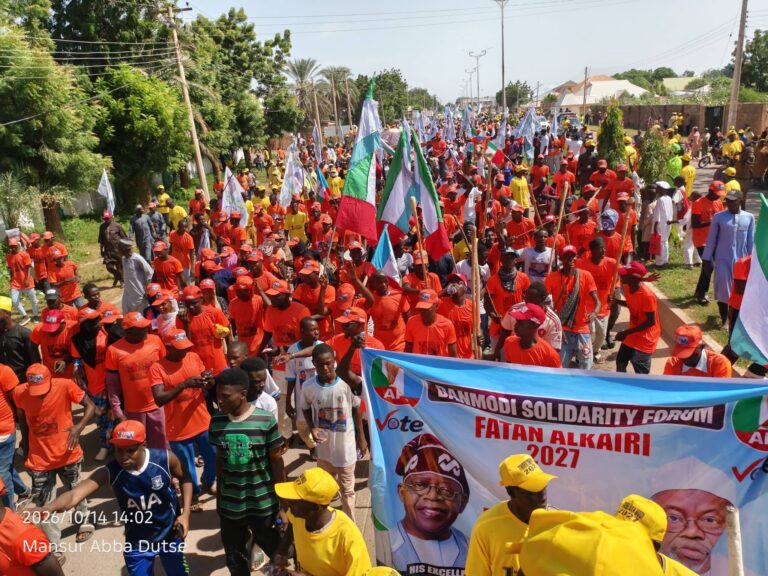
Across the North Central geopolitical zone, there are strong indications that both the ruling and opposition political parties have shown operational readiness to key into the recent lifting of the ban on political campaigns by the Independent National Electoral Commission (INEC) ahead of next year’s general elections.
Across the states that make up the zone, comprising Benue, Kogi, Kwara, Nasarawa, Niger, Plateau and the Federal Capital Territory (FCT), the build up to the 2027 campaign has already accelerated into high gear. The zone remains one of the country’s political epicentres.
From every indication, the campaign will not fall below its usual standard of giving Nigerians the good, the bad, the ugly and, occasionally, the beautiful, given that both the ruling and opposition parties are expected to adopt a mix of positive and negative approaches, laced with personal attacks alongside a minimal amount of issue-based campaigning.
Predictably, while opposition parties across the zone are still perfecting arrangements to navigate the teething hurdles, political landmines and financial challenges involved in mounting a campaign before rolling out their drums, there are strong indications that campaigning in the zone will be fierce, given its strategic importance in deciding the fate of the presidential candidates.
Before the surprise outcome of the recently concluded Osun State off-cycle governorship election, which reshaped perceptions, calculations and the wider political equation, there was a general feeling that campaigning for the 2027 election, particularly the presidential race, was something of a formality, with many assuming the contest had effectively already been won by the All Progressives Congress (APC).
The Federal Capital Territory
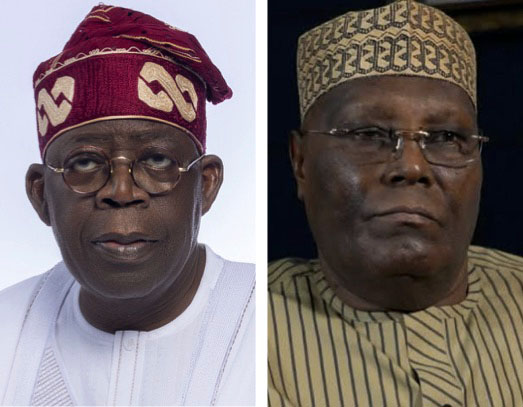
The APC, in what appears to be a determined move to demonstrate its dominance to the opposition, has already taken the lead by constituting a 32-member, high-profile Presidential Campaign Council (PCC) aimed at penetrating the grassroots to secure a comprehensive victory, particularly for its presidential candidate, incumbent President Bola Ahmed Tinubu.
Although the list remains shrouded in controversy, both the Director-General of the Campaign Council, Alhaji Abdul’Aziz Yari, and the National Chairman of the ruling party, Prof Nentawe Yilwatda, along with other party stakeholders, have offered assurances that the APC will adopt an issue-based campaign centred on the landmark achievements of the Tinubu-led administration, while eschewing bitterness and personal attacks.
Speaking recently, the newly appointed DG, Yari, declared that fidelity to campaign promises would remain the hallmark of the ruling party, assuring Nigerians that “whatever promise we made during campaign, we shall keep to them. Today we have him (Bola Tinubu) as President, and by God’s grace he shall remain the president come 2027.”
Similarly, the party’s national chairman, Yilwatda, speaking through his Special Adviser on Media, Mr Tooki Abimbola, reassured that the APC would base its campaign on results and the delivery of the reforms it had promised Nigerians, arguing that having recorded milestone achievements in several strategic areas, the ruling party would prosecute an issue-based campaign.
“The APC will campaign on results, not rhetoric. The next phase is about moving from reform to delivery, from macroeconomic stabilisation to household-level impact, and from security operations to sustainable security. On the economy, we will deepen the reforms already underway, but with a sharper focus on translating growth into jobs, lower business costs and greater purchasing power,” he said.
He added that Nigerians should not only hear that the economy is improving but should feel that improvement in their homes and businesses, with the party’s emphasis placed on expanding productive sectors, supporting small and medium enterprises, attracting investment and creating opportunities for young Nigerians. On inflation and the cost of living, he acknowledged that stabilising the economy is not enough if families are still struggling with food, transport and other basic necessities, and said the party would support stronger measures to increase food production, improve supply chains, reduce logistics costs and expand targeted interventions for vulnerable households, stressing that the objective is not merely to reduce the inflation rate on paper but to reduce the pressure Nigerians feel in their daily lives.
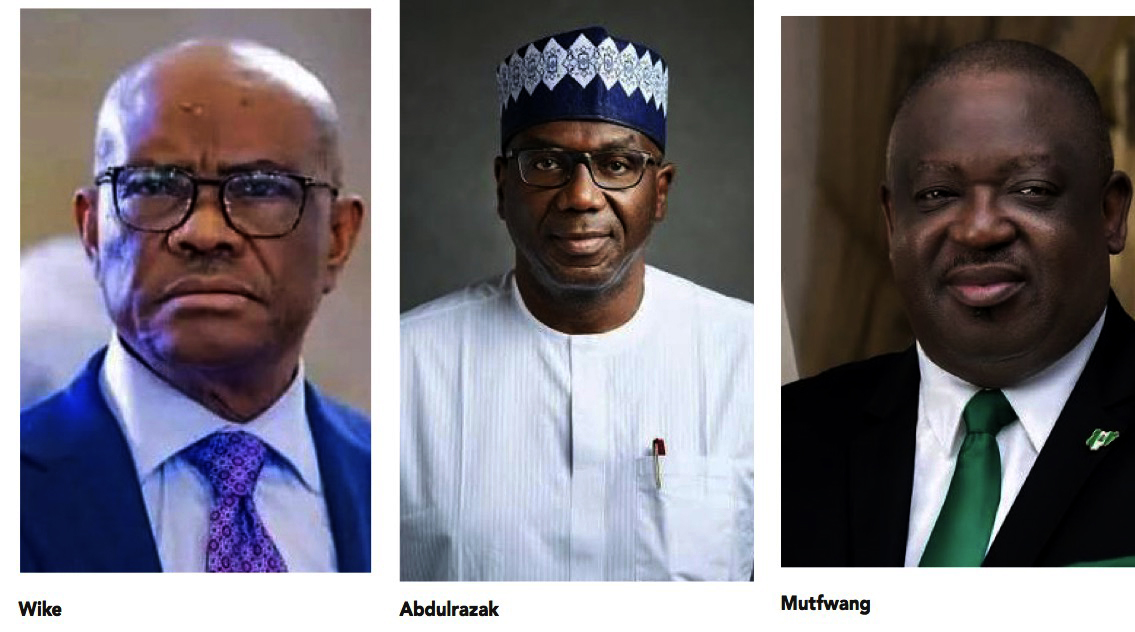
Although campaigning has yet to take off fully in the FCT, there is strong evidence that the government in power will make the process difficult for the opposition, judging by alleged threats from the Minister of the FCT, Nyesom Wike, who is likely to roll out stringent measures against opposition parties to reduce their visibility.
Benue State
In Benue State, political parties have already declared their readiness to join the race even before the official campaign kickoff, with party leaders saying their structures are already on the ground and measures are in place to convince voters to secure victory for their platforms.
Speaking on his party’s readiness, the state secretary of the Peoples Democratic Party (PDP), Dan Nyikwagh, told Daily Sun that the party was very much prepared for the 2027 campaign. “We are not waiting for September to start preparing. We have been on the ground, rebuilding, reorganising and strengthening the party since the 2023 elections,” he said.
Arguing that the PDP remains the only genuinely organic political party in Benue State, he said the party demonstrated that in 2023. “We lost an election, but we did not lose our identity, our structures or our connection with the people. Instead of fighting ourselves or abandoning the party, we went back to the drawing board, examined what happened, learnt our lessons and restrategised,” he said.
Nyikwagh said the party is going into the 2027 election as a much more united and determined political family, explaining that under the leadership of Chief Samuel Ortom, the PDP is putting finishing touches to a formidable campaign structure and strategy, to be led by a seasoned politician who understands the political dynamics of Benue State and how to win elections there. He said the party’s structure runs from the state down to the local government, ward and polling unit levels, and that unlike political structures sustained primarily by access to government, the PDP’s structure exists because of the people.
He said the party’s task was not to introduce itself to Benue people but to mobilise a population that already knows the PDP and is increasingly asking for an alternative, pointing to widespread complaints over the direction of the state, the cost of governance, management of resources, unemployment, infrastructure, healthcare, education and general hardship under the Hyacinth Alia-led administration. Expressing confidence in his party’s victory, Nyikwagh argued that the goodwill the Alia administration enjoyed in 2023 was effectively a loan from the people with a repayment date of 2027, and questioned what tangible benefits residents have seen from the state’s internally generated revenue and various government projects and contracts. He said the PDP had also deliberately fielded a governorship candidate with strong brand identity in Chief Michael Kaase Aondoakaa, SAN, a seasoned politician and administrator, and stressed that the party’s campaign would be issue-based but not timid, putting the Alia administration’s record before the people on jobs, schools, hospitals, agriculture, roads and internally generated revenue.
According to him, the Osun election offers an important lesson for every party going into 2027, demonstrating that the will of the people can prevail when the electoral process is properly defended and that political structures matter. He noted that Osun has traditionally been a PDP state and that Governor Ademola Adeleke is regarded by the party as one of its own, adding that Osun shows that an incumbent can occupy Government House without owning the people, since the government may control resources and enjoy the advantages of incumbency, but voters retain the more powerful instrument of the ballot. He said the PDP of 2027 is not the PDP of 2023, having learnt from its earlier experience, strengthened internal cohesion and gone into this election as one indivisible bloc, with a sharper message asking Benue people to compare what they were promised in 2023 with what they have actually received.
Another opposition party, the African Democratic Congress (ADC), also speaking with confidence, said it is the most prepared party in Benue State. The party’s Acting State Publicity Secretary, Michael Inyaregh, told Daily Sun that having spent the last 18 months on grassroots rebuilding, which other parties had ignored, the ADC is the most prepared party for 2027. He said the party has a functional structure in all 36 states, including the FCT, with local government and ward executives in place, and ward coordinators in over 90 per cent of the country’s 8,809 wards, alongside fully activated youth and women’s wings.
“While others are importing crowds for rallies, we are building polling unit by polling unit. Elections are won at the polling units, not on TV,” he said.
He argued that Nigerians are tired of the old political cycle, describing hunger, insecurity and the cost of living as problems that transcend party lines, and positioned the ADC as a third force unburdened by the failures of the past 24 years. He said the party’s campaign would be entirely issue-based, built around food security and the economy, security through community policing and the welfare of security personnel, and youth jobs, including a target of one million jobs in technology and agriculture, with a policy scorecard to be published so voters can hold the party accountable.
Inyaregh said the Osun result showed that when INEC deploys the IReV and BVAS systems faithfully, the will of the people prevails, and that rigging at collation centres has become considerably harder, which he described as good for democracy. He said the party is investing heavily in training over 200,000 polling unit agents and setting up a situation room to track IReV results in real time, describing the strategy for 2027 in simple terms: win the polling unit, own the result.
For the ruling APC in Benue State, its Publicity Secretary, Mr Benedict Yawe, said the party is exceptionally well prepared for 2027, stressing that over the past three years the APC has been building a stronger party structure while Governor Alia has been delivering visible development across the state. He pointed to interventions in roads, education, healthcare, agriculture and workers’ welfare, including the rehabilitation of hundreds of public schools, the recruitment of about 9,700 teachers, the implementation of free basic education, and more than 50 road projects, some completed and others already commissioned, alongside two underpasses built in Makurdi and Gboko local government areas.
He said the party has established more than 500 grassroots-based support structures across the state’s 23 local government areas to deepen mobilisation, communicate the administration’s achievements directly to the people and build sustained support ahead of 2027, describing the party’s confidence as rooted in evidence rather than wishful thinking, and pointing to a claim by the Benue APC chairman that projects executed by the Alia administration in Benue South alone were worth more than N100 billion.
Yawe said the party’s campaign would be fundamentally issue-based, centred on what Governor Alia has done with the mandate he received in 2023 and what more he could accomplish with a fresh mandate, covering roads, education, healthcare, agriculture, security, employment and the overall wellbeing of the people. On the lessons of the Osun election, he said modern elections require serious preparation from beginning to end, and that while technology has become an increasingly important component of Nigerian elections, it does not eliminate the need for strong political organisation, adding that the party’s strategy is becoming increasingly grassroots-driven, with an emphasis on communicating results rather than merely making promises.
Plateau State
Other News
In Plateau State, political parties have continued to lay claim to victory, should the electoral umpire sustain the level of transparency demonstrated in the Osun election. The APC’s Publicity Secretary, Hon Wuman Bako, while expressing confidence that the party remains at home with Plateau people and is determined to consolidate on the successes of the current administration, lamented that the state chapter has continued to be weighed down by bitterness among members following the defection of Governor Caleb Manasseh Mutfwang ahead of the official commencement of campaigning.
Although Governor Mutfwang has denied insinuations that a 60-40 agreement was reached between his camp and the Legacy Group over the running of his remaining years in office, Daily Sun gathered that the brewing internal conflict has pushed some APC stalwarts into anti-party activities, including support for the PDP candidate rather than working for the victory of their own party’s candidate.
The PDP is not immune to the crisis rocking both the ruling and opposition parties in the state. The state chairman of the Wike-led faction, Hon Peter Tongshep, has been refuting claims that the party has two factions, while expressing optimism that the PDP is assured of victory if INEC sustains the transparency displayed in the Osun election. “As the state party chairman, I still believe that we have one PDP. Those working towards assisting the government are just doing it for their food. They are just a group of people, and I want to tell you that our party is not having any issue,” he said, adding that the party has structures at state, local government and ward level and would soon inaugurate its campaign council at all three levels.
The Publicity Secretary of the Turaki-led faction, Dr Choji Felix Dalyop, in an interview with Daily Sun, similarly dismissed the existence of another faction, describing rival claimants as “illegal and disgruntled elements” parading themselves as party leaders, and insisting that the PDP in Plateau remains under the leadership of Hon Raymond Dabo. He said the party’s candidate is Garba Biggs and no other person, describing the Osun outcome as a replication of what happened in Plateau State in 2023, where residents stood and defended their votes, and stressing that the party’s campaign is usually issue-based, focused on insecurity, national development, inclusive governance and youth.
The Plateau State chairman of the National Democratic Congress (NDC), Comrade Solomon Ndam, said the party is enjoying wide acceptance across the state despite internal challenges arising from its primaries. Expressing confidence that the spirit of the 2023 “Obedient Movement” remains strong and would help galvanise support for an issue-based campaign, he said the NDC is well accepted partly because Governor Mutfwang, after three years in office, has not commissioned a major capital project in the state, and pointed to the fact that about 10 per cent of the state’s residents remain in internally displaced persons’ camps as a result of insecurity. He said the NDC was ready to provide answers on the more than 4,000 sacked workers, insecurity, agriculture and education.
The ADC’s governorship candidate, General John Sura, who previously served in Governor Mutfwang’s administration before defecting to the APC, similarly described the achievements of the present administration as inadequate.
Kogi State
In Kogi State, the ruling APC appears comfortably in the driving seat, claiming full readiness for the campaign while mounting obstacles for opposition parties. The PDP has complained of outrageous signage fees, while the ADC remains largely in disarray, leaving Kogi looking, in practice, close to a one-party state, with only the PDP and, to a lesser extent, the ADC offering any visible opposition presence.
The PDP’s state chairman, Mohammed Sanni Gambo, told Daily Sun that his party is fully prepared for the campaign and set to win all state and national election seats, including the presidential contest, though he lamented that the actions of the ruling party appeared designed to destabilise the opposition.
“The only concern we have is the outrageous signage fees, which the state government is compelling us to pay, which is targeted against the opposition, especially the PDP, to whittle down our popularity. But we are resolute and undaunted. We are more encouraged by the outcome of the just concluded Osun governorship election, which was free and fair, and it really shows that democracy has come to stay,” he said, adding that the ruling party is afraid because it knows the PDP is the only opposition in the state with the structures and supporters to spring surprises in 2027.
Kogi State government has announced signage and promotional material fees of N150 million for presidential candidates, N50 million for senatorial candidates, N30 million for House of Representatives candidates, N5 million for State Assembly candidates, N2 million for chairmanship candidates and N300,000 for councillorship candidates. Reacting, Gambo said the charges are excessive and disproportionate, noting that Section 92(4) of the Electoral Act 2026 limits a senatorial candidate’s total election expenses to N500 million, meaning a N50 million signage levy alone consumes 10 per cent of that statutory ceiling before any spending on rallies, media, transportation, campaign offices or other legitimate activities.
The ruling party’s state leader, Governor Usman Ododo, is not leaving anything to chance, repeatedly pledging massive support for President Tinubu’s re-election bid and for all APC candidates in the National and State Assembly elections in the state. The governor has held a series of meetings with party leaders, directing them to work harmoniously toward a formidable team, and has set up a reconciliation committee to address grievances arising from the party’s primaries, alongside layers of party structures covering all 21 local government areas and 239 wards, equipped with the necessary logistics for the campaign.
A source close to the governor claimed the party has the capacity, both in logistics and structure, to sweep the presidential election, the three senatorial seats, the nine House of Representatives seats and the 21 House of Assembly seats in the state.
Nasarawa State
In Nasarawa State, the ruling party, banking on the incumbency factor, has dismissed the likelihood of a repeat of the Osun outcome, even as the result has triggered fresh political calculations, with opposition stakeholders describing it as a warning that voters, rather than incumbency alone, will ultimately determine the outcome of the 2027 elections.
Speaking separately, stakeholders argued that the Osun experience showed political parties can no longer rely solely on government machinery, political influence or patronage to secure victory, and that the key lesson for Nasarawa is the need for parties to strengthen grassroots structures, mobilise voters around issues and protect their votes from the polling units through to collation.
Governor Abdullahi Sule, however, offered a different interpretation, arguing that the Osun election demonstrated the enormous political advantage enjoyed by a sitting governor. “The power of a sitting governor is not something you can joke around. That is the message that was actually sent in Osun,” he said. Beyond the incumbency factor, the APC intends to translate projects into a campaign advantage, with Sule urging the party’s candidates to go into the 2027 campaign using the achievements and projects of his administration as major campaign material, presenting candidates with acknowledgement slips relating to their INEC processes at a recent strategic meeting.
It may not, however, be a stroll in the park, as the opposition PDP is planning stronger vote protection. Former state PDP chairman, Hon Francis Orogo, said the Osun election demonstrated the importance of local political structures and the relationship between candidates and voters. “Politics in Nigeria is local. The lesson from Osun would affect different states differently because every state has its own political dynamics, but Nasarawa voters would also defend their preferred candidates in 2027. The Osun election has helped in educating our people, but we must add value to it to make it work in the Nasarawa 2027 election,” he said.
Niger State
Niger State is shaping up as one of the more settled contests in the North Central, at least on the ruling party’s side. Governor Mohammed Umar Bago has already emerged as the APC’s unopposed and consensus candidate for a second term, affirmed by party members across all 277 wards of the state following a screening process led by the APC’s national chairman, Nentawe Yilwatda. Bago has since set up reconciliation machinery to address grievances arising from the party’s primaries and has urged flagbearers and stakeholders to begin mobilising and canvassing support ahead of the 2027 general elections.
Bago has also positioned himself and Niger State prominently within the wider Tinubu re-election project, having earlier declared the state the effective headquarters for the president’s 2027 campaign and describing himself as a self-imposed coordinator of that effort, a sign of how closely the governor intends to tie his own re-election bid to the fortunes of the APC’s presidential ticket.
As with Benue and Plateau, Niger’s opposition parties, principally the PDP, are expected to contest the governorship, though, unlike in Kogi or Benue, there is little public indication yet of a comparably organised opposition structure on the ground in Niger ahead of the 2027 polls.
Kwara State
Kwara State is shaping up as one of the more genuinely contested races in the North Central, largely because Governor AbdulRahman AbdulRazaq is completing his constitutionally allowed second term, leaving the governorship open for the first time since the 2019 “O To Ge” revolution that swept his APC to power. Speaking at the APC Youth Engagement 2026 in Ilorin, AbdulRazaq declared that the party in Kwara is stronger than ever and well positioned for a resounding 2027 victory, citing his administration’s performance and what he described as growing grassroots support, while urging party faithful to return to their wards, zones and polling units to begin mobilisation, insisting that the party could not afford complacency despite its popularity.
Rather than seek a third term, which the constitution does not permit, AbdulRazaq is understood to be moving to the Senate, setting up a direct contest for the Kwara Central seat against Senator Saliu Mustapha, who resigned from the APC after losing its primary and has since picked up the PDP’s senatorial ticket for the same district, with former Senate President Bukola Saraki reported to have been involved in courting him to the opposition.
For the governorship, AbdulRazaq has thrown his weight behind the Speaker of the Kwara State House of Assembly, Yakubu Danladi-Salihu, whom he described as a competent and experienced politician capable of sustaining his administration’s developmental strides, defending the choice against critics who questioned the Speaker’s readiness for the role by pointing to Danladi-Salihu’s role in appropriating funds for the government’s projects during his time leading the Assembly.
The state APC chairman, Prince Fagbemi, echoed the governor’s confidence but also acknowledged internal friction, noting that while aggrieved party members are entitled to their grievances, the manner in which some have channelled their complaints violates the party’s rules.
The main opposition PDP, long dominant in Kwara before the APC’s 2019 breakthrough, has rallied behind a consensus ticket under Saraki’s leadership, settling on Sulaiman Bolakale Kawu Agaka, a former Rural Electrification Agency executive director, as its governorship candidate for Kwara Central, alongside former House of Representatives member Zakari Mohammed as its consensus candidate for Kwara North, in a move widely read as an attempt to reconsolidate the party’s traditional support base in the Ilorin Emirate area and revive the long-running Saraki-AbdulRazaq political rivalry that has shaped the state’s politics since 1999.
Beyond the two dominant parties, AbdulRazaq’s attempt to instal a hand-picked successor is also facing resistance from the ADC and the NDC, both of which are positioning themselves to disrupt what has traditionally been a straight fight between the APC and the PDP, making the governorship race, and the APC’s ability to project a unified front behind its candidate, one of the North Central’s genuine toss-ups heading into 2027.