Follow Us on Google
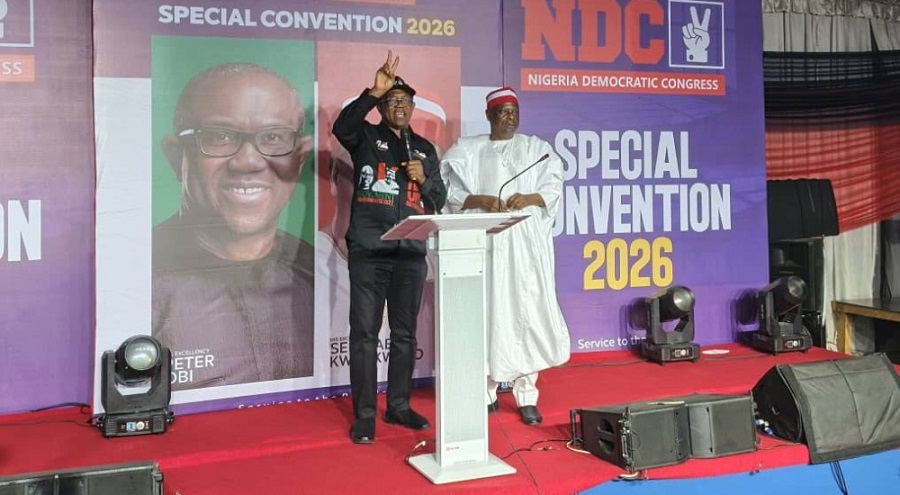
Nigeria Democratic Congress (NDC) presidential candidate Peter Obi has promised a power-sharing government with Rabiu Kwankwaso, insisting his running mate would play a central leadership role rather than occupy a symbolic office.
Obi made the declaration on Saturday at the NDC national convention in Abuja while unveiling the former Kano governor as his vice-presidential candidate for the 2027 presidential election.
According to Obi, his administration would depart from the traditional structure where vice presidents are often reduced to ceremonial figures.
“The government we plan to build will not treat the vice president as a spare tyre,” Obi said.
“The vice president will be a true partner. We will govern through consultation, shared responsibility and collective decision-making.”
The former Labour Party presidential candidate said Kwankwaso shares his core beliefs on governance, particularly in the areas of education, security, equity and national development.
Other News
“He believes in creating opportunities, strengthening institutions and building a country where every citizen can thrive. We will work together to deliver that vision,” Obi stated.
The Obi-Kwankwaso alliance brings together two leading opposition figures who finished third and fourth in the 2023 presidential election.
Both politicians recently defected to the NDC after leaving the African Democratic Congress over concerns about the party’s future direction.
Kwankwaso, former governor of Kano State and ex-NNPP presidential candidate, remains one of northern Nigeria’s most influential political figures, with a strong grassroots following.
Obi also reaffirmed his commitment to serve only one term if elected, saying a four-year administration would be enough to implement reforms aimed at reducing the cost of governance, curbing wasteful spending and repositioning the economy.
The announcement signals a major political realignment ahead of the 2027 contest, with the NDC positioning the Obi-Kwankwaso ticket as a coalition built on shared leadership and institutional reform.