Follow Us on Google
… Reiterates hard stance on vote buying, campaign hate speech
…Raises fresh concerns over operational perfection
From Romanus Ugwu, Abuja
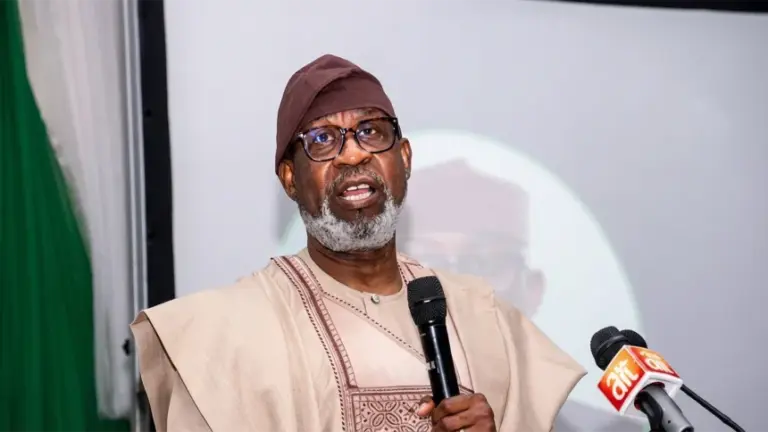
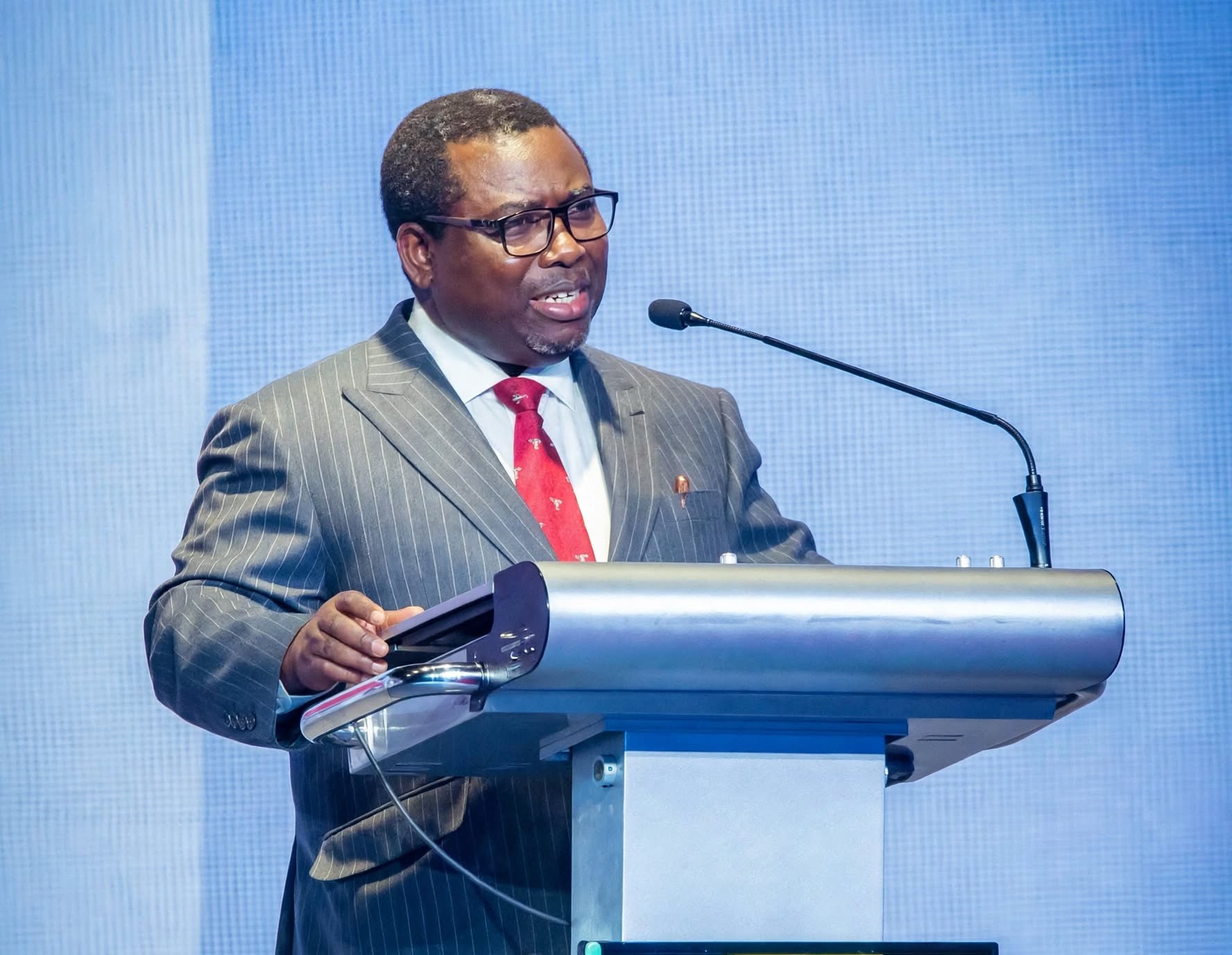
The chairman of the Independent National Electoral Commission (INEC), Joash Amupitan, has stated that the commission has no preferred candidate in next year’s general election.
Amupitan gave the assurance in his remarks at the strategic workshop for Editors organised by the Nigerian Guild of Editors (NGE), in Abuja on Monday.
Updating the Editors on the build-up to the 2027 general elections, the electoral umpire boss reiterated the commission’s hard stance against vote buying and campaign hate speech, even as he raised fresh concerns about operational perfection.
According to him; “Democratic governance is a continuous journey that requires constant care, vigilance, and institutional courage. Democracy is a journey, not a destination.”
“The strength of that journey depends on the quality of the partnership between those who manage the vote, those who monitor the vote, and those who report the vote.
“If we stand together—Editors, CSOs, and INEC—we create a fortress that no amount of electoral malpractice or political mischief can breach. Let this workshop be the starting point for a revamped roadmap toward a transparent and peaceful 2027.
“As the Chairman of the Independent National Electoral Commission, my commitment to Nigeria is firm: our allegiance is to the Constitution and the law, and our sole obligation is to the Nigerian electorate.
“We have no preferred candidate, no preferred political party, and no agenda other than guaranteeing a free, fair, transparent, and credible election.
“To the Nigerian Guild of Editors: you are the guardians of public truth. As the nation prepares for the 2027 General Elections, let us work together to build a public space powered by verified facts, civic responsibility, and unassailable institutional trust,” he said.
While raising fresh concerns over the poll, the commission’s boss said: “As the countdown accelerates, the administrative, technical, and operational machinery of the commission is operating at peak capacity.
“However, history and experience have taught us a fundamental lesson: operational perfection on the part of an electoral management body, while necessary, is insufficient on its own to guarantee democratic stability.
“The ultimate arbiter of electoral integrity is public trust. That trust cannot be constructed in isolation; it requires an active, transparent, and unshakeable partnership between the electoral umpire, civil society, and the free press,” he said.
Amupitan equally emphasised the firm stance against vote-buying and financial inducement, noting: “The integrity of the ballot box is fatally compromised when a citizen’s vote is treated as a commodity for sale. The commission is taking an uncompromising stance against vote-buying in all its forms ahead of the 2027 general elections.”
“Working through a strengthened coalition with the Federal ministry of Justice, Economic and Financial Crimes Commission (EFCC), the Independent Corrupt Practices and Other Related Offences Commission (ICPC), and the Nigerian Financial Intelligence Unit (NFIU), joint financial monitoring teams will be deployed to track illegal campaign spending and conduct undercover surveillance at polling units nationwide.
“To the political actors and their agents: attempt to trade cash or material gifts for votes, and you will face immediate arrest and prosecution under the Electoral Act 2026. Elections must be decided by the conviction of the voter, not the depth of a candidate’s pocket,” he assured.
Revisiting the commission’s zero tolerance for campaign violence and hate speech, Amupitan said: “As electioneering intensifies across the country, I must sound a clear note of warning to all political parties, candidates, and campaign managers: INEC will not stand by and allow political competition to devolve into violence, intimidation, or inflammatory rhetoric.
“Democracy thrives on the clash of ideas, not the clash of weapons or the proliferation of hate speech. Through the Inter-Agency Consultative Committee on Election Security (ICCES), we have activated an early-warning tracking framework to log incidents of political violence, thuggery, and dangerous campaign rhetoric. Any political party or candidate implicated in inciting violence, disrupting rivals’ rallies, or deploying armed thugs will face direct statutory sanctions and swift prosecution. No political office in this country is worth the blood of a single Nigerian,” he issued fresh warning.
Amupitan also updated the Editors on logistics upgrades, he said: “To eliminate the perennial challenge of late arrival of polling materials, early procurement and delivery of non-sensitive materials to State Offices have already commenced.”
“Furthermore, we have procured and begun distributing brand-new operational pick-up vehicles to State Offices and LGAs nationwide to navigate challenging terrains,” he said.
“INEC has zero tolerance for partisanship, administrative negligence, or compromised ethics. Any official found wanting will face immediate administrative measures,” he re-emphasised his warning to the staff.
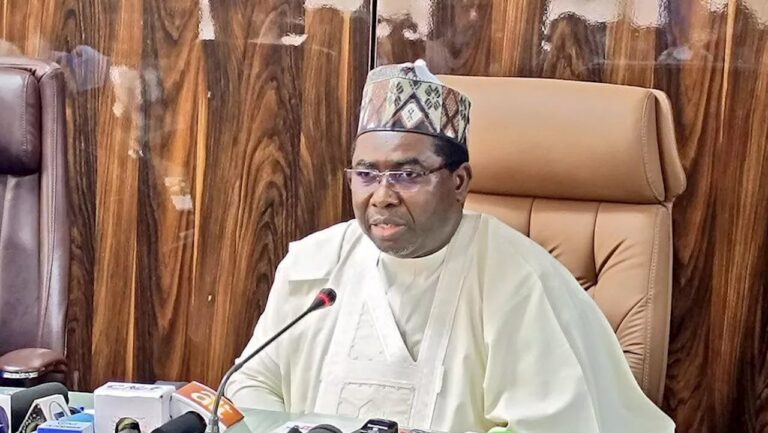
Earlier in his opening remarks, NGE President, Mr Eze Anaba said that the engagement is necessary to deepen, strengthen the relationship between the electoral management body and the leadership of the media at a time when the credibility of the democratic process remains a matter of profound national importance.
“Elections are not merely about casting ballots. They are about trust. They are about citizens believing that their votes will count, that the process will be transparent and that the institutions responsible for conducting elections will act fairly and professionally.
“The media has a critical role in building and sustaining that trust. As editors, we determine, to a significant extent, what information reaches the public, how it is presented and the context in which it is understood. With that responsibility comes an obligation to uphold accuracy, fairness, balance and the public interest.
“At the same time, we recognise that the media cannot perform this responsibility effectively without credible, timely and accessible information from the electoral management body.
“In an environment increasingly polluted by misinformation, disinformation, manipulated content, deepfakes and partisan narratives, the relationship between INEC and the media must therefore be one founded on openness, mutual respect and regular engagement,” he appealed.
He further explained that: “This workshop provides an opportunity for us to look beyond the traditional relationship between the electoral commission and the media. We must ask ourselves difficult but necessary questions: How can INEC communicate more effectively with the public?”
“How can editors and journalists report electoral processes more accurately? How do we collectively confront disinformation without undermining legitimate criticism? And how can we use the enormous reach and influence of the media to strengthen citizens’ confidence in our elections?
“The Guild believes strongly that a credible election is a shared responsibility. INEC has its constitutional mandate; political parties and candidates have their responsibilities; the media has its own obligations; and ultimately, citizens must be adequately informed and empowered to participate in the democratic process.
“The credibility of the media is itself an essential component of the credibility of the electoral process,” he said.