Follow Us on Google

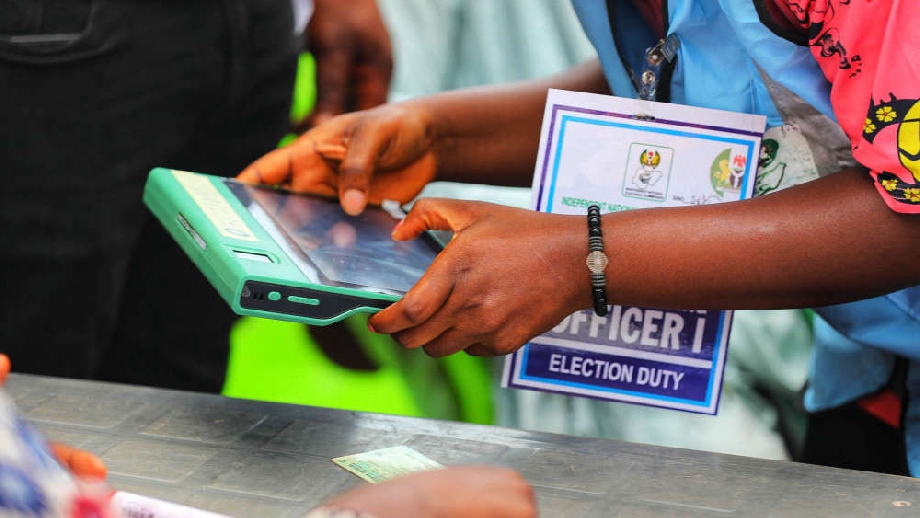
The Independent National Electoral Commission (INEC) is exploring the use of artificial intelligence to improve election result management ahead of Nigeria’s 2027 general elections.
The commission said AI-powered tools could help reduce human errors during result processing, improve operational efficiency and ensure that figures uploaded to its results portal correspond with records from polling units.
INEC’s Director of Information and Communication Technology, Lawrence Bayode, disclosed this on Thursday, October 22, 2026, at the launch of Rise Networks’ AI for Elections Programme and Hackathon in Abuja.
Bayode explained that the commission was examining practical applications of AI while ensuring that appropriate safeguards were in place.
He said one of the proposed applications involved verifying election result figures before they were transmitted electronically.
“The system checks whether the figures entered electronically match those on the paper result sheets and scanned copies before transmission is allowed. If discrepancies exist, they must be resolved before the results can be uploaded,” Bayode said.
He, however, warned that technological innovations must not compromise electoral security. He also urged developers participating in election-related projects to work with publicly available information or data they had been authorised to use.
Meanwhile, Meta’s Head of Public Policy for Anglophone West Africa, Sade Dada, raised concerns about the growing use of AI to create misleading information that could affect public confidence in elections.
Dada said manipulated videos, cloned images and artificially generated voices were making it increasingly difficult for people to distinguish authentic information from fabricated content.
“Elections are decided by voters. Voters make decisions based on what they believe, and what they believe depends on what they can trust,” she said.
Other News
She noted that AI could also support election integrity by helping people verify content, strengthening digital literacy and making civic information accessible in different languages.
Dada said Meta labels AI-generated content and requires advertisers to disclose the use of AI when it significantly alters political advertisements.
She also highlighted the company’s partnership with the Federal Ministry of Communications, Innovation and Digital Economy, the National Centre for Artificial Intelligence and Robotics, and Publica AI on GovGuide Nigeria, an AI-powered chatbot designed to provide government information in English, Hausa, Igbo and Yoruba.
The programme’s convener, Dr Toyosi Akerele-Ogunsiji, said the initiative was designed to move discussions about AI and elections towards practical solutions that address challenges in Nigeria’s electoral process.
She noted that the programme builds on Run-Am, an AI application previously used to identify misinformation and support fact-checking during the 2023 general elections.
The initiative will feature a national hackathon, an AI Innovations Development Hub and a Community of Practice. Its focus areas include access to reliable electoral information, election data analysis, multilingual civic technology, cybersecurity, election observation and accountability.
According to the organisers, participants are expected to develop functional technology solutions rather than submit proposals alone.
Nigerians aged 18 and above can apply individually or in teams of up to four members. Applications opened on October 22 and will close on November 12, 2026.
The programme offers a total prize pool of ₦10 million. The winner will receive ₦4 million, the runner-up ₦2.5 million and the third-place entrant ₦1.5 million. Four additional special awards of ₦500,000 each will also be presented.