Follow Us on Google

Ahead of the 2027 general elections, opposition presidential candidates appear to be picking holes in the All Progressives Congress, APC-led government of President Bola Tinubu without proffering solutions to the myriads of problems confronting the country.
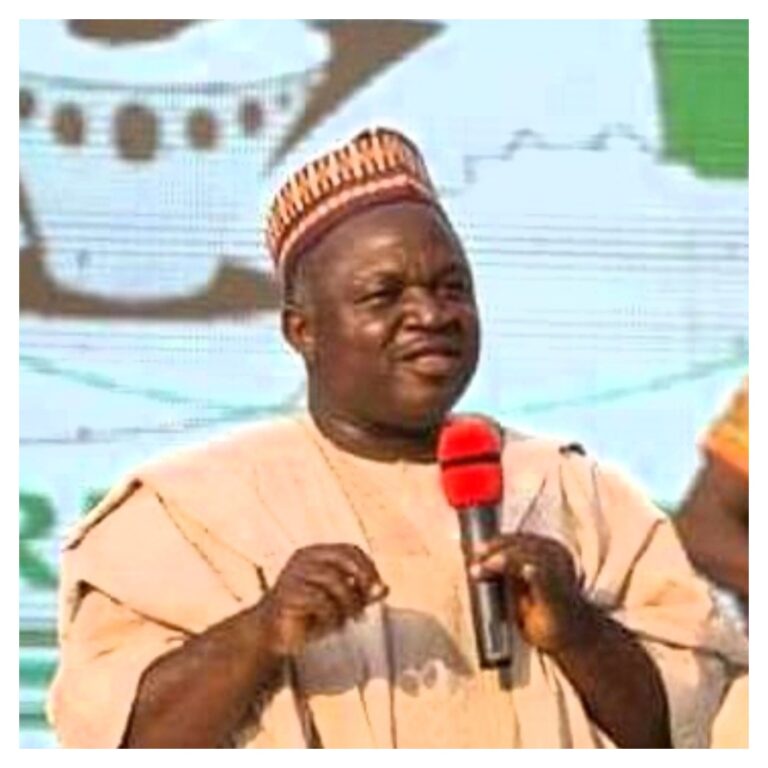
But, the Social Democratic Party’s (SDP) presidential candidate, Prince Adewole Adebayo seems to be toeing a different part and he is intentional about it when declared that the 2027 election would be won by the man who actually shows his work.
Many would say Nigeria has heard the script before and are tired of it but Adebayo meant every word of it.
President Bola Tinubu stands before the nation and begs for more time.
The candidate of the African Democratic Party (ADC), former Vice President Atiku Abubakar points fingers at a government he insists has wrecked the economy. The Nigerian Democratic Congress’ (NDC’s) candidate Peter Obi thunders about waste, corruption, and broken promises. Round and round it goes, the same voices, the same outrage, the same election season theatre that Nigerians have watched for a generation.
Criticism is cheap. In any democracy, opposition voices are expected to hold power accountable. But as the 2027 presidential race roars to life, one uncomfortable question is starting to cut through the noise and that is beyond the outrage, who actually has a plan?
Adebayo seems to be answering the question louder than the rest, not with slogans, but with specifics. He appears to be building a reputation which a few of his rivals can claim: he doesn’t just diagnose Nigeria’s wounds, he shows up with the scalpel.
When others stop at outrage, he goes further to attach a detailed solution to every single grievance he raises.
He has made a case for unemployment, calling on the government to revive dormant factories, rebuild labour-intensive manufacturing and restore Nigeria’s broken agricultural value chains.
He doesn’t just lament about poverty, he lays out, in detail, how the government’s spending must fuel production instead of consumption, insisting that the nation must create wealth before it can ever redistribute it.
On insecurity, he refuses to stop at condemnation. He pushes further, calling for genuine federalism, constitutional restructuring, and state policing anchored in a clear constitutional framework.
Looking at the education sector, he said he isn’t interested in nostalgia for better days. He is rather demanding free, compulsory education from primary school through university, a constitutional guarantee, not a privilege for the few.
Speaking on health, he believes that a nationally coordinated, identity-based system guaranteeing every Nigerian automatic access to care, could do the magic.
On the economy, he bemoaned what he called outright economic illiteracy in government. He pairs the attack with a plan, including fiscal discipline, production-led growth, serious investment in manufacturing, energy reform, real infrastructure and support for the small businesses that keep ordinary Nigerians afloat.
Other News
On fuel subsidy removal which has become one of the most explosive issues in the country, Adebayo doesn’t just criticise the fallout, he counters with a roadmap to expand domestic refining, slash the cost of governance and redirect national resources towards productive
investment instead of endless imports.
He has also promised hundreds of measurable programmes, on a defined timeline, aimed at crushing poverty, reviving industry and restoring a public trust that has been battered for decades.
Skeptics will ask whether it’s all achievable. That’s fair and it’s a debate worth having, but he has shown his work.
He is playing a different kind of opposition and this is where the contrast becomes impossible to ignore.
Obi has built a movement on frugality, transparency and competence, a message that resonates deeply with Nigerians exhausted by government waste. But critics say the details of how it all gets implemented often stay just out of reach, buried beneath the applause lines.
Atiku Abubakar brings decades of experience to his critique of economic collapse, insecurity and democratic erosion. His warnings carry weight. But more and more voters are asking the same sharp question: beyond “reform,” what does that actually look like on day
one?
Tinubu, as the sitting president, plays an entirely different game, judged not on promises but on results already delivered. His government insists the pain is temporary, a bitter but necessary price for long-term reform. His critics say the hardship speaks for itself.
Adebayo has planted his flag somewhere else entirely. Not as another voice in the chorus of complaint, but as the candidate daring to answer the question Nigerians are exhausted from never hearing answered: not just what’s wrong but what happens next.
Supporters call his blueprints ideological discipline, the SDP’s democratic roots showing up not in slogans, but in structure. They argue his politics isn’t fuelled by grievance but by governance.
As Nigeria inches towards another election that will shape a generation, voters may finally stop settling for outrage and start demanding answers to one question, asked of every candidate on the ballot: “What exactly will you do on day one, 100 days and by year four?”
While Atiku criticises, Obi questions, and Tinubu defends, Adebayo is betting everything on a different wager and that is that in an election drowning in complaints, the candidate who shows up with the blueprint is the one Nigerians will finally trust to build.