Follow Us on Google
• State police must not become private armies for govs
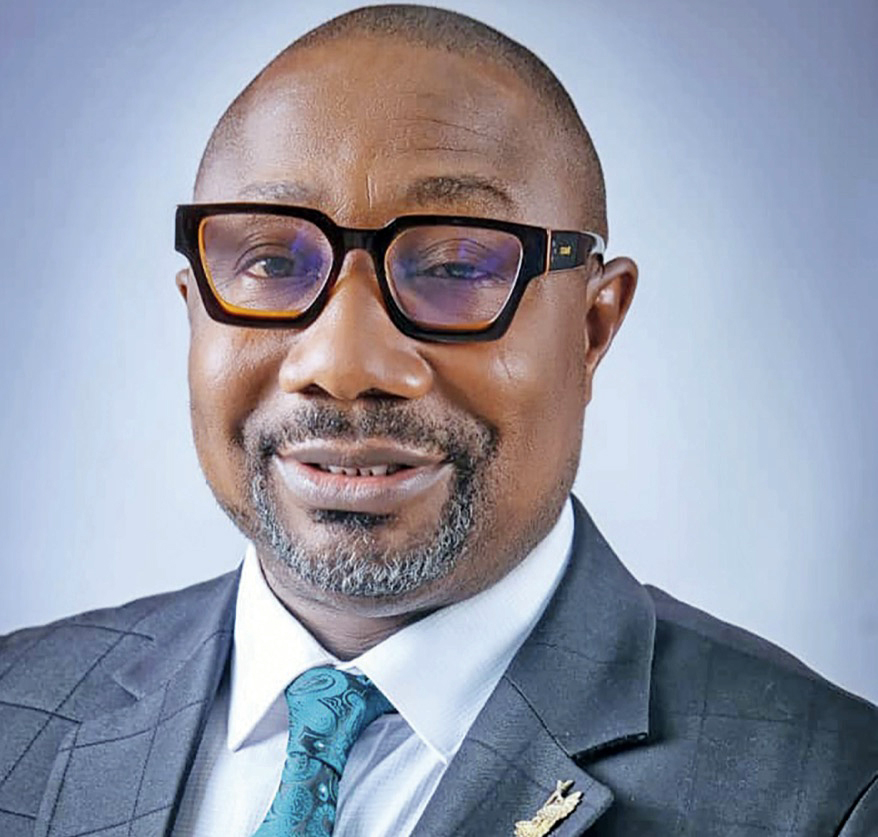
Following the passage of the bill for the establishment of state police by the National Assembly, the vice presidential candidate of the Action Democratic Party (ADP) for the 2023 election, Dr. Okey Udo, has warned that the proposed security outfit must not become private armies for governors.
Dr. Udo, in interview with VINCENT KALU, noted that the outcome of the party primaries shows that Nigerian politics is still largely controlled by money, incumbency, godfatherism, and party machinery rather than ideology and competence.
He pointed out that Nigeria sometimes rotates power without rotating performance, and insisted that power rotation between north and south must go together with competence, integrity and capacity.
How can you describe the state of the nation?
Nigeria today is a nation with great potential, but under serious pressure. The economy is showing some positive macroeconomic signs, with GDP growing by 3.89 per cent in Q1 2026, but this growth has not sufficiently translated into better living conditions for ordinary Nigerians. Inflation was still 15.93 per cent in May 2026, while food inflation stood at 16.96 per cent, meaning that many families are still struggling with food, transport, rent, school fees, and healthcare.
The major failure is that governance has not yet converted economic statistics into human welfare. A country is not truly developing when citizens cannot afford basic needs, farmers cannot safely go to their farms, businesses are burdened by power and fuel costs, and young people are uncertain about jobs. Nigeria is not hopeless, but it urgently needs security, productivity, accountability, and people-centred development.
What are your expectations of the 2027 general elections?
My expectation is that the 2027 general elections should be issue-based and not driven by ethnicity, religion, vote-buying, or political sentiment. The Independent National Electoral Commission (INEC) has fixed the presidential and National Assembly elections for next year, on 16th January.
Nigerians must use the election to ask serious questions about security, hunger, unemployment, inflation, education, healthcare, and corruption.
The failure of past elections is that campaigns are often dominated by slogans rather than measurable plans.
In 2027, any candidate seeking power must explain clearly how to secure the country, reduce food prices, create jobs, stabilise the naira, improve power supply, and rebuild public trust. The election should be a referendum on performance, not propaganda.
Political parties have concluded their primaries. How can you describe their outcome?
The outcome of the primaries shows that Nigerian politics is still largely controlled by money, incumbency, godfatherism, and party machinery rather than ideology and competence. Many candidates emerged through influence and negotiation, not necessarily because they have the best development plans for the country.
The critical failure is weak internal party democracy. Political parties in Nigeria still behave more like election vehicles than institutions for leadership recruitment and policy development. Until parties become transparent, inclusive, and idea-driven, they will continue to produce candidates who may be politically strong but developmentally weak.
With 31 APC governors, majority members in the National Assembly and state assemblies, does any opposition party pose a challenge for Tinubu’s re-election?
Structurally, the APC has a major advantage because of incumbency, control of many states, and strong representation in the National Assembly and state assemblies. In Nigerian politics, governors control grassroots structures, mobilisation, and local political machinery, so 31 governors is a very powerful electoral asset.
However, no ruling party is unbeatable when citizens are facing hardship, insecurity, unemployment, and rising cost of living. The opposition can pose a challenge only if it avoids division, presents a credible candidate, protects votes at polling units, and offers a clear alternative on security, food, jobs, and governance. If the opposition remains fragmented, APC will benefit from that failure.
What is your view on the insecurity in the country?
The insecurity situation is one of the biggest failures of the Nigerian state. The country is facing terrorism in the North-East, banditry and mass abductions in the North-West, farmer-herder conflicts in the North-Central, kidnapping across many regions, and other forms of organised crime. It is widely reported that between July 2024 and June 2025, at least 4,722 people were abducted in 997 incidents, with hundreds killed and ransom payments running into billions of naira.
This is not only a security crisis; it is an economic crisis. When farmers cannot access farms, food inflation rises. When roads are unsafe, transport costs increase. When investors feel unsafe, investment declines.
The failure is poor intelligence coordination, weak local policing, porous borders, slow prosecution, and the inability to dismantle the financial networks behind insecurity. This is quite terrifying to societal expectations and realities.
Abduction of school children is becoming the absurd norm. What should the government do to arrest this scourge?
Other News
The abduction of school children is a national disgrace and a direct attack on Nigeria’s future. A country cannot claim to be developing when children are afraid to go to school. Reports of repeated school abductions show failure in intelligence, prevention, rapid response, and safe-school implementation.
Government must profile all schools in high-risk areas, secure vulnerable schools, strengthen community intelligence, fund the Safe Schools programme properly, and create rapid-response security units around schools. Kidnapping must also be made unprofitable by tracing ransom payments, arresting informants, prosecuting collaborators, and dismantling the criminal networks operating from forests and ungoverned spaces.
For the 2027 elections, what should be the campaign message?
The campaign message should be bold and quite expressive – security, food, jobs, and accountability. Nigerians do not need empty promises; they need solutions that touch daily life. The message must address food prices, safe farming, youth employment, electricity, small businesses, education, healthcare, and corruption.
The failure of past campaigns is that they promise hope without a measurable delivery plan. A serious 2027 campaign must tell Nigerians what will be done in the first 100 days, first year, and full term. The people want leadership that can secure communities, reduce hunger, create work, cut waste, and make government accountable.
Power rotation between North and South has been a critical issue. Where do you stand on this?
I believe in power rotation because Nigeria is a diverse country, and fairness helps to reduce suspicion among regions. Rotation between North and South may not be a perfect solution, but it has become an important political arrangement for stability, inclusion, and national balance.
However, the failure is that Nigeria sometimes rotates power without rotating performance. Power rotation must go together with competence, integrity, and capacity. Nigeria does not only need a Northern or Southern president; it needs a leader who can secure the country, grow the economy, unite the people, and deliver development.
Senate President, Godswill Akpabio said the abductions, killings etc. are sponsored to rubbish Tinubu’s achievements. What is your take on the statement?
If there is evidence that some people are sponsoring killings and abductions for political reasons, government should investigate, arrest, prosecute, and expose them. National security matters should not be reduced to political statements without proof, because Nigerians need facts, not speculation.
At the same time, we must not politicise human tragedy. People are being killed, children are being abducted, farmers are being displaced, and communities are living in fear. The primary responsibility of government is to protect lives and property; therefore, whether the perpetrators are political actors, terrorists, bandits, or criminal networks, the state must defeat them with evidence, intelligence, and justice.
Tinubu’s handlers are praising the administration for growing foreign reserves to an all time high. At the same time, the government is accused of unprecedented borrowings and hardship. How can you reconcile the two?
There is no contradiction. A country can have rising foreign reserves and still have hardship. Foreign reserves measure external buffers and investor confidence, but they do not automatically mean that citizens can afford food, transport, rent, or school fees. They claimed Nigeria’s reserves rose above US$50 billion in June 2026, the strongest level in about 17 years, but that is not the same as household prosperity.
The concern is that Nigeria’s public debt has also risen sharply, reaching about ₦159.28 trillion as at 31 December 2025. Borrowing is not bad if it funds productive infrastructure, power, transport, agriculture, and industry.
The failure is when borrowing funds consumption, waste, and recurrent expenditure while citizens face hardship. Reserves are good, but the real test is lower inflation, more jobs, stronger exports, and better living standards.
How can you assess the Tinubu reforms?
The Tinubu reforms may seem bold, but they have been painful. Fuel subsidy removal, exchange rate unification, tax reforms, revenue mobilisation, and monetary tightening are reforms many economists considered necessary. They can improve fiscal stability, attract investment, and reduce waste if properly managed.
However, the failure is in sequencing and social protection. Fuel subsidy removal increased transport and production costs, exchange rate reforms raised import costs, and high interest rates affected businesses. The reforms must now become people-centred through food security, mass transport, power supply and support for small businesses, local production, job creation, and targeted relief for vulnerable Nigerians. Reform is only successful when citizens feel improvement in their daily lives.
What is your view on state police and how should it operate?
My answer to this question is often with mixed expectations. I support state police because Nigeria’s centralised policing system is overstretched and cannot effectively secure 36 states and 774 local government areas from Abuja. Security is local, and a police officer who understands the language, terrain, community, and criminal networks of an area is better placed to prevent crime. Countries like the United States, Germany, and India operate decentralised policing systems where federal and state security agencies have defined responsibilities.
However, state police must not become private armies for governors. It should operate under constitutional safeguards, independent state police service commissions, transparent funding, federal oversight, human rights training, and clear limits on political interference.
My candid advice: state police should handle community crime, school protection, local intelligence, kidnapping response, and rural security, while federal police and national agencies should handle terrorism, inter-state crime, border security, cybercrime, and national security coordination. Thank God for the passage of the bill by both chambers. There’s need for wholesome reorientation for national service. Even the recruitment process may be hijacked if not properly guided.