Follow Us on Google


•Why APC took flag-off to Kaduna
•Ruling party, PDP, ADC, NDC, others restrategise for presidential poll, others
•Food prices, insecurity, improved allocations; Factors that will decide votes
By Omoniyi Salaudeen, with additional reports
The commencement of the ruling All Progressives Congress (APC)’s presidential campaign in Kaduna State marks the opening of what promises to be an intense battle for Northern votes ahead of the 2027 general election. The choice of Kaduna as the launch pad for the re-election campaign of President Bola Tinubu is no accident. The state occupies a strategically important position in Nigerian politics, and the decision to begin the campaign there carries significant political, historical and electoral implications.

Historically, Kaduna has served as an administrative, cultural and political nerve centre of Northern Nigeria. Its enduring influence makes it a natural rallying point for political parties seeking to mobilise support across the region. Launching the APC’s campaign from Kaduna is, therefore, more than a symbolic gesture. It sends a message across the North-West, North-East and North-Central geopolitical zones that the ruling party considers the region indispensable to its re-election strategy.

The electoral arithmetic reinforces this calculation. Northern Nigeria accounts for over 56 per cent of Nigeria’s registered voters, with the North-West alone ranking among the country’s largest voting blocs. President Tinubu’s victory in 2023 was secured through a coalition of political interests, including influential Northern governors and established party structures. Beginning the 2027 campaign in Kaduna is an attempt to preserve that coalition, rebuild confidence in the administration and consolidate the support that contributed to his emergence as president.
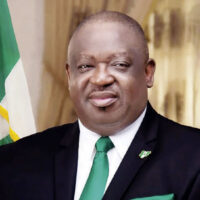
That intent was evident at the flag-off. Governor Uba Sani, while speaking during the APC presidential campaign flag-off, expressed confidence that the North would repay Tinubu with votes, citing the administration’s interventions in infrastructure, security, education, healthcare and agriculture as evidence of his performance.
“When someone comes to us and says we should vote for him simply because he is a northerner, we ask him: can you show us your track record?” Sani said.
From Kano, Senator Rufai Hanga, a member of the campaign council representing Kano Central Senatorial District, re-echoed that enthusiasm, stating that the APC was on its way back to power. “We will win Kano by the grace of God. Having Kwankwaso as Obi’s deputy holds no water; we will win Kano. There is nothing to suggest that we cannot beat them,” he said.
By choosing Kaduna, the APC is not merely organising a campaign rally; it is staking its claim to a region that could prove decisive in determining the outcome of the presidential election. The party hopes to demonstrate its organisational strength, reassure its supporters and establish an early advantage before opposition parties can consolidate their positions.
APC National Secretary, Ajibola Basiru, recently described Northern Nigeria as a stronghold of the ruling party in a television interview. However, the 2027 election will test that assertion against the realities of regional diversity, economic grievances, persistent insecurity and the strength of opposition mobilisation.
Political endorsements and the influence of incumbent governors may provide an organisational advantage, but they do not automatically translate into votes.
Although the APC enjoys considerable political influence across Northern Nigeria, the party faces a demanding task in persuading voters to renew Tinubu’s mandate. The region’s political leaders must contend with public frustration over the cost of living, the impact of economic reforms and the continuing threat of banditry and insurgency. These challenges will shape the electorate’s assessment of the administration more directly than campaign slogans or political declarations.
Economic grievances
The choice of Kaduna places the APC at the centre of the political debate over the economic consequences of the Tinubu administration’s reforms. While the government maintains that its policies are necessary to correct longstanding structural weaknesses in the economy, many households continue to struggle with rising food prices, high transport costs and declining purchasing power.
The removal of the petrol subsidy and the floating of the naira have had far-reaching consequences for businesses and households. In Northern Nigeria, where poverty is widespread and millions depend on agriculture and informal economic activities, the effects of inflation and rising production costs have intensified economic hardship.
In Nasarawa, the verdict is mixed. As Sunday Sun reporter, Abel Leonard, indicates, the state offers a mixed verdict on President Tinubu’s reforms. At a recent North-Central rally in Lafia, Governor Abdullahi Sule said subsidy removal and forex reforms raised the state’s allocation from N4.5 billion to N16 billion. Secretary to the Government of the Federation (SGF), George Akume and APC candidate Ahmed Wadada cited infrastructure and mining gains. Analysts acknowledged higher government spending and investment, but noted rising costs. University teacher, Dr Aminu Bello, noted transport and food prices had surged, while trader Grace Obey lamented low purchasing power and spoilage of unsold goods.
Opposition PDP chairman, Dr Joel Gimba, and SDP candidate Mohammed Adamu pitched alternatives centred on easing hardship and boosting agriculture. The central challenge remains translating increased revenue into tangible relief on school fees, taxation and household expenses.
That disconnect is sharper in Benue. In Makurdi, stakeholders say the APC may struggle in the North as opposition parties capitalise on hardship, insecurity and high living costs. Religious scholar Rev. Jesse Tsekeh and former President-General of Mdzough U Tiv Worldwide, Chief Iorbee Ihagh, doubted the party’s ability to sell future prosperity to ordinary Nigerians.
Sunday Sun reporter, Scholastica Hir, in Makurdi, reports that Tsekeh acknowledged President Tinubu’s economic reforms but said poor cushioning had exposed the government to attacks. “Tinubu is doing well on economic reforms aimed at putting Nigeria on the right track, but it is difficult for the uneducated common man to understand,” he said. According to him, the administration did not put measures to cushion the effects. “That is what the opposition has capitalised on. That is the major challenge the APC will face in the North,” he added.
He blamed governors for frustrating local government autonomy: “Money is coming to local governments but does not get to them. Governors are sharing over N2 trillion. Where is the money going?”
Ihagh dismissed APC promises as election-driven: “Whatever they are saying now is because of elections. They don’t mean it. If they had started earlier, it would have been different.” He questioned the proposed N70,000 payment for six months and said opposition parties, particularly the NDC where Peter Obi is contesting, could gain sympathy votes, but urged them to mobilise polling agents and ensure credible result transmission in 2027.
A similar sentiment dominates Kaduna, reports Noah Ebije. Opposition parties say promises of future prosperity will not convince hungry Nigerians to vote for the APC. NRM candidate for Kabba-Bunu/Ijumu Federal Constituency, Rev. Emmanuel Olorunmagba, noted that politics is about the well-being of the people. “The APC faces a serious challenge convincing ordinary Northerners to support its economic reform agenda when many households are still struggling with hunger, poverty, unemployment and insecurity.
“You cannot ask a struggling farmer, an unemployed graduate or a family battling to afford food to vote based solely on promises of future prosperity. People want to see tangible improvements in their lives today,” he stated.
The APC is expected to counter these grievances by highlighting federal investments in security, student financing, infrastructure and agricultural development. Projects such as the Abuja-Kaduna-Kano Expressway and initiatives under the Nigerian Education Loan Fund (NELFUND) feature prominently in the administration’s development narrative. The party’s argument is that, despite the immediate pain of economic adjustment, the reforms and associated investments will eventually create the conditions for sustainable growth and prosperity.
Yet, convincing Northern voters to look beyond their present difficulties will be a formidable challenge. For many households, the critical question is not whether the reforms are theoretically sound but whether they are improving their daily lives. The government faces an enormous task demonstrating that its policies can deliver tangible relief without imposing an indefinite burden on citizens.
Agriculture is central to this challenge. Northern Nigeria remains a major agricultural production centre, making farmers, traders and food processors important constituencies in the electoral contest. The APC is likely to emphasise agricultural support programmes, subsidised fertilisers, dry-season farming initiatives and irrigation projects as evidence of its commitment to improving food production and rural livelihoods.
The $500 million World Bank-supported Sustainable Power and Irrigation for Nigeria (SPIN) project is among the initiatives that could feature in the government’s efforts to expand irrigation and strengthen agricultural productivity. Similarly, proposed or existing financing and market-support mechanisms, including guaranteed-price arrangements for agricultural produce, could help farmers secure better returns and reduce their exposure to market volatility.
However, the effectiveness of these interventions will depend on their implementation. Farmers need affordable inputs, reliable access to markets, adequate storage facilities and protection from insecurity. Announcing programmes is not enough; the government must demonstrate that the benefits reach smallholder farmers and rural communities rather than remaining confined to policy documents and official statements.
Energy and transportation infrastructure also form part of the administration’s economic argument. The APC can point to the Ajaokuta-Kaduna-Kano (AKK) gas pipeline and broader efforts to expand domestic gas infrastructure as components of a long-term strategy to improve energy supply and support industrial development. Improved energy availability and transport networks could reduce production and distribution costs, although their eventual impact on food prices will depend on implementation, market conditions and the wider cost of doing business.
Ultimately, the party’s economic message will be judged by results. If food prices remain high, transport costs continue to rise and employment opportunities fail to expand, the administration may struggle to persuade voters that the sacrifices demanded by its reforms are yielding sufficient returns.
Other News
Insecurity
Beyond economic hardship, insecurity remains one of the most consequential issues in the battle for Northern votes. Banditry in the North-West, insurgency in parts of the North-East and farmer-herder conflicts in the North-Central zone have disrupted livelihoods, displaced communities and undermined agricultural production.
For millions of residents, security is not an abstract policy issue but a daily concern affecting their ability to travel, farm, attend school and conduct business. Consequently, the APC’s performance in addressing insecurity could significantly influence the electoral calculations of Northern voters.
The administration is expected to highlight military operations, intelligence-led offensives, surveillance capabilities and efforts to dismantle criminal networks operating in states such as Zamfara, Katsina and Niger. Its argument is that sustained security operations are necessary to restore confidence, protect communities and reopen agricultural corridors.
Nevertheless, the persistence of attacks and kidnappings presents a challenge to this narrative. Voters are likely to assess the government not only by the number of military operations announced but also by whether attacks decline, abducted persons are rescued, displaced residents return home and farmers can cultivate their land without fear of violence.
The debate over state police could also become an important part of the campaign. Support for constitutional reforms to establish state police has gained attention among political leaders who argue that localised policing could improve intelligence gathering and enable quicker responses to threats.
Advocates, including supporters of the proposal in Kaduna State, contend that state-level policing could complement federal security agencies by bringing law enforcement closer to communities. For the APC, backing such reforms could demonstrate a willingness to address the structural limitations of Nigeria’s centralised policing system.
However, state police legislation is not a complete solution in itself. Its success would depend on adequate funding, professional training, effective oversight and safeguards against political abuse. In states where political leaders wield considerable influence over local institutions, concerns remain about the possibility of using state police to intimidate opponents or suppress dissent.
The APC must therefore present a credible security strategy that goes beyond legislative proposals and military deployments. The electorate will want assurances that the government can protect lives and property while ensuring that security institutions remain accountable and professional.
Social protection and political messaging
Recognising the political consequences of economic hardship, the APC is likely to emphasise social protection programmes intended to cushion vulnerable households against the effects of the reforms. NELFUND is one such initiative. By providing eligible students with access to loans for tuition and other approved educational expenses, the programme seeks to reduce financial barriers to higher education. The ruling party uses its implementation to demonstrate that the government is attempting to expand educational opportunities, particularly for students from low-income households.
The party is also likely to highlight cash transfers and other social investment interventions designed to support vulnerable households and small businesses. The credibility of these claims, however, will depend on the transparency of beneficiary selection, the regularity of payments and evidence that assistance reaches those who need it most.
Another argument available to the APC concerns increased allocations from the Federation Account Allocation Committee (FAAC) to state and local governments. The party may contend that improved revenue flows have strengthened the capacity of sub-national governments to invest in roads, schools, healthcare and other essential services. But this argument also raises questions of accountability. Higher allocations do not automatically translate into better living conditions. Northern voters may reasonably ask whether their state and local governments are using the additional resources to improve public services, create employment and address poverty.
The ruling party’s political messaging is therefore likely to rest on three broad arguments: that the current economic difficulties are part of a painful but necessary adjustment; that cooperation between the federal government and Northern governors will accelerate development; and that abandoning the reforms midway could undermine investments and reverse progress.
Through this narrative, the APC hopes to persuade voters to exercise patience while promising that macroeconomic stability will eventually translate into more jobs, stronger purchasing power and greater prosperity.
The party will also rely on the political structures of incumbent APC governors to mobilise supporters, engage local communities and communicate the administration’s achievements. These structures could provide a considerable advantage in campaign organisation, particularly in rural areas where established political networks remain influential.
In Kaduna, the party says it has already activated that machinery. Publicity secretary Mohammed Sani Haruna said the chapter targets 2 million votes for President Tinubu in 2027 through a bottom-up approach that relies on polling unit committees to directly explain federal and state government programmes to local communities. The chapter held meetings with publicity secretaries from all 23 LGAs to align messaging around the governance achievements of Governor Uba Sani and President Tinubu, pledging to run an issue-based campaign free of personal attacks.
Yet, political machinery has its limitations. While endorsements and mobilisation can bring supporters to rallies, the decision to vote is ultimately shaped by a combination of personal experience, expectations and confidence in a candidate’s ability to govern.
For the APC, the decisive test will be whether voters experience meaningful improvements before the election. Will food and transport costs become more manageable? Will farmers gain safer access to their fields? Will security improve in vulnerable communities? Will social protection programmes reach the intended beneficiaries?
The answers to these questions may matter more than the promises made from campaign platforms.
Opposition contests
Northern Nigeria is not an automatic electoral possession of any political party. Although the APC has considerable influence in the region, opposition parties, including the Peoples Democratic Party (PDP), the Nigeria Democratic Congress (NDC) and the African Democratic Congress (ADC), have incentives to exploit public dissatisfaction and present alternative policy choices.
The opposition’s challenge will be to transform economic grievances and concerns about insecurity into a coherent political movement capable of competing with the APC’s established structures. Criticising the administration may attract attention, but winning votes will require credible candidates, a persuasive programme and effective coordination across the region’s diverse political interests.
Rev. Olorunmagba made that point directly: “The opposition must also understand that criticising the APC is not enough to win an election. Nigerians are looking for credible alternatives. It must present practical solutions to the country’s challenges, particularly in agriculture, security, unemployment, inflation, education and healthcare. It must also build strong grassroots structures, engage traditional institutions and community leaders, present credible candidates and demonstrate how its policies will translate into better living conditions.
“Above all, opposition parties must overcome internal divisions and offer Nigerians a clear, united and convincing alternative. The party that best demonstrates its capacity to provide security, economic relief, opportunity and hope will have a stronger argument before the electorate,” he added.
In Kaduna, opposition figures have also reaffirmed their commitment to political freedom, inclusion, and a credible electoral process. Yusuf Idris, spokesman for PDP governorship candidate Usman Shehu (ABG), disclosed that opposition candidates in the state met in Kaduna, where they expressed concern over what they described as the persecution of opposition figures and the shrinking space for alternative political voices under the current administration. He said the candidates stressed the need to protect fundamental rights, promote political pluralism, and guarantee a level playing field for all parties, maintaining that no government should use state power to intimidate opponents. They pledged to strengthen cooperation, promote peaceful political engagement, and work towards elections that are free, fair, transparent, and reflective of the genuine wishes of people of Kaduna State.
The opposition must also contend with its own internal divisions, competing ambitions and difficulties in building a common platform. Unless these problems are addressed, the APC could benefit from organisational advantages even in areas where voters are dissatisfied with the government.
By launching its campaign in Kaduna early, the ruling party is seeking to project strength, rally its Northern allies and establish momentum before opposition forces can fully consolidate. The strategy also gives the APC an opportunity to frame the election around its preferred themes of continuity, infrastructure development, security and economic recovery.
However, the significance of the Kaduna launch should not be confused with a guarantee of electoral success. Northern Nigeria comprises diverse communities with different political histories, economic interests and security concerns. The region’s electorate cannot be treated as a single voting bloc whose preferences are determined solely by elite endorsements or party loyalty.
The 2027 presidential election will therefore be a contest not only between the APC and its opponents but also between competing claims about governance, performance and the future direction of the country.
For President Tinubu, securing a strong Northern vote will be essential to his re-election prospects. For the opposition, the region presents an opportunity to challenge the ruling party by appealing to voters who feel excluded from the benefits of government policies.
The battle that opened in Kaduna will ultimately be decided beyond the rally ground. It will be fought in households struggling with food prices, on farms threatened by insecurity, in communities demanding better public services and among young people seeking education and employment.
The APC may have the advantage of incumbency, established political networks and the backing of influential governors. But its ability to convert these advantages into votes will depend on whether it can demonstrate that its policies are delivering results.
In the final analysis, Northern voters will have to decide whether the administration deserves more time to consolidate its reforms or whether the time has come for a change of direction. That decision, rather than the symbolism of the campaign launch, will determine the true outcome of the battle for Northern votes.