Follow Us on Google
From Romanus Ugwu, Abuja
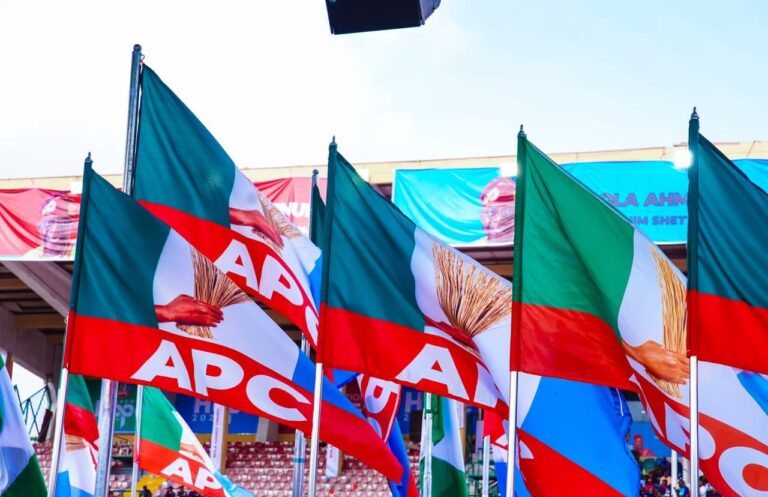
The All Progressives Congress (APC) was, in retrospect, the first to fire the starting gun by announcing the composition of a Presidential Campaign Council (PCC) list a few weeks after the Independent National Electoral Commission (INEC) legally lifted a ban on political campaign for next year’s presidential election.
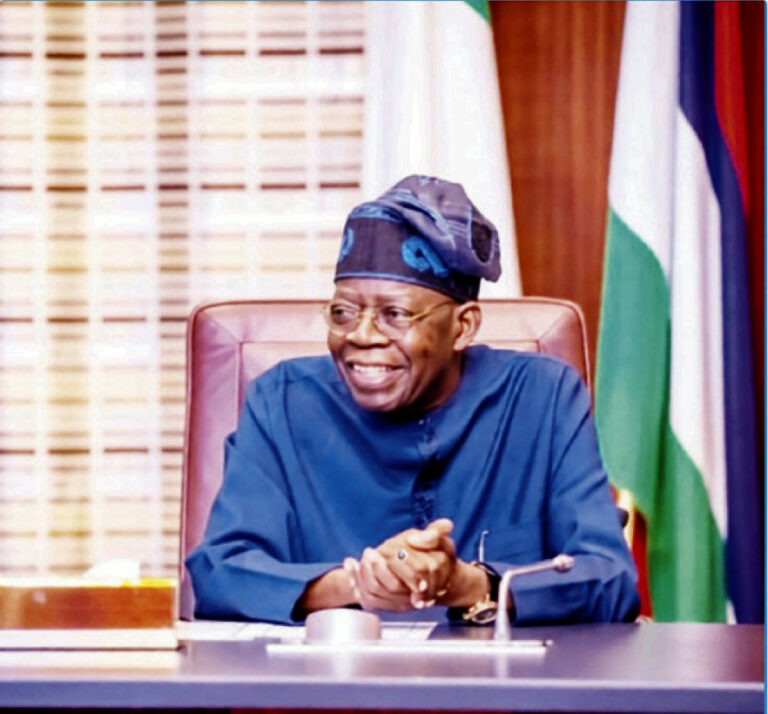
After some deft scheming by certain forces and political blocs over who heads the campaign council, the ruling party, in collaboration with the presidency, had constituted what many described as a crack campaign squad, comprising high-calibre party chieftains, leaders and very important members, ready to facilitate and actualise the re-election of President Bola Tinubu for another four years in office.
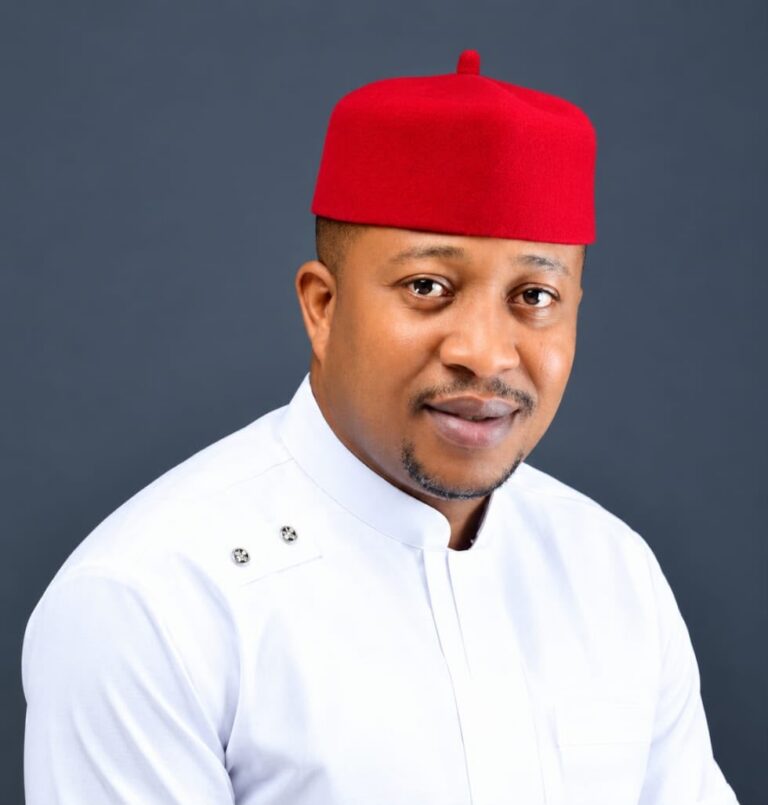
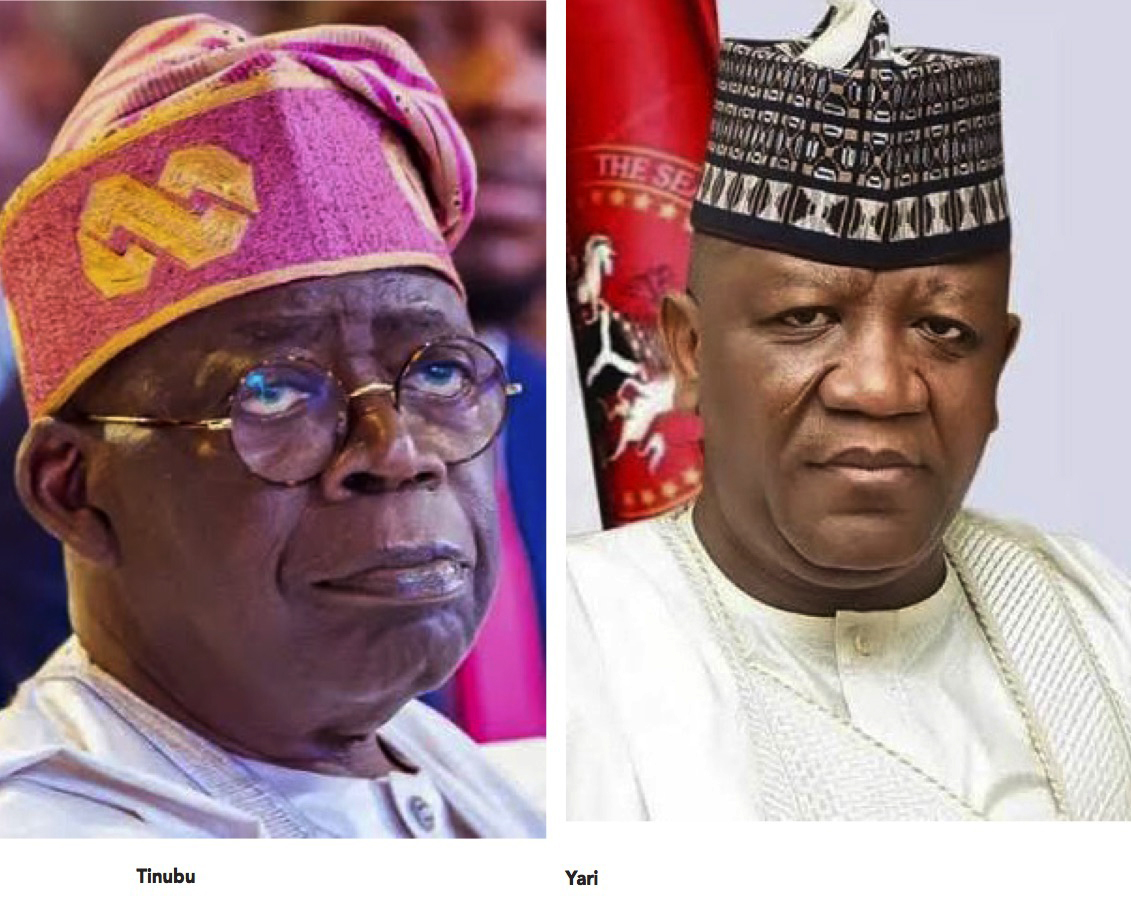
Included in the crack team are former and incumbent State governors, past and present elective and appointive government officials, renowned politicians, elder statesmen, and some members of the party’s national leadership, among others across the country, under the headships of former governor of Zamfara State, Abdul’aziz Abubakar Yari, and the chairman of APC Progressive Governors Forum (PGF), Hope Uzodimma.
As the ruling party, many political watchers had heightened their expectations that with the composition of the campaign council, it would hit the ground running, moving a step further to set the pace for the opposition parties to trail behind and emulate.
However, after backlash against the campaign council list, which resulted in its withdrawal a few weeks later, the APC national leadership, the presidency, and many other major stakeholders seem to be enmeshed in controversy over the amendment and review of the PCC list.
To underscore the gravity of the apprehension, confirming that the initially released PCC list was perhaps horridly done in error, the concerned authorities that withdrew the list had continued to appeal for calm and understanding of stakeholders to enable them to amend the list.
Surprisingly, the delay in releasing the amended campaign list, perhaps withdrawn to accommodate various sheds of interests still smarting from the inconsequential positions and status given to them or their outright exclusion from the list, has come to the stakeholders with heightened apprehension and anxiety.
It is understandable, because ever since the initial release of the campaign list, what was meant to project strength, unity and readiness, has instead triggered a storm of criticism and controversy bordering on the size of the council, the choice of members, and curiously the inclusion of serving government officials into an explicitly partisan campaign structure.
Expectedly, tongues have equally continued to wag, particularly over the decision to include certain party members still undergoing integrity trials at various law courts, the unnecessary delay in releasing the amended campaign list, and the controversies the withdrawal has generated.
Among the names holding strategic positions in the campaign council structure that are generating serious concerns include: Dr. Zacch Adedeji, chairman of the Federal Inland Revenue Service (FIRS); Engr. (Dr.) Abisoye Coker-Odusote, the Director General of the National Identity Management Commission (NIMC); and Abel Olumuyiwa Enitan, Head of the Civil Service of the Federation.
Agitating and provoking the minds of many politically exposed Nigerians is the pertinent question regarding the moral justification of involving those heading critical public institutions responsible for revenue collection, national identity management, and the federal workforce in partisan campaigns.
Going by the decision to draft them into the list, the ruling party may have perhaps failed to understand that it has, inadvertently, confirmed that the thin line between the ruling party and the machinery of government has narrowed dangerously.
Again, the ruling party seems to have exposed the deeper problem of sacrificing institutional boundaries and credibility with their inclusion in the list. They equally paid less attention to the implications of drafting institutions expected to serve Nigerians, regardless of political affiliation, for such responsibility, and to public confidence ahead of another fierce electoral contest.
Escalating the controversy further was the raising of the question of why those individuals who have faced such serious allegations of public trust should be included in the list, which has prompted claims that the APC is rewarding loyalty rather than patronising or prioritising accountability and credibility.
The unrelenting critics had described the campaign council list as a product of the evidence that the government is more concerned about political survival than public confidence, going by the ruthless arithmetic of electoral politics, win desperately assembling every possible political asset and arsenal behind the incumbent.
Curiously, whether or not the national leadership of the APC and the presidency are bothered about the delay in releasing and inaugurating the updated PCC list is inconsequential to them, because they have activated every other campaign machinery to ensure that the ruling party desperately secures victory at both national and subnational stages of the elections.
And dismissing the concerns of many Nigerians, particularly the opposition parties, over the delay in reissuing the amended campaign council list, both the presidency and the party’s leadership have gone the extra mile to disabuse the minds of Nigerians, insisting that the list is an internal affair of the party, not a cabinet list to trigger or generate such interest.
PCC spokesperson, and the Minister of Mines and Steel Development, Dele Alake, who made the dismissal recently, argued that what should concern the public is the campaign messages, not the messengers.
“It is an internal mechanism of the party, for crying out loud. Unfortunately, it has been projected, even with the help of the media, as if it is a cabinet list. It is not. It is just an internal mechanism of the party. So, whether the list is adjusted, tinkered with, or not, is an internal business of the party.
“What the public requires is the messaging of the campaign, the manifesto, the policies, the projections and all that, not the internal constitution of the campaign council, which bears no relevance to the aspirations of the public. It is a non-issue as far as I am concerned,” he said, fuming.
While attributing the complaints to indolence, Alake said: “The party can bring out a campaign list today and bring out another one tomorrow if they so think that they need to adjust it. It is an internal thing. It is not for the public to chew on. Maybe there is so much indolence around that we now elevate issues that shouldn’t be elevated, make them national issues, and then allow it to dominate the media space.”
“For God’s sake, let us be more serious and elevated than that. There are more salient issues in the society we can chew on. What was my business with the NDC, ADC campaign council? Whatever and however they do it don’t concern me,” he dismissed.
Other News
Equally, APC National Publicity Secretary, Felix Morka, explained that: “When every committee of the party, whether the PCC or Primary Election Committee, is announced, it is subject to periodic review and revisions.”
“That is normal. There is hardly any list of committees that we have released that didn’t go through a process of revision. So, we publish updated lists of committees, and this PCC is no exception, no different. There is nothing unusual about any prospect for the review of this list,” he defended the delay.
Morka, in defending the inclusion of non-partisan individuals on the campaign council list, retorted: “Are these people we are referring to Nigerians? The answer is yes. Are they persons whose rights to freedom of association, freedom to participate in politics and in governance of a country, are guaranteed by the constitution? The answer is obviously yes. Are some of these individuals referring to partisan people who belonged to political parties, including the APC? The answer may be yes for many of them.
“Does it suggest that when they are given appointments or appointed by the President to serve their country, then they must first renounce all affiliations with the party to which they belonged before the appointment, or that they are therefore stripped of their constitutional rights and freedoms they enjoyed prior, because they have accepted to serve in some capacity or the other? I don’t think so.
“If that was a serious question, the Constitution of Nigeria will peremptorily exclude them, insisting that once they accept to serve, they are barred from any sort of partisanship or political association, affiliation, or participation. That is not the case. The constitution doesn’t say that. Some of this specter we were spewing are not supported by the law, by the constitution, the ground norm of our country. The drafters of our constitution are very smart people. They understand that there is interconnectedness of all of these elements of freedom, which you cannot take away.
“You cannot do good by sacrificing another good. The consequence doesn’t add to anything. The Constitution is clear. A citizen has a right to vote. Dr. Zacch Adedeji, for example, has the right to vote just like other Nigerians when the elections come, and he is entitled to take some political opinions and freedom to participate,” Morka defended.
And perhaps, flowing from their defenses that the messages matter more than the messengers, it did not come as a surprise to many Nigerians how many of the ruling party chieftains and leaders have, by their words and actions, keyed into the message from President Tinubu, particularly his disingenuous comment that all is fair in politics.
Sending what many called negative signals and/or hate campaign speeches to the party members, President Tinubu recently said: “Those who will take this job from me will try. They will try. All is fair in politics, and it is equal opportunity. INEC is neutral. They have never, never intimidated anybody.”
“If political opponents are crying wolves, maybe they are afraid of their own shadows and the uncertainty in the companies they keep, not me. I am ready, but I won’t give them a red carpet. I won’t offer them the leash to tie me and rope me. No, we wrestle each other to the finishing point,” Tinubu warned.
But, in what looked like joining him in the battle ahead, political elite, elective and appointive officials from Osun to the Federal Capital Territory (FCT), Borno, Kebbi and Ebonyi States, comprising serving senators, commissioners, council chairmen and state governors, have, in recent weeks, openly threatened voters, opponents and residents with violence, eviction and physical harm ahead of next year’s general elections.
Recent developments suggest that the ruling party may be planning to deploy every warfare other than an issue-based campaign, despite the landmark achievements the President Tinubu-led administration has recorded in the over three years it has been in office.
As the campaign kicks off on a subtle note, all that have dominated the engagement between the ruling party and the Nigerian electorate is not the display of President Tinubu’s scorecard, but surprisingly the discrediting of the opposition candidates and, more worryingly, the brazen threats to unleash mayhem and the issuance of outright quit notices to non-APC members.
The threats that have come from low and high places, and even from high-profile individuals, were accompanied by serious consequences and negative signals to any uncompromising person.
Ahead of the election, many APC chieftains have been caught on camera or quoted directly threatening citizens who refuse to align with the ruling party, with physical harm or forceful evictions, which has triggered wide condemnations from civil society, rights groups, and opposition politicians, warning that the trend could plunge the country into another round of election-related bloodletting.
The threats from the Kuje Area Council chairman, Samuel Danjuma Shekwolo, his counterpart in Ohaukwu Local Government Area (LGA) of Ebonyi State, Eze Paul Ituma, the governors of Edo, Ebonyi and Benue States, Monday Okpebholo, Francis Nwifuru and Hyacinth Alia, respectively, among others, have not only continued to resonate across the country but have also painted a picture of the kind of campaign the ruling party might adopt.
The ugly development, according to many concerned political watchers, should be of more concern to Nigerians than releasing the amended campaign council list and inaugurating the committee.
Confirming that the campaign and the election itself will be anything but peaceful, Shekwolo, the Kuje Council boss, had, while threatening non-APC residents in Kuje, warned: “I have said in my area council that it’s either you are for the APC, or you leave the area council. I am not arguing about it at all.”
“You know why? I cannot have the Minister and the President doing what they are doing, then on the day of the election, you will now say you want to match me. I will not agree. It is either you are with us, or you are against us,” Shekwolo threatened.
On his part, Ituma, the Ohaukwu Ebonyi Council chairman, was even more ferocious in his threat when he warned in a viral video that: “Anyone who dares to operate against my political interests will be declared persona non grata. This is the time for politics. I don’t have a shop at the International Market; politics is my business. Anyone who wants to put sand in my garri should not come close to Ohaukwu.”
Ituma’s comments came after the governor, Nwifuru, had warned that any local government chairman who failed to secure victory for the APC in his council in the 2027 elections would be removed from office.
Issuing the warning in Abakaliki, the state capital, during the inauguration of the newly elected chairmen and vice-chairmen in the state, Nwifuru had emphasised that: “Any chairman who fails to win his council will be removed from office and replaced with a Councilor. I want this information to be on the headlines of newspapers because, as politicians, we would not speak in secret. The chairmen know we would win in the state, and if they choose to sleep and allow others to take their areas, they would be removed.”
The situation was even worse and more bizarre in Yobe State, where the instigating comments credited to the state chairman of the APC, Alhaji Mohammed Gadaka, equally triggered widespread condemnation, with the directive to married women in the state to divorce their husbands, if they stopped them from voting APC.
Although the chairman of Gwandu LGA in Kebbi State, Atiku Ahmed Mandiya, has denied ordering the “beating up or killing” of anyone who refused to support Governor Nasir Idris at the polling unit in Kauran Gwandu, the clip has, however, gone viral like similar others despite describing it as a doctored video.
Perhaps, if the political office holders had stopped at the mere threats, the recent incident in Benue State, where youths, in their hundreds, barricaded the roads to stop the passage of the presidential candidate of the Nigeria Democratic Congress (NDC), Peter Obi, after similar alleged threat from the State governor, Hyacinth Alia, was a practical demonstration of what to expect from the ruling party across the country ahead and during the presidential poll.
From all indications, the APC seems to have started on the wrong foot with the faulty composition of the campaign council list and apparent elevation of threats to a political campaign tool in its build-up to next year’s general election.