Follow Us on Google
From Romanus Ugwu, Abuja
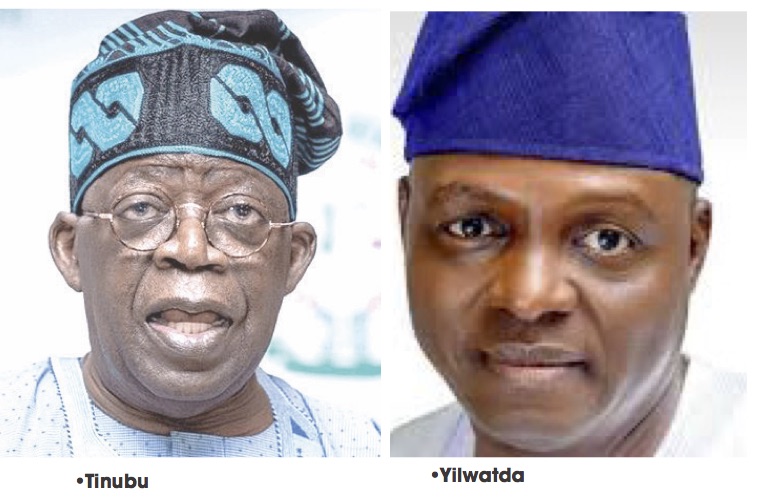
The National Organising Secretary of the All Progressives Congress (APC), Sulaiman Muhammad Argungu, last week, said what many considered unthinkable when he explicitly declared that the ruling party will not offer an automatic ticket to President Bola Tinubu in the forthcoming 2027 presidential election.
Argungu, having been a two-time former Deputy Governor of Kebbi State and currently occupying an exalted seat in the party’s national leadership- the National Working Committee (NWC) is not in any consideration, a political neophyte.
Interestingly, he made the declaration at the party’s national headquarters in Abuja. But many believed that he acted beyond his brief and he appears to have ended up stirring the hornet’s nest with his comments.
But he did not stop there, as he equally boldly announced too that the ruling party would neither disenfranchise any intending presidential aspirant nor close the door on any party member ready to contest against President Tinubu.
According to him, the ruling party will gladly welcome any willing party member ready to purchase the N100 million presidential expression of interest and nomination forms, declaring that “there is no dictatorship in democracy, the aspiration of the people will be the wish of the party.
“We, the leadership of the party, have endorsed President Tinubu as the next presidential candidate of our party, and by extension, other organs have equally done the same thing. Most of the governors in the states under the platform of our party, zones in most of the six geopolitical zones, have also adopted the same resolution,” Argungu said.
And while detonating the explosive with a high-velocity shock wave, he however emphasised that “that does not mean that the door is closed, that does not mean that when the time comes, like we always do, we will not make our timetable known, so that for anybody who wants to aspire for the next president of this country under the platform of the APC will not be denied the opportunity to come and purchase the forms.”
“We will allow the person to come and pay. We will not disenfranchise anybody who is a member of the APC. We never said it, anytime or any day, that we have closed the door, but we are only telling people that we appreciate what Mr President is doing for the whole people of this country,” he said.
Whether the instigation of party members to purchase the nomination forms and contest against President Tinubu at the presidential primary, despite the overwhelming endorsements given to him, was for economic reasons to boost the party’s account balance, or a signal of a crack in the party, whatsoever could have been behind the declaration, it was a joke taken too far, which has obviously sent a negative pointer to the general public that there must be more to it than meet the eyes.
The backslashes and intense debate the declaration has generated, ever since the Organising Secretary blew the lid off, have shown that there has been heightened apprehension and tension over the veracity and desirability of the ruling party contemplating allowing any party member to compete for the ticket with President Tinubu.
For many pundits, the APC’s Organising Secretary, on the flipside, may have deliberately robbed it on the faces of the would-be APC aspirants and mocked their sensibilities, urging them to summon the courage to challenge the status quo and threaten what has already been signed, sealed, and only waiting for delivery.
Weighing in on the declaration, Coalition of United Political Parties (CUPP), cynically described it as a false open contest aimed at deceiving gullible party members.
The CUPP National Secretary, Chief Peter Ameh, described the declaration as “a calculated attempt to mislead unsuspecting aspirants and exploit their ambitions for financial gain.
“The public endorsement of President Tinubu by recognised party organs effectively signals that the outcome of the APC presidential primary is predetermined. Such actions cast serious doubt on the fairness and transparency of the party’s primary process, as the endorsement will create a significant bias in favour of the incumbent,” he argued.
Reacting further, the former President of the Inter-Party Advisory Committee (IPAC) emphasised that “inviting other aspirants to purchase nomination forms under these circumstances is tantamount to deceiving them into investing resources in a contest where the outcome appears to be cast in stone.
“This approach not only undermines the principles of democracy but also portrays the APC as prioritising revenue generation over fostering a level playing field for all aspirants. It also erodes public trust in the party’s commitment to a free and fair aspirants’ selection process and raises questions about its dedication to upholding democratic values,” Ameh noted.
Also, in the perception of the National Publicity Secretary of the Social Democratic Party (SDP), Mr Rufus Aiyenigba, “the ruling party, by its antics, is becoming notorious for imposition and godfatherism.
“It is not a surprise that internal democracy is being stifled within APC and members are deprived of the freedom of participation in the process of their primaries for their presidential ticket. Nigerians are familiar with the fact that imposition and godfatherism are the defining characteristics of the APC. But the good news is that the undemocratic value of the ruling party does not, in any way, define our democracy as a nation,” he said.
However, for many students of political history, the incident playing out concerning the offer of automatic ticket, will definitely not come to many keen observers of Nigerian politics as any surprise.
Sources within and outside the APC noted that the revelation of the plan to deny President Tinubu an automatic ticket was mere rhetoric and a repeat of similar history in the build-up to every second-term bid, especially in the fourth Republic, by many former presidents.
Starting with former President Olusegun Obasanjo, when he sort re-election in the build-up to the 2003 presidential election, to Goodluck Jonathan, when he attempted to wrest the Peoples Democratic Party (PDP) presidential ticket for his re-election bid ahead of the 2015 presidential poll, and Muhammadu Buhari, when he surprisingly sort re-election ticket in the build-up to the 2019 presidential election, despite his health challenges, every of them historically faced stiff rejections and confrontations before finally securing the automatic tickets.
For instance, the hostility, acrimony, and controversies that trailed the plan to offer an automatic re-election ticket to former president Buhari, came to the verge of tearing the ruling party apart.
From the members of the APC Progressive Governors Forum (PGF) to many chieftains and even the party’s national leadership, the NWC, the planned offer of an automatic ticket created an intense moment and became a serious source of division in the party.
Similar to the posture of the Organising Secretary, Argungu, the ruling party had equally declared, in the build-up to the 2019 general elections, that there would be no automatic ticket for Buhari and other presidential aspirants on the platform of the party.
The party’s Deputy National Publicity Secretary at the time, Yekini Nabena, had in his defence against the planned denial of an automatic ticket to Buhari, hinged it on the need to allow other aspirants to prove their electoral worth at the primaries.
Nabena had argued that: “There is going to be primaries where other aspirants will also be given a chance to test their popularity. So, it is not as if an automatic ticket has been given to President Buhari.
“Though one or two have shown interest, the actual number will be known when the nomination forms go on sale, because there are people who have indicated interest in purchasing the forms when they go on sale. When the aspirants come out, then, we will know their actual numbers,” Nabena had said.
But if the party’s national leadership was mild, some fire-splitting members of the APC PGF, in their rejection of the proposed offer of an automatic ticket, expressed the severity of their disappointment and disapproval against printing a single ticket for now-late Buhari.
Despite the endorsement of then-President Buhari by some APC governors ahead of the 2019 election, there were still loud dissenting voices, especially from then Imo State Governor, Owelle Rochas Okorocha, who insisted that such a resolution was not binding on him nor will it hold water if he decided to re-contest the party’s primary election.
And since the party’s constitution is silent on the issue of an automatic ticket for the incumbent president, there were divergent views and even rifts between the party’s national chairman, Chief John Odigie-Oyegun, and his predecessor, Chief Bisi Akande.
While Akande had insisted that the presidential ticket of the APC should be open to all interested members desirous of throwing their hats into the ring, Oyegun disagreed, insisting that Buhari must be given the right of first refusal.
But regardless of the trajectory the debate may have tilted to, the APC constitution stipulated that any financially up-to-date member of the party is eminently qualified to contest for any elective office, including the president, on the platform of the ruling party.
The resentments against Buhari’s re-election bid then were hinged on the torturous health challenges he went through during almost all his first tenure, which created serious doubt on the possibility and implications of the party retaining the seat if he re-contests.
But, by the end of the day, the party’s national leadership had caved in to pressure when the national chairman, Oyegun, finally declared that Buhari would be given the right of first refusal for the ticket, which resulted in the party’s National Executive Committee (NEC) finally endorsing it despite the grudges against it.
Similarly, Buhari’s predecessors, Obasanjo and Jonathan, equally went through the crucibles of related stiff rejections from many PDP chieftains and even the party’s national leadership before they could get the tickets.
For instance, the contestation of whether Obasanjo would be re-nominated for his second tenure, ahead of the 2003 presidential election, had degenerated into an intense face-off between his aides and his South West kinsmen.
Locked in the battle over an automatic ticket for Obasanjo then were principally Chief Alani Bankole, father of former Speaker of the House of Representatives, who accused Obasanjo of hijacking the structure of then ruling party and government to decide its trajectory and Kashim Ibrahim-Imam, Obasanjo’s aide in charge of Liaison at the Senate, who insisted that the automatic ticket was in line with the convention worldwide.
Imam had noted: “I am convinced that when the time comes, our party will re-present Obasanjo and Vice President Atiku Abubakar for a second term. It is conventional worldwide that you do not change a winning team. I want to restate that there is no other credible alternative to Obasanjo.”
The battle was understandable because halfway through Obasanjo’s four-year term, public confidence in his administration had waned, with Nigerians becoming increasingly disillusioned with the government’s slow progress in ending the prolonged economic stagnation.
Nigerians were actually hard hit by the spiralling inflation, crime, government’s failure to provide basic health services, and the inability to improve the education system after 15 years of neglect during the military rule.
As for Jonathan, the rumblings were not, in any way, different. The battle to offer him an automatic ticket was equally fierce, to the point of indirectly helping to fortify the newly registered APC with the exit of PDP political heavyweights that left the party in droves, particularly Atiku and some state governors under the auspices of nPDP faction.
The battle raged until the PDP NEC reluctantly but unanimously adopted Jonathan as the party’s sole candidate for the 2015 presidential election during its meeting on September 18, 2014.
But before the endorsement, antagonism and skirmishes had reared its head from several embittered party chieftains, especially Atiku and a member of the party’s NEC who doubles as the Chairman of Jigawa State chapter, Salisu Mamuda Ku’it, who declared as unconstitutional, the plan to offer an automatic ticket to then President Jonathan for the 2015 election.
Atiku had even gone to the extent of threatening legal action to challenge PDP leadership should it award second-term automatic tickets to Jonathan and the state governors.
As for Mamuda Ku’it, he had warned: “My position remains that as far as the PDP Constitution is concerned, any attempt to change it to favour the President as a sole candidate in the event of his willingness to re-contest is unconstitutional. The contest should be open to every party member desiring to pursue an ambition on the platform of the PDP.
“There is no portion of the PDP’s constitution that allows an automatic ticket to any member for any position. PDP is a party that has internal democracy, where all members enjoy equal rights. An automatic ticket is a violation of PDP’s constitution and a breach of its internal democracy. That can lead to internal crises, which would give the opposition the upper hand. It is not only President Jonathan; any other member of the party should stop thinking of an automatic ticket for any elective position,” he warned.
However, even as the trend to offer automatic tickets has almost become an established tradition, the slip from Argungu cannot definitely affect a deft political strategist like President Tinubu, who has apparently perfected and tightened every loose end, to guarantee his seamless emergence.
To many pundits and political watchers, if he scales the hurdles to emerge victorious at the party’s primary, it can only take the God factor and or his voluntary withdrawal from the race, to scuttle his 2027 re-election ambition.