Follow Us on Google

From Fred Ezeh, Abuja
Omicron variant of COVID-19 ushered the world into the second year of the pandemic. Omicron joined forces with Delta and other variants to destabilize the health system that was recovering, gradually, from the 2020 health care crisis.
The fast spread of Omicron variant forced some countries to strengthen response measures, including partial or total lockdown, to control community transmission of the disease.
However, Nigeria and some other developing countries, especially in Africa, have peculiar problems. They are confronted with pandemic COVID-19, and epidemic infectious diseases, notably Lassa fever, cholera, measles, meningitis, monkey pox, malaria and yellow fever, among several other ones.
There are also problems like snakebite, guinea worm, river blindness, soil transmitted helminths, rabies, elephantiases, snail fever and trachoma (major cause of blindness) that are wrecking havoc across communities. These are referred to as neglected tropical diseases (NTD).
Many people and communities have been abandoned with these diseases, as neither governments nor international donor organizations are interested in the plights of the people.
For instance, between 2015 and 2020, 39,458 cases of snakebite were reported in Nigeria, with over 633 deaths. Prevalence of snakebike is higher in Gombe, Taraba and Bauchi states, while it’s lower in Katsina, Jigawa, Rivers and Osun states.
Evidently, snakebite has become an ignored public health problem that causes considerable danger to human health, particularly in rural areas where access to life-saving anti-venom is poor.
Medical professionals and other observers have predicted that the combination of COVID-19 and other epidemics would lead to more deaths in 2022 due to less attention being paid to the issues of the epidemics by governments.
COVID-19
Nigeria Centre for Disease Control (NCDC) confirmed that several waves of COVID-19 led to the death of many people in 2021. Data from NCDC indicated that over three million samples were tested for COVID-19: 243,450 samples returned positive; 215,352 people were treated and discharged after they returned negative. Regrettably, 3,039 deaths were recorded.
There was a prediction that the fourth wave of COVID-19 heralded by Omicron could lead to more casualties, except people would up their game as regards the preventive measures, notably, regular hand-washing, wearing of face mask, vaccination and other non-pharmaceutical measures.
Lassa fever
Lassa fever remains a major public health challenge in West Africa, with Nigeria bearing the highest burden. Every year, hundreds of people, including medical doctors and other health workers, die of Lassa fever in spite of precautionary and reactionary measures by the NCDC.
Lassa fever is often transmitted by food that has been contaminated with the urine and faeces of infected rats, hence the advice for food to be cooked properly before eating.
A few days ago, NCDC confirmed that Lassa fever was responsible for 102 deaths in 2021, with case fatality rate (CFR) of 20.0 per cent.
Edo State accounted for the a large part of confirmed cases (84 per cent). Ondo and Bauchi states were responsible for 34 per cent and 8 per cent, respectively. The predominant age-group affected was 21-30 years, while male to female ratio for confirmed cases was 1:0.9.”
NCDC advised healthcare workers to always practice standard precautions by wearing gloves and other appropriate personal protective equipment while handling patients or providing care to an ill patient/relative.
Malaria
Malaria has evidently become one of the major killer diseases in Nigeria. Minister of health, Dr. Osagie Ehanire, disclosed recently that at least 30 children are lost to malaria daily in Nigeria.
He confirmed that data indicated that malaria prevalence was on the decline: “Malaria prevalence in Nigeria has dropped to 23 per cent and it’s expected to drop more. Lagos State is doing well in the fight against malaria, hence Malaria prevalence in the state is far less.”
The minister lamented that many people frequently trivialize the disease because it’s endemic to Nigeria.
“But it’s a major public health concern in Nigeria. This is because we are burdened with the world’s highest disease and death rate in Nigeria.
Other News
“Malaria is the highest killer disease for children under the age of five in Nigeria. It accounts for 60 per cent of outpatient hospital visits, 30 per cent of admissions. It mostly affects the poor, the young, vulnerable and pregnant women.”
Nevertheless, there’s stronger hope of eliminating malaria with the recent approval of malaria vaccine for the disease by the World Health Organization (WHO).
Cholera
Cholera is an acute diarrhoeal disease caused by vibrio cholerae. It is a waterborne disease, and potentially life-threatening. It’s an endemic and seasonal disease, occurring annually mostly during the rainy season and more often in areas with poor sanitation.
In 2021, 3,566 deaths (higher than COVID-19 deaths) were recorded out of 103,589 suspected cholera cases reported across 32 states of the federation and the FCT, and four states, namely, Bauchi (19,470 cases), Jigawa (13,293) Kano (12,116), and Zamfara (11,918) accounted for 55 per cent of all cumulative cases.
NCDC explained that cholera outbreaks were recorded in different states at different times. While some of the states have had short outbreaks, others have had protracted outbreaks. Open defecation increases the risk of contracting the disease.
It maintained that the spread of infectious diseases such as cholera, COVID-19 and Lassa fever and other epidemics could be prevented if healthy physical and environmental practices were initiated, enforced and practiced by all.
Meningitis
Cerebrospinal meningitis (CSM) is an epidemic-prone disease for immediate notification on the Integrated Disease Surveillance and Response (IDSR) platform in Nigeria. Cases can occur throughout the year, with epidemics occurring during the dry season.
Lately, there has been drop in cases of meningitis in Nigeria, which health professionals attributed to less attention being received from government as regards case detection in communities.
They lamented that COVID-19 has taken the attention of government and other health stakeholders; hence, less attention was been paid to other ailments that are peculiar to Nigeria.
They, however, reawakened the consciousness of the government to the fact that states in the meningitis belt, mostly the 19 northern states and FCT, are responsible for the cases of meningitis and all the losses there. Cases are also reported from across African countries.
However, NCDC maintained that meningitis remains one of the priority epidemic diseases under the national IDSR strategy that was reported all year round in Nigeria.
NCDC said it’s working on the National Cerebrospinal Meningitis Emergency Response Plan for the 2021/2022 season, and had engaged stakeholders from high-burden CSM states to develop the plan.
Yellow fever
Cases of Yellow fever were not as loud as COVID-19 and other epidemics. However, there are predictions that more cases would be recorded because of increasing exposure and breeding grounds for causative agents.
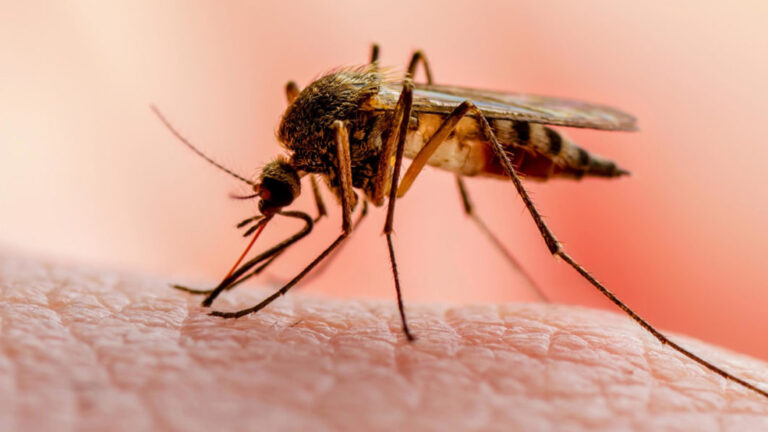
Yellow fever is transmitted by mosquitoes, both aedes and haemogogus species, and has three transmission cycles, namely, jungle (sylvatic), intermediate (savannah), and urban.
Yellow fever remains an acute viral hemorrhagic illness caused by the yellow fever virus, an RNA virus that belongs to the family flaviviridae. The virus is found in tropical and sub-tropical areas of Africa and Central/South America with the illness endemic in 34 African countries, including Nigeria and 13 Central and South American countries.
Monkey pox
Monkey pox is an infectious disease that’s transmitted from animals to humans. It’s caused by the monkey pox virus which belongs to the orthopoxvirus genus in the family poxviridae.
Data from NCDC indicated that since September 2017, Nigeria has continued to report sporadic cases of monkey pox with the National Technical Working Group (TWG) monitoring cases and strengthening preparedness/response capacity.
However, a total of 93 suspected cases were reported between January 1 and November 30, 2021. Of the suspected cases, 31 were confirmed from eight (8) states, namely, Delta (8), Lagos (5), Bayelsa (6), Rivers (6), Edo (3), FCT (1), Niger (1), Ogun (1). But no death was recorded.
Healthcare professionals commended government for the advocacy measures that resulted in drop in cases. They advised that government identify and sustain measures that have yielded the desired result.