Follow Us on Google
By Chinyere Anyanwu and Okwe Obi, Abuja
There is no doubt that the country’s agricultural sector is groping, which is evident in the high cost of foodstuff; a conundrum that is partly attributed to the perennial fracas between herders and farmers, post-harvest losses, flooding, and hike in transportation of farm inputs and produce.
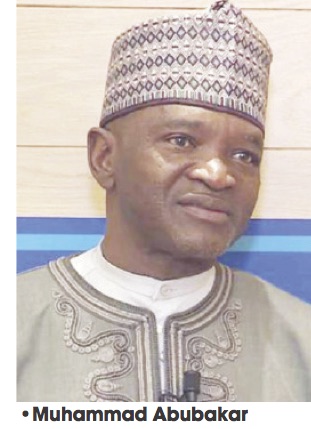
Even the Minister of Agriculture and Rural Development, Mohammad Mahmood Abubarkar, during the 2021 World Food Day, lamented that insecurity had crippled many farming communities in the Northeast.
“The insecurity bedevilling many farming communities in the North has greatly affect food production in the last three-four years, and the farmer/herder clashes, banditry, cattle rustling all posed serious setbacks in our food systems,” he had said.
In 2019, the Federal Government, through Nigeria Agricultural Insurance Corporation (NAIC), disbursed N877 million to farmers affected by flooding and drought, while in 2020, NAIC doled out about N874 million to affected farmers.
Rotimi Ayoola, the Manager, Underwriting Department of NAIC, said, “NAIC has been doing well. It has lived up to its expectations. For example, the flood in the last two years was telling on farmers. In 2019, we paid a total claim of N877 million to farmers. Most of the claims were for flooding. In the past, our highest claims were on poultry and livestock. In 2020, we paid a total claim of N874 million. The list of farmers that were paid are with me.
“The essence of insuring a farm is not that the farmer should make a claim, it is to give the farmer rest of mind in case anything happens that is not good enough. It is always good if a farmer does not make a claim but if he makes a claim we will look at it and ensure that the claims are well adjusted and paid.
“To help the farmers on animal husbandry on modern management of these projects, the corporation has been carrying out sensitisation of farmers across the country. We give lectures and encourage the farmers. By and large, I can confidently say NAIC has lived up to its mandate.”
Notwithstanding the myriad of challenges confronting the sector, farmers and other stakeholders are hopeful that if certain crucial measures that are germaine to the survival and growth of agriculture in the country are taken this year, the sector will record a quantum leap.
For the President of All Farmers Association of Nigeria (AFAN), Ibrahim Kabiru, the painstaking implementation of the National Agricultural Technology and Innovation Policy (NATIP) will bring a marked improvement to Nigeria’s agriculture.
Kabiru said: “We want that policy (NATIP) to be implemented to the letter. If that is done, we believe that agriculture will have some focus.”
In addition, he emphasised the need to end insecurity, which has constituted a major challenge to agriculture in the country in the last few years. He insists that, “we want to see the end of insecurity.” Another step in the right direction, which will move the sector forward, according to him, is that “farmers should abide by the advice of NiMet (Nigerian Meteorological Agency). I’m hopeful that 2022 will be better for agriculture in Nigeria because the new minister is a listening man.”
In his submission on the way forward for agriculture this year, the Vice President of Nigeria Agribusiness Group (NABG), Mr. Emmanuel Ijewere, stated that the role of the private sector in the growth of agriculture should not be undermined.
Ijewere said, “the first thing I want to see happen in the agriculture sector this year is the recognition that it is the private sector that makes agriculture happen. Government’s job is to create an enabling environment for the private sector to thrive. The farmers, the growers, the transporters, the processors are the people in agriculture. Government should just enable them achieve their goals.”
Furthermore, Ijewere noted that, “government should not determine for the private sector what the private sector wants. Government should ask the private sector what they want and work them,” adding that, “state governments need to realise that the days of free oil money are gone. It is time for hard work and the hard work can only be done by the farmers in the agriculture sector in each state, so the state governments need to go down to the local governments and stir them up to work with those in the agricultural space.
“Agricultural success cannot be achieved in Abuja or Lagos. It is through those in the villages that it will happen. Once they are able to recognise that and give them the enabling environment, Nigeria would have achieved its agricultural goals.”
Other stakeholders have their focus on the new Minister of Agriculture, Abubakar, for solutions to majority of the listed problems in 2022. For some, fertiliser diversion and cost inflation by middlemen awarding contracts to portfolio farmers, poor contract execution, insufficient and inexperienced agricultural service providers in rural areas, should be addressed.
Musa Ibrahim, a potato farmer, said, “some unscrupulous people are buying goods from the market and hoarding them, which is an act of commission and omission because these are people who are using facilities provided by the CBN (Central Bank of Nigeria) as prime anchors instead of giving money to anchor borrowers as the CBN directs.
“They are buying things during this inflation. So the aforementioned reasons are worsening the situation. Another thing that is very serious and worth considering is the purchasing power of the Naira. The value of the Naira now is N580 per dollar. Several things that are used for production are imported and they have dollar component in them and therefore our production cost is high.
“Our mechanisation system is very poor. We do not even have sufficient strategy to adopt technology because extension workers are limited. The skyrocketing prices of other inputs is another thing that needs consideration. Credit is also an issue. Even at 5 per cent, Oliver Twists are still asking for more subsidy. Our own package should not be more than 3 per cent. But we are not blaming anybody. If you blame anybody you are making a mistake. So, the minister should look into these problems.”
Others suggest that the minister should fast track his intervention in the power tussle between CBN and NAIC. A source in NAIC who spoke to Daily Sun accused CBN of usurping the corporation’s responsibilities especially in insuring farmers.
“We have been having some problems with CBN. The law says that every agric business that is financed by loan should pass through NAIC but CBN has been breaking the law. So, to date they have not been living up to expectations. Some of those farmers they give to private insurance are supposed to be our clients by the power conferred on us by the NAIC Act of 2004. The work put in insuring those farmers is enormous. CBN diverted our businesses to other insurers.
“A lot of people say that CBN has the money so it must insure but that claim is pedestrian in the sense that we are the risk carrier. We know how to carry those risks and if they are not comfortable with the way we are handling it, we know what to do. We can do co-insurance and the law will still not be broken. We have taken the matter to the National Assembly and they are talking about it.
“Moreover, the farm gate prices and other indices CBN is using to calculate the loan for farmers is part of the research we are carrying out. Why is it that a farmer granted loan last year cannot renew it? That is why, despite so many billions spent on intervention, food is still expensive. Some of those indices used by CBN are not correct. The farmers can never break even. But the farmer has no choice; they will just collect what is given.”
The source told our reporter that despite the large number of farmers (over 20 million), only 500,000 are fully insured and captured in NAIC’s database. He attributed the problem to the inability of farmers who have been insured to get insurance cover after one year.
“For the past few years, we have had 500,000 farmers in our database across the country. We want to embark on data collection of farmers next year. I have been worried because of the unsustainability of all this agricultural projects where people will collect loan and disappear the next year. When you look at the mechanism of granting insurance, especially in developed countries, farmers are insured in clusters.
“It is easy and that is why some people believe that when you want to pay compensation to farmers adopting cluster farming, you should give area yield indemnity because indemnity means you will be checking the project one by one and it is labour and capital intensive.”
Another farmer in Kuje, Catherine Chukwuma, wants the minister to address the issue of farmers’ inability to get insurance cover, especially those whose farms have been attacked by herders.
She said: “When farmers report losses on their farms as a result of the fight with herders, they do not get compensated. So, we want him to look into the matter because it is becoming serious.”
Moreso, Actionaid Nigeria suggested that government should pay more attention to agricultural extension service providers. Its Food and Agriculture Programmes Coordinator, Azubike Nwokoye, while
presenting outcome of his findings to farmers, rated Bauchi, Ebonyi, Delta, Kogi, Kwara and the Federal Capital Territory low, among others.
Nwokoye further made a case for women farmers by calling on relevant authorities to incorporate them into extension service providers. He said, “the challenges of poor funding of extension services and the components of agriculture have made it necessary for us to push for increased funding.
“It is also to indicate areas of extension services because it is the fulcrum of agricultural productivity. Over the years, farmer agent ratio has been very poor; there is a wide gap and some of the statistics are showing that in Nigeria you have one extension agent to 2,500 family farms. In some situations, one extension agent to 10,000. Latest, people that have done it are saying 10,000 extension agents to 18,000 family farms.
“So, the gap is wide. There is also in existence the challenge of low recruitment, lack of mobility and transport allowance and lack of training and low number of female extension agents across Nigeria. So, we are having this conversation to make sure the poor funding situation is addressed within this budgetary process that is currently ongoing in the 2022 agriculture budget. We believe it is a waste of our common wealth if government, both at the federal and state levels, have extension agents they cannot provide with motorcycles and transport allowance to do their job.
“It means that when they pay them at the end of the month without providing them money for operation, government is wasting our common wealth. It is better for government not to waste our common wealth by ensuring that trainings and retraining are provided for extension agents and that they are provided with proper mobility to be able to deliver these services to farmers.
“Across Nigeria, we have a lot of technological researches that are lying on the shelves. Because of the low funding of extension services, these technologies are not distributed to farmers. From the database of our assessment we did recently, it showed that information service to farmers across is not up to 50 per cent. Farm demonstration is about five point something per cent. A lot of things need to be done in terms of real investment in agriculture with focus on component like extension services.”