Follow Us on Google

- Unresolved challenges that may hamper conduct of elections
- As Obasanjo meets party leaders, security chiefs over campaign violence
Omoniyi Salaudeen
it is remaining exactly two weeks to the much-awaited presidential election scheduled to hold on February 16. As usual, debates have been organized at different levels to provide opportunities for the candidates to present their programmes of action that would lead the country out of the woods. The parties and their candidates have been going round the country to woo the electorate with mouth-watering promises and these are gradually building to a crescendo. But for the ruling All Progressives Congress (APC), the exercise is not so much about political rhetoric, which has now become the main weapon of the opposition Peoples Democratic Party (PDP), as to the feedback on the impacts the programmes of the administration have had on the generality of the Nigerian people. And there is no doubt that it has been doing just that to the admiration of its teeming supporters across the country.
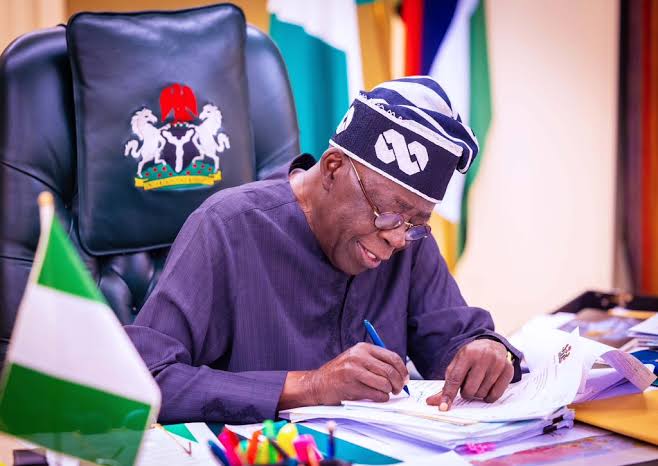
Beyond campaign issues, the onus lies on President Muhammadu Buhari to ensure that the coming election is transparent, free, fair and credible in line with international best practices. He cannot afford to do less, as the eye of the world is on Nigeria. But the road to a smooth transition process is no doubt bumpy with the numerous challenges now confronting the nation. These border essentially on the rising spate of attacks by the dreaded Boko Haram insurgent, the looming constitutional crisis arising from the recent suspension of the former Chief Justice of Nigerian (CJN), Walter Onnoghen, the prolonged strike embarked upon by the Academic Staff Union of Universities (ASUU) as well as the impending labour show down over minimum wage issue, among others.
Upsurge in Boko Haram attacks
President Muhammadu Buhari came to power in 2015 with a pledge to end the Islamist insurgency. In line with the electoral promise, the administration has been relentlessly committed to restoring peace to the troubled Northeast part of the country. According to the Nigeria Army, the dreaded insurgents have been degraded, while some villages hitherto occupied by them have been reclaimed.
However, the recent resurgence in the activities of the group has become a source of worry to many Nigerians, especially at this point in time when elections are at the corner. Just last week, precisely on Sunday, January 26, the terrorist group went out of their way to attack two military bases in Borno State, near the border with Cameroon and injured six soldiers.
The attack was the latest against military targets in the region with security becoming a major campaign issue ahead of presidential and legislative elections in February. Troops came under attack by Boko Haram terrorists who came in four gun trucks around 6:30p.m, and in the ensuing encounter six soldiers were said to be wounded by bomb fragments.
Earlier on Wednesday and Thursday, the jihadists also attacked three bases in Borno and neighbouring Yobe states, stealing weapons and burning the bases.
According to statistics, insurgency has claimed no less than 27,000 lives since 2009, while over two million people are said to been forced to flee their homes, triggering a humanitarian crisis in the region.
A recent report revealed that the upsurge in violence in North-eastern Nigeria had already driven more than 80,000 civilians to seek refuge in already crowded camps or in towns in Borno State. The UN, civilian militia and residents have also confirmed that about 30,000 people had fled the town of Rann and across the border to Cameroon in recent days because of fears of renewed Boko Haram attacks. Rann has repeatedly been attacked by Boko Haram in the recent past when the terrorists targeted a military base. All this has increased the apprehension about the chances of conducting election in the region without any incident.
Onnoghen’s suspension and the brouhaha
Tongues are still wagging over the suspension of the former CJN, Walter Onnoghen, and the appointment of Justice Muhammed Tanko as the Acting CJN by President Buhari. Onnoghen is facing a six-count charge of non-asset declaration at the Code of Conduct Tribunal. President Buhari in a statement announcing the suspension of and replacement of Justice Onnoghen, said that he relied on an Order of the Code of Conduct Tribunal made on Wednesday, January 23, 2019 to take the step.
Since then, opposition political parties, members of the Nigerian Bar Association, Civil Society Organisations and other concerned stakeholders have condemned the action as a breach of the constitution, agitating for an immediate reversal of the action.
Similarly, the United States (US), United Kingdom and the European Union (EU) have expressed concern over the development, especially as it was coming barely 22 days to the presidential election.
In its statement, issued on January 26, and signed by European Union Election Observation Mission Nigeria (EU EOM) 2019 public outreach officer, Sarah Fradgley, the EU said: “The EU Election Observation Mission (EU EOM) is very concerned about the process and timing of the suspension of the Chief Justice of Nigeria, Honourable Justice Walter Onnoghen, on 25 January. With 20 days until the presidential and National Assembly elections, political parties, candidates and voters must be able to have confidence in the impartiality and independence of the judicial system. The decision to suspend the Chief Justice has led to many Nigerians, including lawyers and civil society observer groups, to question whether due process was followed. The timing, just before the swearing in of justices for Electoral Tribunals and the hearing of election-related cases, has also raised concerns about the opportunity for electoral justice.”
The British High Commission, in its reaction urged the government to ensure a free and credible process. “We further urge them to take steps to ensure that elections take place in an environment conducive to a free, fair and peaceful process,” it stated.
Reacting, the Federal government has accused the United States, the United Kingdom, and the European Union (EU) of taking side with the leading opposition Peoples Democratic Party and the suspended Chief Justice of Nigeria, Justice Walter Onnoghen. The Presidency made this claim in a statement issued by the Senior Special Assistant to the President on Media and Publicity, Mallam Garba Shehu.
The statement reads in part: “The Presidency notes with interest the coordinated statements of the US, UK and EU linking the suspension of CJN Onnoghen to the conduct of the upcoming elections.
“We appreciate the concerns voiced by the three statements and accept that the authors of the statements believe they were acting in friendship toward Nigeria with regard to making the statements.
“However, we also note that friends, when not properly informed or acting in haste, can indeed make serious mistakes even with the best of intentions. Such is the case here.
“The statements by the three seem more driven by unfounded assumptions and to be honest, a certain condescension to this African democracy.”
Meanwhile, the Code of Conduct Tribunal has fixed Monday for the continuation of the non-assets declaration trial against Justice Onnoghen.
Ibraheem Al-Hassan, spokesman of the tribunal, disclosed this in a statement issued on Thursday.
Al-Hassan said that this was as a result of the Appeal Court ruling on the matter, adding that Onnoghen had lost his bid to make the appellate court halt his trial.
But lawyers insisted that the National Judicial Council (NJC) remained the body empowered by the constitution to suspend the CJN. A renowned legal practitioner, Yusuf Ali (SAN) said: “The Constitution is clear on who can remove the CJN and in what circumstance. No person, individually, can remove the Chief Justice of Nigeria, no matter how highly placed.”
They urged the National Assembly to assert its constitutional authority on the matter.
Threat From ASUU strike
Barely two weeks to the election, the Academic Staff Union of Universities (ASUU) has vowed to continue with its prolonged industrial action. The union blamed its stand on lack of government’s commitment to the agreement reached with its leadership.
According to government’s reports, N163 billion had been released to the universities to address the issue of infrastructure. But ASUU has debunked the claim, saying the money it got was an intervention fund from TETFUND, which is the brainchild of the union.
There is no indication that the strike will be called off before the election. This is in spite of the alarm raised by the Chairman of the Independent National Electoral Commission (INEC), Prof. Mahmood Yakubu, that the lingering strike would affect its preparations for the conduct of the 2019 general elections.
At a one-day workshop on Gender Sensitive Reporting of Elections recently held in Abuja, INEC’s National Commissioner and Chairman of its Information and Voter Education Committee, Barr. Festus Okoye disclosed that over 70 per cent of the ad hoc staff requirement for the elections would be drawn from students of federal tertiary institutions. “The lingering strike by the Academic Staff Union of Universities, ASUU, will no doubt have serious impact on the preparations for the conduct of the 2019 elections.
“It is, therefore, important that students of federal tertiary institutions should and must be in school at least a month before the February 16 Presidential and National Assembly elections.
They are one critical resource and their absence will have adverse effects on the ad hoc staff requirement of the Independent National Electoral Commission INEC,” he stated.
Two weeks to the election negotiation with the Federal Government remains deadlocked. This has forced the electoral umpire to rely essentially on corps members as ad hoc staff.
Looming labour showdown
Pre-emptying government’s failure to agree to N30,000 minimum wage, the Nigeria Labour Congress (NLC) has directed its members to be ready to take appropriate actions should the National Assembly fail to do the needful by affirming N30,000 as the new national minimum wage at state and federal levels.
It said the National Assembly should uphold the recommendation of the tripartite committee which specified N30,000 as the new national minimum wage.
President of the congress, Comrade Ayuba Wabba, at the end of an emergency meeting of the Central Working Committee of the congress maintained that the International Labour Organization (ILO) conventions guiding negotiations on minimum wage do not allow one party to change the figures agreed upon after negotiations.
According to him, the N30,000 agreed to by the tripartite committee was a compromise position for which labour should be commended as it is still less than 100 dollars if converted. Wabba said: “This is the resolution that has just been adopted by a meeting of the Central Working Committee of the Nigeria Labour Congress. The meeting deliberated on a one-item agenda which is the issue of the transmission of the national minimum wage bill to the National Assembly.
“The meeting reviewed the whole situation, including the fact that what was agreed at the tripartite negotiation meeting of the review of the minimum wage was N30,000. It is actually out of place and out of procedure for that figure to be reduced to N27,000.
“Unless the Federal Government handles the matter with care, any strike action now by the organised labour may not argur well for the election that is some days away.”
Alongside the NLC warning, the Nigerian health workers’ union under the aegis of JOHESU has also taken the Buhari administration to task, threatening to go on strike if its demands are not met.
According to its National Chairman, Mr Josiah Biobelemoye, the union’s demands include the age-long struggle for recognition of consultancy cadre for eligible health workers and other outstanding allowances, as well as payment of April and May salaries withheld by the government.
The five affiliate unions of JOHESU are the National Association of Nigerian Nurses and Midwives, Nigeria Union of Allied Health Professionals and Medical and Health Workers’ Union.
Josiah said that the unions would be compelled to embark on strike, if the government failed to meet its demands by January 31.
That some of these issues are coming at a time when preparation for the elections is at top gear raise suspicion that they may be politically motivated. And unless the government handles the challenges with care, they may hinder the smooth process of the transition, as well as its ultimate outcome.